Cars Mazda Cars Mitsubishi Cars Toyota Cars Chevrolet Cars AvtoVAZ Cars Kia Cars Nissan
English Русский
Български
Беларускі
Український
Српски
Hrvatski
Română
Polski
Slovenský
Magyar
| Articles | Contacts | Sitemap |   
BMWman.ru


3 series   5 series   7 series   BMW X3   BMW X5   BMW X6

E46 (1998-2006) E46 (1998-2006, petrol) E36 (1990-2000) E30 (1982-1994) E21 (1975-1983)
  • Home
  • BMW 3 Series

History and description cars BMW 3rd series


The BMW 3 Series is a compact business class car and belongs to the D-segment according to the European classification. It has been produced by the German company BMW since 1975 to the present. It is a direct successor to the BMW 02 Series. During this period, the car has undergone six reincarnations. It is the most popular among BMW cars, accounting for about 30% of sales and has won many awards over its long history. It is a competitor to cars Volkswagen Passat, Ford Mondeo, Kia Stinger, Kia Optima, Mercedes C-Class, Mazda 6, Mitsubishi Galant, Opel Insignia, Peugeot 408, Renault Laguna, Subaru Legacy, Toyota Camry, Skoda Octavia and Audi 80 (A4).

First generation (E21; 1975–1983)
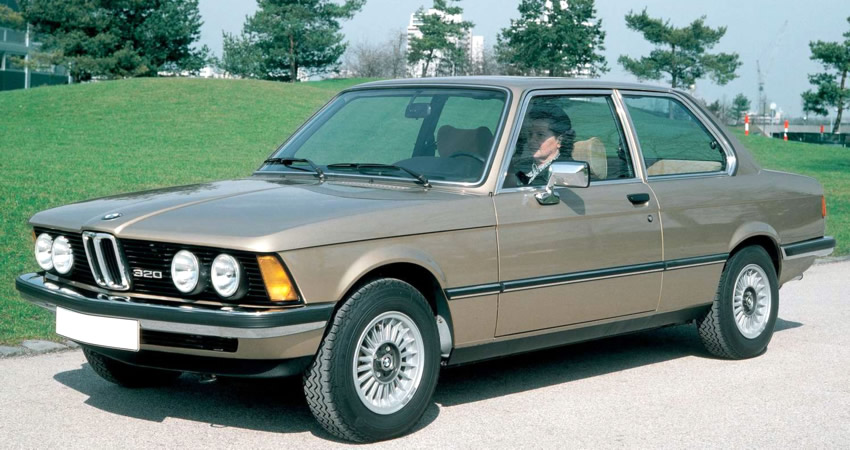


BMW 320 1975 year 
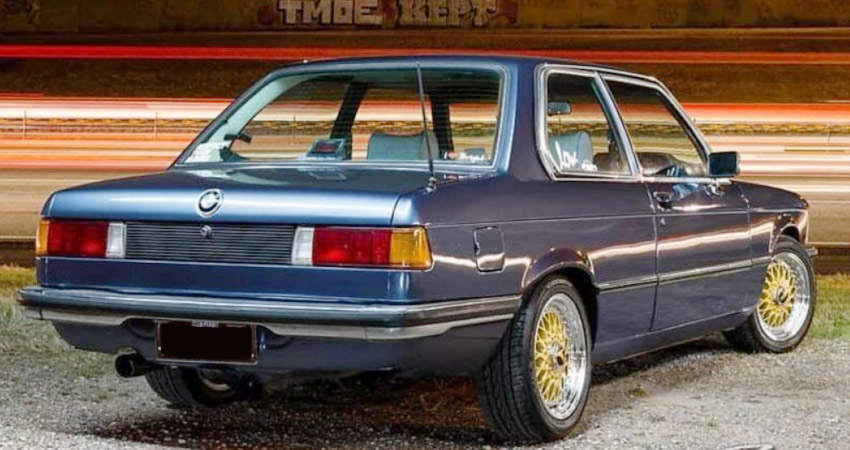
BMW 320 1975 year
The first generation with the E21 body was presented to the public in July 1975 at the Olympic Stadium in Munich. At first, a two-door sedan body was available, and in 1978 a two-door convertible appeared. The sedan size was 4355 mm in length, 1610 mm in width and 1380 mm in height. The model names consist of three digits, for example "320", the first of which means the 3rd series, the rest are the engine capacity in liters, if you put a decimal point between them. In the example, the engine has a capacity of 2.0 liters. If there is an "i" at the end, then the engine is injection.

BMW 320 1975 year, back view 
BMW 320 1975 year, back view
The steering is rack and pinion, the front suspension is MacPherson type, and the rear is independent with a wishbone. The brakes with power on the front wheels were disc, while the rear wheels had drum brakes. The engine is located in the front with the drive to the rear wheels. Initially there was only a four-speed manual Getrag gearbox, in 1980 it was possible to choose a five-speed transmission, as well as an automatic three-speed ZF 3 HP-22 gearbox.

There were three four-cylinder engines with a volume of 1.6, 1.8 and 2.0 liters and a power of 74 to 123 hp, and two six-cylinder engines with a volume of 2.0 and 2.3 liters and a power of 121 and 141 hp. All engines were petrol, there were no diesel options.

Second generation (E30; 1982–1994)
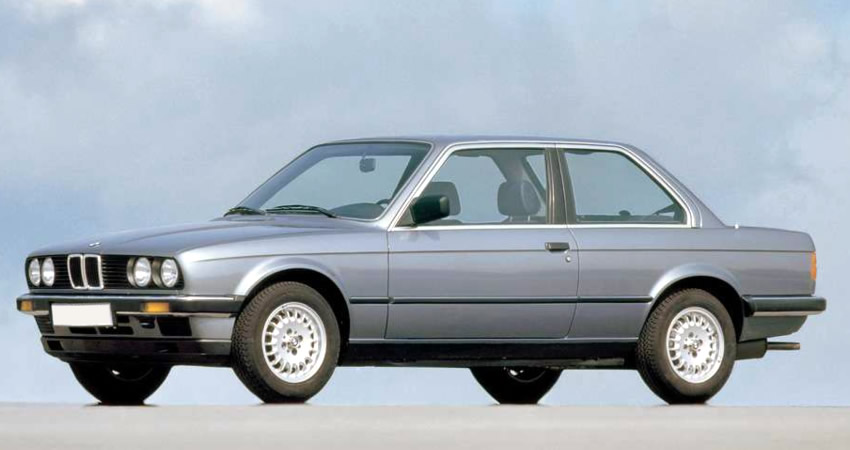


BMW E30, two-door sedan 
BMW E30, two-door sedan
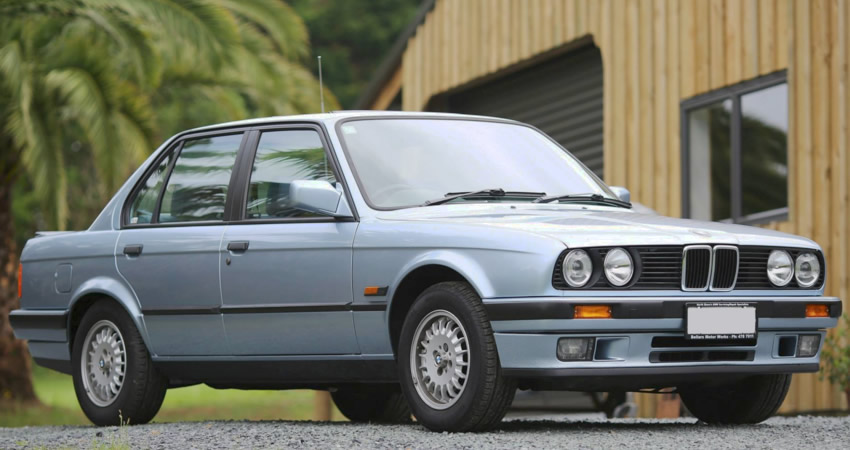
The design of the second generation was created in 1978 by NSU Ro 80 designer Klaus Luthe, and mass production began in 1982. In total, about 2.3 million cars were produced during this period. Externally, the car is similar to the previous version with two headlights. Initially, two bodies were available - a 4- and 2-door sedan, and later a convertible and a 5-door station wagon appeared.

BMW E30, four-door sedan 
BMW E30, four-door sedan
The engine range has expanded significantly. Four-cylinder petrol engines with a capacity of 1.6, 1.8 and 2.0 litres with a capacity of 90 to 192 hp, six-cylinder engines with a capacity of 2.0, 2.3, 2.5 and 3.3 litres with a capacity of 123 to 197 hp. For the first time, diesel six-cylinder engines with a capacity of 2.4 litres with a capacity of 84 (atmospheric) and 114 (turbocharged) h.p.

A total of eight gearboxes were available for the various models – five manual and three automatic. Manual transmissions were 4- and 5-speed from Getrag. Automatic transmissions were 3- and 4-speed from ZF.

Third generation (E36; 1990–2000)
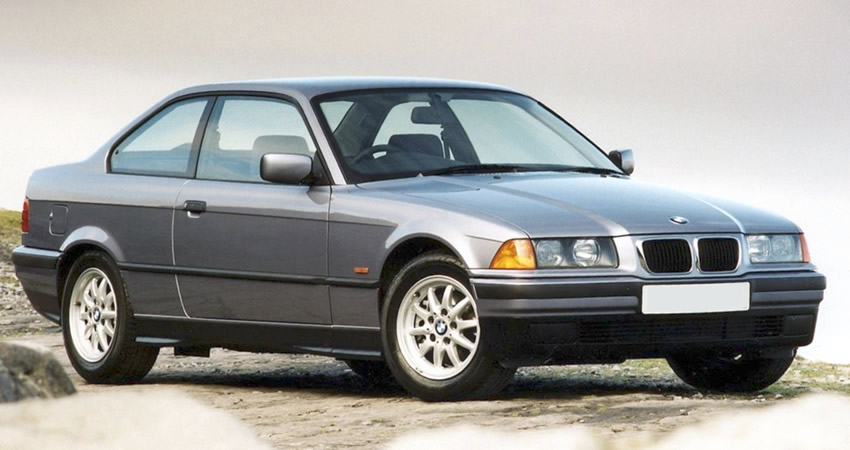


BMW E36, two-door coupe 
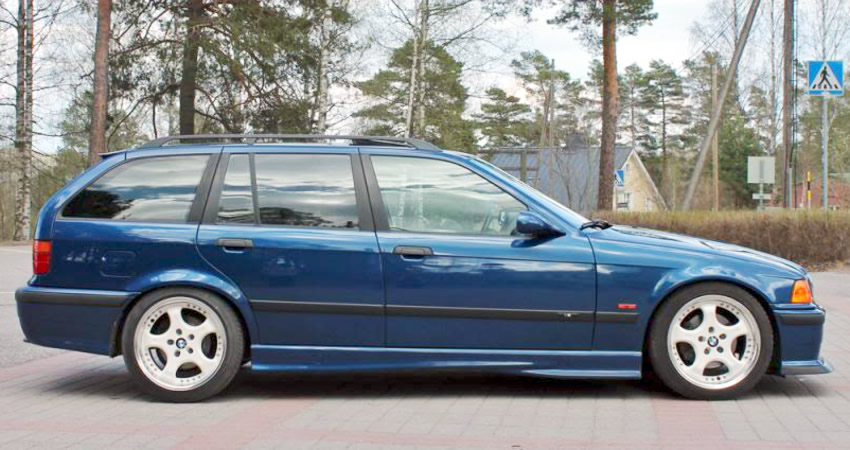
BMW E36, two-door coupe
The third generation was introduced in Europe in 1990. The car became longer, higher and wider than the previous generation, and the wheelbase was extended by 130 mm. The engine was located in the front with a drive to the rear axle. Over the entire period, about 2.3 million cars were produced. For the first time, the body became available in the form of a hatchback. In total, there were five body types: 2-door coupe, 2-door convertible, 3-door hatchback, 4-door sedan and 5-door station wagon.

BMW E36, wagon 
BMW E36, wagon
The engine lineup has also expanded and switched completely to injection models. Four-cylinder engines: two with a volume of 1.6 liters with a capacity of 98 and 101 hp and six with a volume of 1.8 liters with a capacity of 111 to 138 hp. Six six-cylinder engines with a volume of 2.0 to 2.8 liters with a capacity of 150 to 190 hp. Five diesel engines with a volume of 1.8 and 2.5 hp with a capacity of 89 to 141 hp, all with turbocharging. There are four transmission options to choose from - 5- and 6-speed manual or 4- and 5-speed automatic.

Fourth generation (E46; 1998–2006)


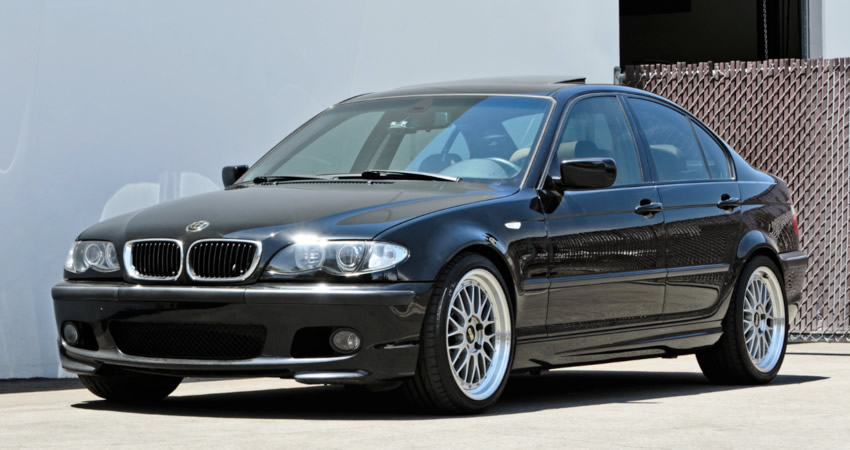
BMW E46, four-door sedan 
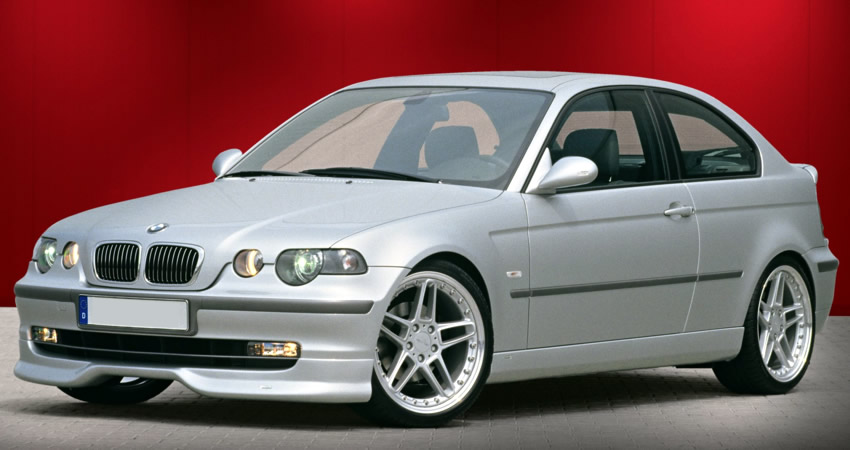
BMW E46, four-door sedan
In May 1995, the E46 exterior design was approved. The four-door saloon followed in 1998, the coupe and wagon in 1999, the convertible in 2000 and the hatchback (compact) in 2001. The E46 body was claimed to be 70% more rigid than its predecessor, the E36. The engine was positioned at the front with rear-wheel drive, and all-wheel drive was also introduced. The electronics were more integrated, including the use of a CAN bus system.

BMW E46, hatchback 
BMW E46, hatchback
The range of petrol engines with 4 and 6 cylinders includes 13 modifications with a volume from 1.6 to 3.0 liters and a power from 103 to 235 hp, all with direct injection. Diesel engines have five variants with a volume of 1.8, 2.0 and 3.0 liters and a power from 114 to 201 hp, all with turbocharging. Manual gearboxes are 5-speed ZF S5-39 and Getrag S5D, 6-speed ZF S6-37. Automatic transmissions are 4-speed GM 4L30-E, 5-speed GM 5L40-E and ZF 5HP19, as well as 6-speed SMG-II.

Fifth generation (E90, E91, E92, E93; 2004–2013)
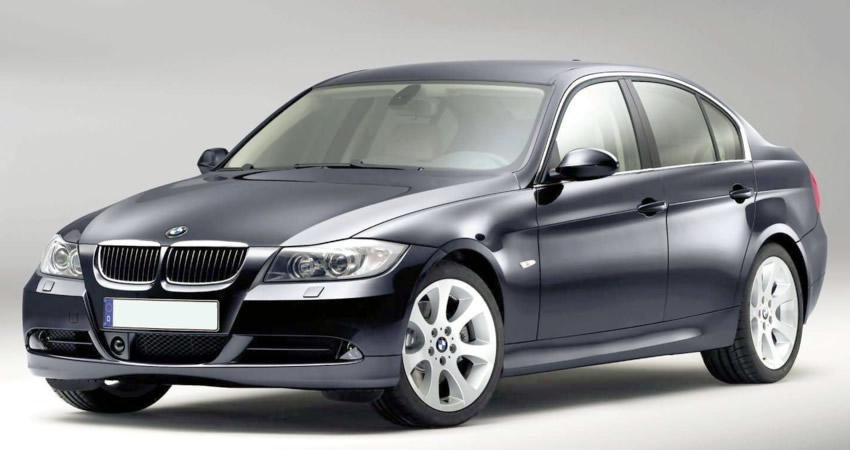


BMW E90, four-door sedan 
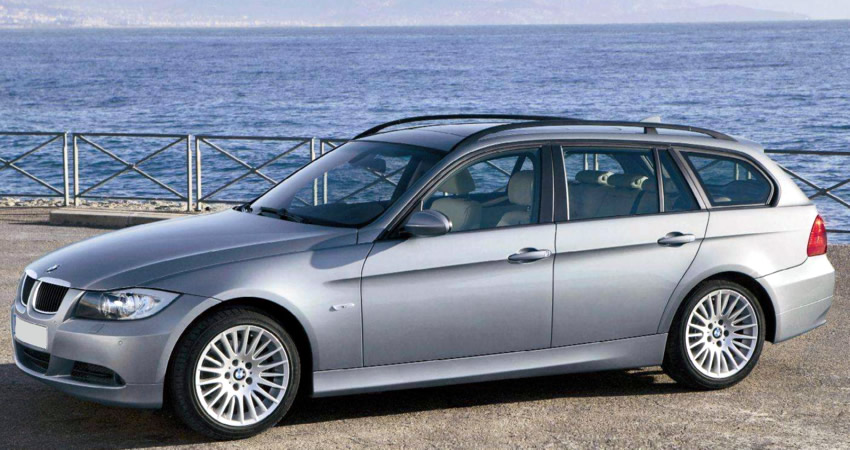
BMW E90, four-door sedan
The design for the fifth generation 3 Series was frozen in mid-2002, and production began in December 2004. The engine was front-mounted with rear-wheel drive or all-wheel drive. Body styles included a 4-door sedan (E90), 5-door wagon (E91), 2-door coupe (E92), and 2-door convertible (E93). The sedan was slightly longer and wider than the previous generation. Aluminum MacPherson struts were used in the front, and a steel 5-link multi-link suspension was used in the rear.

BMW E91, wagon 
BMW E91, wagon
The range of petrol engines includes 19 models of 4 and 6 cylinders with a volume of 1.6 to 3.5 liters and a power of 114 to 322 hp. Diesel engines of 12 modifications of 4 and 6 cylinders with a volume of 1.6 to 3.5 liters and a power of 114 to 282 hp, all with turbocharging. Transmission is optionally automatic or manual. In total, about 3 million cars were produced during the entire period.

Sixth generation (F30, F31, F34, F35; 2011-present time)
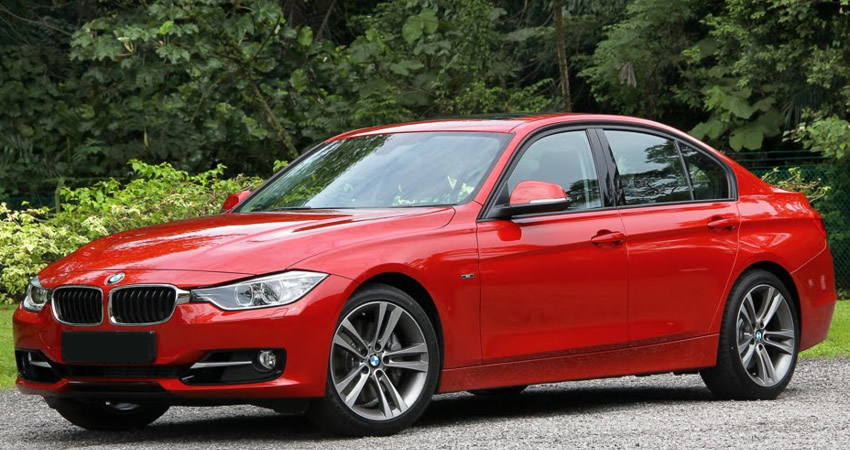


BMW F30, sedan 
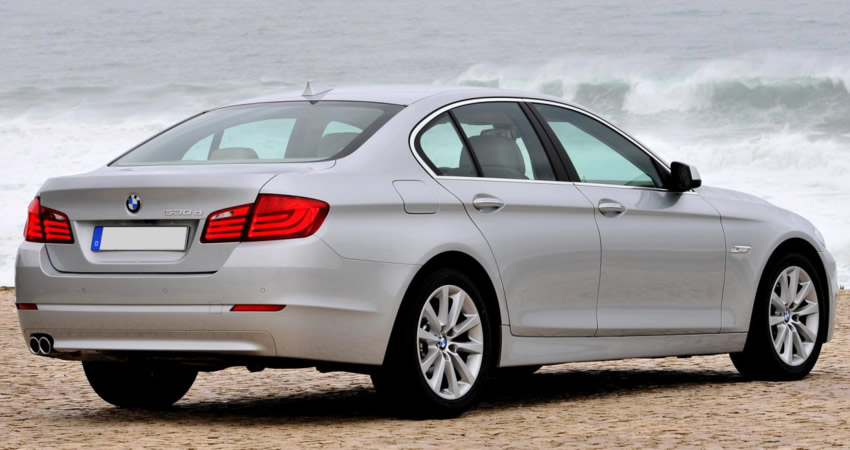
BMW F30, sedan
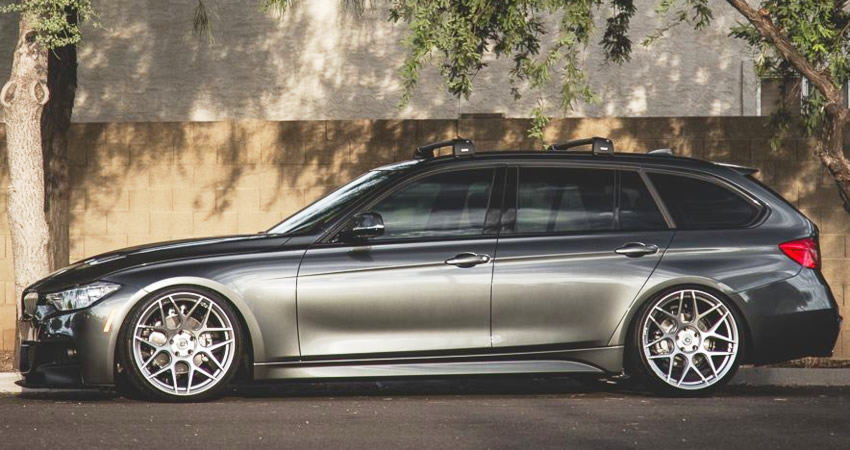
At the end of 2011, the sixth generation of the BMW 3 Series was released. It was the first to use turbocharged petrol engines and electric power steering (instead of power steering). Body types were 4-door sedan (F30), 5-door station wagon (F31), 5-door hatchback (F34, Gran Turismo) and a 4-door sedan with an extended wheelbase (F35). A new series name was allocated for the models with coupe and convertible bodies – BMW 4 Series.

BMW F30, sedan, back view 
BMW F30, sedan, back view
There are nine petrol engines with a capacity of 1.6 to 4.0 litres and a capacity of 130 to 320 hp, as well as one petrol engine in tandem with an electric motor (hybrid) with a capacity of 340 hp. There are 13 diesel engines with a capacity of 1.6 to 3.5 litres and a capacity of 114 to 310 hp. Automatic transmission (8-speed ZF 8HP45 or ZF 8HP50) or mechanical (6-speed Getrag GS6-17BG or Getrag GS6-45BZ).

In 2015, the generation underwent a cosmetic facelift in appearance, as well as numerous internal changes.
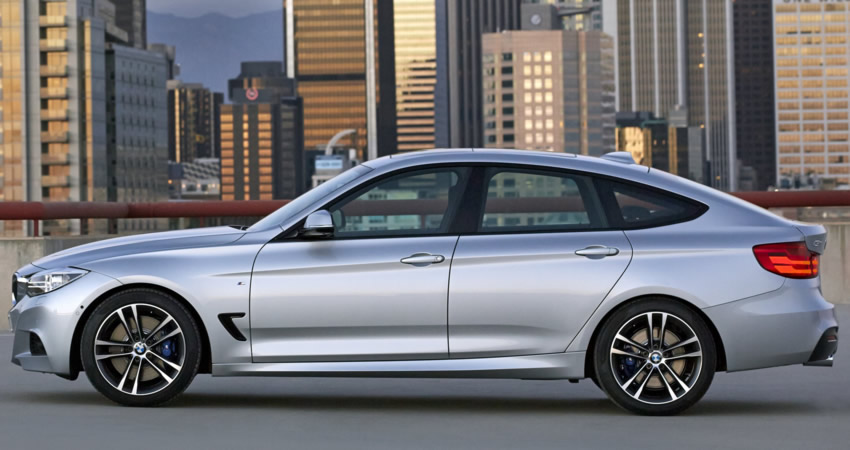
BMW F34, Gran Turismo 
BMW F34, Gran Turismo
BMW F31, wagon 
BMW F31, wagon
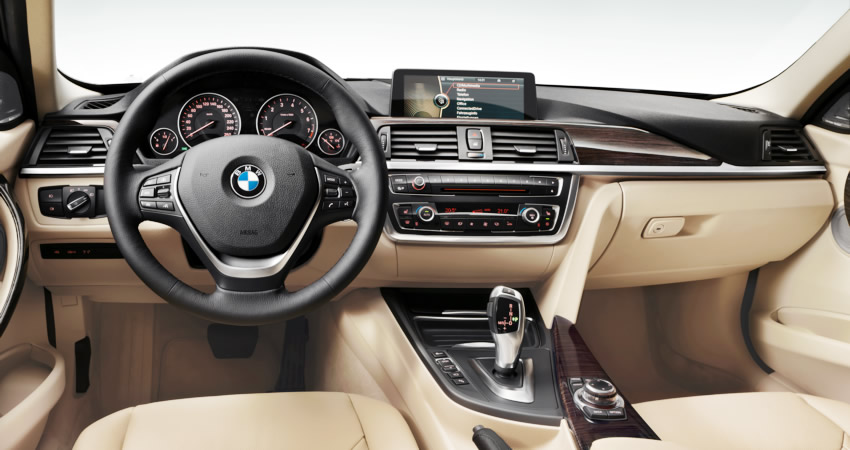
BMW F30, interior 
BMW F30, interior


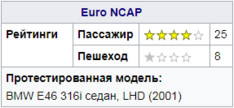
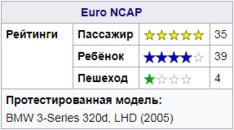
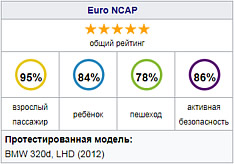
Testing the safety of some cars


Share information:


Link in different formats to this page
TextHTMLBB Code

BMW E46 (1998-2006) 
  • General information
  • Manual
  • Maintenance
  • Power unit
  • Engine repair
  • Cooling system
  • Power system (gasoline)
  • Injection system (gasoline)
  • Fuel system (diesel)
  • Exhaust system
  • Ignition system
  • Charge and launch systems
  • Transmission
  • Car gearbox
  • Clutch and drive shafts
  • Chassis
  • Brake system
  • Suspension front and rear
  • Steering
  • Body
  • Body care and repair
  • Exterior
  • Interior
  • Electrical equipment
  • Troubleshooting
  • Lighting and signaling
  • Equipment and devices
  • Heater and air conditioner
  • Electrical circuits
BMW E46 (1998-2006, petrol) 
  • General information
  • Manual
  • Repair on the road
  • Weekly checks
  • Maintenance
  • Troubleshooting
  • Power unit
  • 4 cylinder engines
  • 6 cylinder engines
  • Engine overhaul
  • Cooling and heating
  • Fuel and exhaust system
  • Starting and charging system
  • Ignition system
  • Transmission
  • Clutch
  • Mechanical gearbox
  • Automatic gearbox
  • Cardan and drive shafts
  • Chassis
  • Brake system
  • Wheel suspension
  • Steering
  • Body
  • Exterior
  • Interior
  • Electrical equipment
  • Equipment and devices
  • Electrical circuits
BMW E36 (1990-2000) 
  • General information
  • Maintenance
  • Power unit
  • Engine repair
  • Cooling system
  • Ignition system
  • Supply system
  • Fuel injection system
  • Exhaust system
  • Transmission
  • Clutch
  • Car gearbox
  • Front and rear axle
  • Chassis
  • Steering
  • Brake system
  • Body
  • Exterior
  • Interior
  • Electrical equipment
  • Heating system
  • Equipment and devices
  • Power devices
  • Electrical circuits
BMW E30 (1982-1994) 
  • Power unit
  • M10/M20 engine
  • M40 engine
  • Ignition system
  • Lubrication system
  • Cooling system
  • Supply system
  • Fuel injection
  • Exhaust system
  • Transmission
  • Clutch
  • Manual gearbox
  • Front axle
  • Rear axle
  • Chassis
  • Steering
  • Brake system
  • Body
  • Exterior
  • Interior
  • Electrical equipment
  • Heating system
  • Equipment and devices
  • Electrical circuits
BMW E21 (1975-1983) 
  • General information
  • Specifications
  • Operation and maintenance
  • 4-cylinder engine
  • Engine repair
  • Cooling and lubrication system
  • Supply system
  • Ignition system
  • 6-cylinder engine
  • Engine repair
  • Cooling and lubrication system
  • Supply system
  • Fuel injection system
  • Ignition system
  • Transmission
  • Clutch
  • 4-speed manual gearbox
  • 5-speed manual gearbox
  • Automatic gearbox
  • Cardan and rear axle
  • Chassis
  • Steering
  • Front suspension
  • Rear suspension
  • Brake system
  • Electrical equipment
  • Equipment and devices
  • Electrical circuits
BMWman.ru © 2017-2026 · Mobile version · News and articles · Sitemap: EN BG BY UA RS HR RO PL SK HU · Feedback · Site search
3er E21 · 3er E30 · 3er E36 · 3er E46 [petrol] · 3er E46 · 5er E12 · 5er E28 · 5er E34 · 5er E39 · 7er E32 · 7er E38 · X3 E83 · X5 E53 ·
This site uses cookies 🍪, without them some features simply would not work.