



The BMW X5 debuted in 1999. It is a mid-size luxury crossover and belongs to the J-segment according to the European classification (Sports utility vehicle or SUV). It is produced by the German automaker BMW and is the company's first SUV. It was developed during the time when BMW owned the brand Land Rover and the X5 has adopted many of the car's off-road features Range Rover. The engine is located at the front with all-wheel drive (by default, 62% of the torque goes to the rear axle, 38% to the front), the transmission is automatic or manual. The main competitors are Audi Q7, Chevrolet Tahoe, Lexus RX 300, Mercedes-Benz M-Class, Mitsubishi Pajero, Porsche Cayenne, Suzuki Grand Vitara, Toyota 4Runner and Volkswagen Touareg.
Starting with the X5, the BMW crossover series expanded and in 2003 they began producing a compact crossover X3, and then in 2008 began production of a luxury mid-size crossover X6, which shares its platform with the X5.
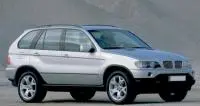
BMW X5 E53, front view
The X5's history begins in 1994, when BMW began considering crossovers following its acquisition of Rover. By the fall of 1996, the design had been approved and the basis for the X5 (E53) had been defined, with prototypes being tested in the second half of 1997. Production began on September 1, 1999 first generation X5 with E53 body at BMW's US plants in Greer, South Carolina and Toluca, Mexico.
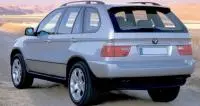
BMW X5 E53, back view
The BMW X5 was developed primarily as a sports car, and its off-road capabilities are inferior to those of the Range Rover, its inspiration. For this reason, BMW classified the X5 as an SAV (Sports Activity Vehicle), instead of SUV.
In 2003, the car was restyled. Changes were made to the headlights, grilles, and taillights, new exterior colors were available, engines were upgraded, and a new xDrive all-wheel drive system was introduced. The car can now direct any percentage of engine power to the front or rear axle, instead of the original 62%-38% ratio.
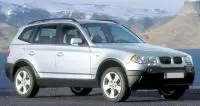
BMW X5 E53, restyling 2003
There were five petrol engines: 3.0 litres (l6, 231 hp), 4.4 litres (V8, 286 hp), 4.4 litres (V8, 320 hp), 4.6 litres (V8, 340 hp) and 4.8 litres (V8, 360 hp). There were only two diesel engines: both 3.0 litres, producing 184 and 218 hp. Transmissions were 5- and 6-speed automatic and manual. In 2006, production of the E53 ended and it was replaced by the new E70 body style.
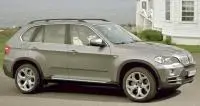
BMW X5 E70, side view
The second generation BMW X5 was unveiled at the Paris Motor Show in August 2006. Official sales began in November 2006. Production was also located in the USA. The xDrive all-wheel drive system, introduced on the restyled first generation, is also used on the E70, with further improvements. The car's body has become 165 mm longer, 60 mm wider and the wheelbase has been increased by 110 mm.
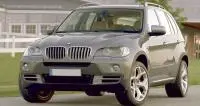
BMW X5 E70, front view
The car features many new technological advances for this class, including the iDrive system, electronic "joystick" gear shifting, LED taillights, head-up displays, active steering, active suspension, active anti-roll bars and other solutions for a more comfortable and safe ride. The car's interior has become larger and has been completely updated. A central display with a large screen has appeared. The number of seats was increased to seven by installing folding seats in the trunk.
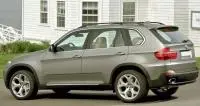
BMW X5 E70, back view
The X5 was equipped with four petrol engine models: 3.0 liters (l6, 261 hp), 3.5 liters (l6, 302 hp), 4.8 liters (V8, 350 hp), and 5.0 liters (V8, 402 hp). There were initially three diesel engines: 3.0 liters (l6, 232 hp), 3.5 liters (l6, 282 hp), and 3.5 liters (l6, 265 hp). In 2011, two 6-cylinder in-line diesel engines appeared: 3.0 and 4.0 liters, producing 242 and 302 hp. Initially, the transmission was only a 6-speed Steptronic automatic, and since 2011, an 8-speed ZF 8HP automatic has appeared.

BMW X5 F15, front view
The third generation was unveiled at the Frankfurt Motor Show in September 2013. Production began in August 2013, and official sales began in November 2013. The exterior, designed by BMW designer Mark Johnson, was approved in November 2010. The car's body became slightly larger, but the wheelbase remained the same. The use of ultra-high-strength steel, thermoplastics, aluminum, and magnesium has resulted in a 90 kg weight reduction. The interior now features a 10.25-inch display.

BMW X5 F15, back view
Three petrol engine modifications are installed: a 3.5-liter inline l6 with a capacity of 302 hp, a 5.0-liter V8 with a capacity of 444 hp, and a 2.0-liter inline l4 in a hybrid power plant with a total capacity of 298 hp. There are also three diesel engine modifications: a 2.0-liter l4 with a capacity of 215 hp, a 3.0-liter l6 with a capacity of 254 hp, and a 3.0-liter l6 with a capacity of 309 hp. Only one transmission is installed: an 8-speed automatic ZF 8HP.

BMW X5 G05, front view
The official premiere of the fourth generation took place in October 2018 at the Paris Motor Show, and the launch of production took place in November. The G05 modification uses the CLAR platform (BMW Cluster Architecture), on which were also built sixth generation 7-series and seventh generation 5-series. The body is a five-door SUV measuring 4935 mm in length, 2004 mm in width, 1765 mm in height, and a wheelbase of 2975 mm. A third row of seats became available in 2019. In April 2022, the X5 with an extended wheelbase (3105 mm) was released for the Chinese market under the code G18, with an overall body length of 5060 mm.
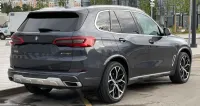
BMW X5 G05, back view
Standard equipment includes LED headlights, electronically controlled adaptive dampers, heated and powered sports seats, a five-link rear suspension, two 12.3-inch displays, and the iDrive system. Options include laser headlights, air suspension with 80 mm of travel on both axles, a differential lock, rear-axle steering, an aroma diffuser, and a panoramic glass roof. The drag coefficient for the G05 is 0.31, the same as the previous modification. An armored version appeared in August 2019 "X5 Protection VR6", capable of withstanding hits from an AK-47.
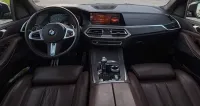
BMW X5 G05, interior
The petrol engine range included the following models: 2.0 litre (1998 cm³, B48 I4, 261 hp), 3.0 liters (2998 cm³, B58 I6, 329/335/375 hp), 4.4 liters (4395 cm³, N63 V8, 456/523 hp), 4.4 liters (4395 cm³, S63 / S68 V8, 523/591/617 hp). The 3-liter engine was a plug-in hybrid with a total output of 389/483 hp. There were two 2.0-liter diesel engine options (1995 cm³, B47 I4, 228 hp) and 3.0 liters (2993 cm³, B57 I6, 261/335/394 hp). The gearbox is only 8-speed automatic "ZF 8HP".

BMW X5 G05, restyling
There was also a production version with hydrogen fuel cells, the BMW iX5 Hydrogen, which was introduced in 2021 and is produced in limited numbers. It has a maximum power of 401 hp and a range of about 500 kilometers.
The model was updated in March 2023. The front grille and bumper, headlights and taillights have been redesigned, and new wheel options have been introduced. The Highway Assistant driver assistance system has appeared, which is also present in G70 7 Series.
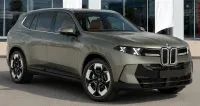
BMW X5 G65, front view
The fifth-generation X5 was officially unveiled in June 2026. Production began in late summer 2026 at the Spartanburg, USA, plant. The G65 represents a radical stylistic and technological update to the flagship SUV, borrowing design elements and technologies from BMW's New Class vehicles. It uses the previous-generation Cluster Architecture (CLAR) platform. The body length was 4994 mm, width 2000 mm, height 1748 mm, and wheelbase 3035 mm. A long-wheelbase (3165 mm) version for the Chinese market, codenamed G78, was unveiled in July 2026.

BMW X5 G65, back view
The radiator grilles have become noticeably smaller, and the daytime running lights are stylized in an X-shape. The rear hatch is now monolithic for the first time; previously, it was divided into two parts. The interior is also inspired by other Neue Klasse models, including the Panoramic Vision (projects information onto a black surface under the windshield), large parallelogram-shaped central display, passenger display and 3D head-up display. In China, the car is available with a 31-inch screen for rear passengers. There are no modifications with three rows of seats. Equipped with adaptive suspension as standard. It has a double wishbone axle at the front and a five-link axle at the rear. Air suspension with rear axle steering is available as an option.

BMW X5 G65, interior
The car was equipped with a 3.0-liter mild hybrid gasoline engine (2998 cm³, B58 I6, 400 hp), and the same engine was paired with an electric motor and a 26.5 kWh battery with a maximum power of 50e: 313+197 hp.; M60e: 426+197 hp. The diesel engine was also a mild hybrid with a volume of 3.0 liters (2993 cm³, B57 I6, 286 hp). All combustion engine models featured an 8-speed ZF 8HP automatic transmission with steering wheel-mounted paddle shifters (Steptronic). The iX5 60 xDrive electric vehicle featured two electric motors producing 578 hp, a 141 kWh battery, and a range of 645–845 km.
Starting with the X5, the BMW crossover series expanded and in 2003 they began producing a compact crossover X3, and then in 2008 began production of a luxury mid-size crossover X6, which shares its platform with the X5.
First generation (E53; 1999–2006)
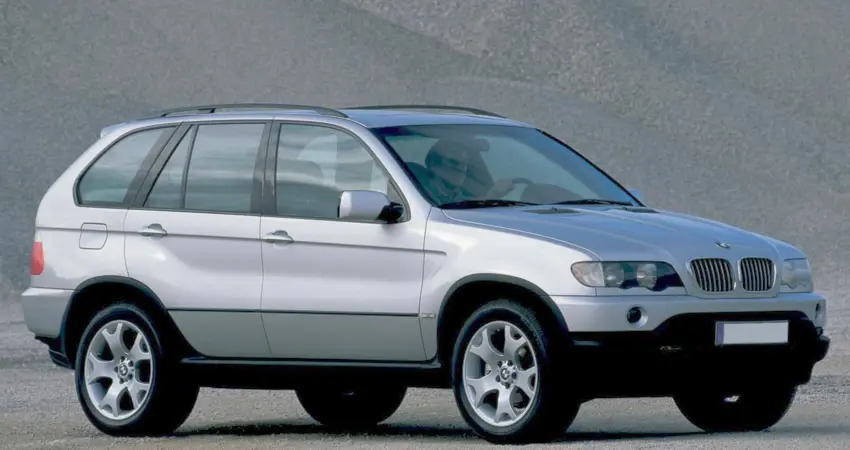
BMW X5 E53, front view
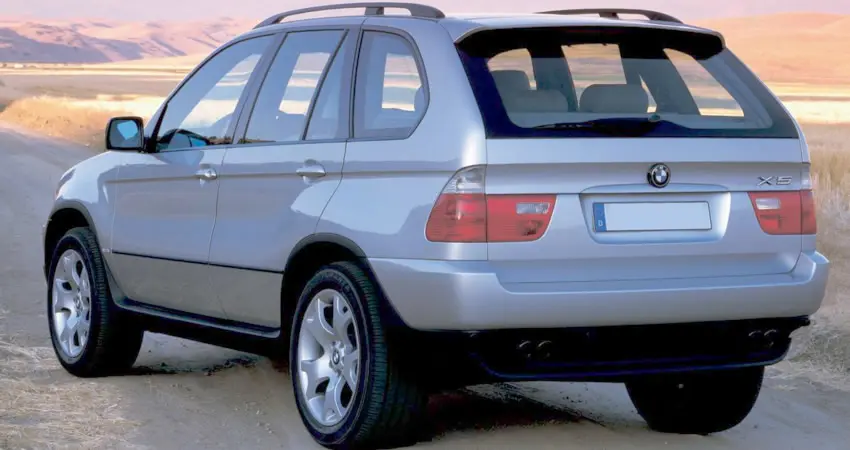
BMW X5 E53, back view
In 2003, the car was restyled. Changes were made to the headlights, grilles, and taillights, new exterior colors were available, engines were upgraded, and a new xDrive all-wheel drive system was introduced. The car can now direct any percentage of engine power to the front or rear axle, instead of the original 62%-38% ratio.
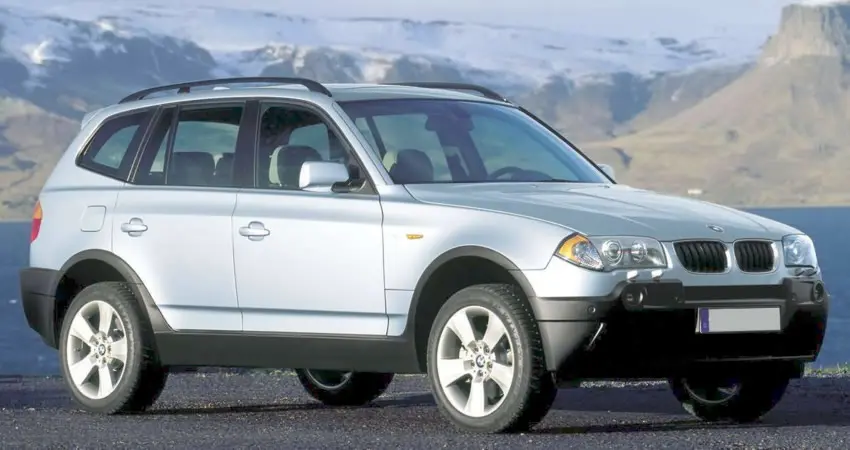
BMW X5 E53, restyling 2003
Second generation (E70; 2006–2013)
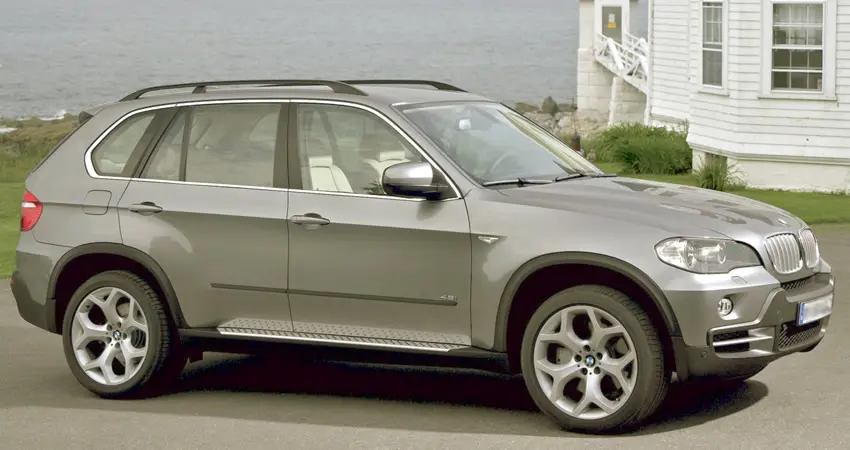
BMW X5 E70, side view
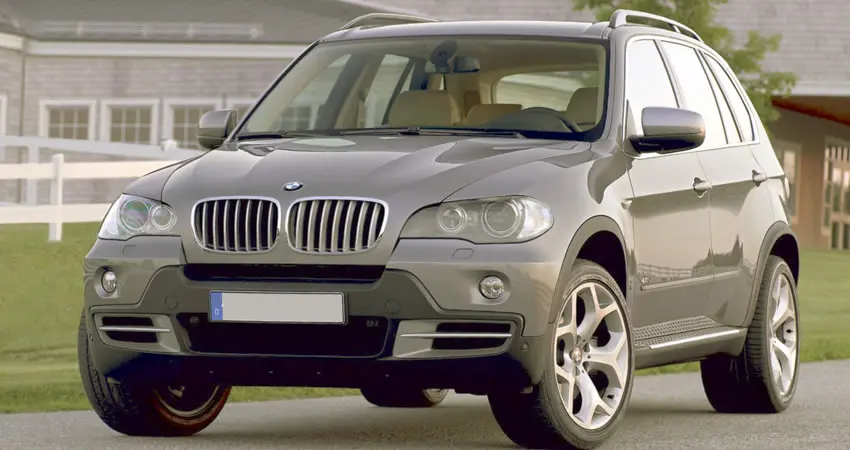
BMW X5 E70, front view
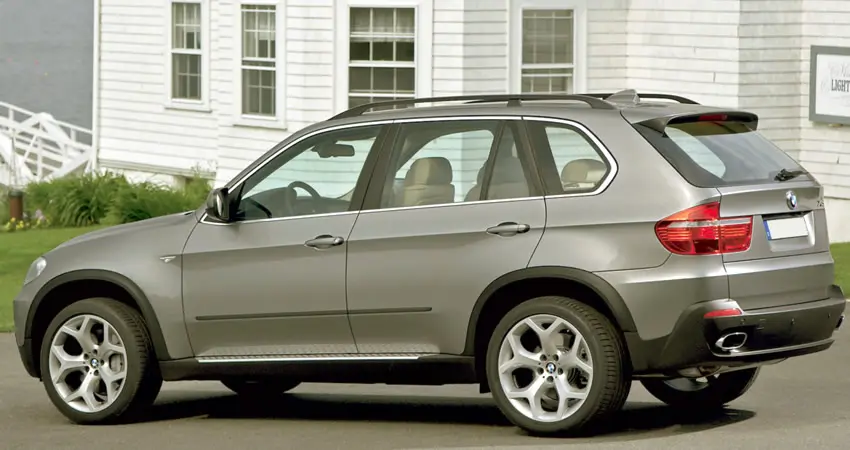
BMW X5 E70, back view
Third generation (F15; 2013–2018)
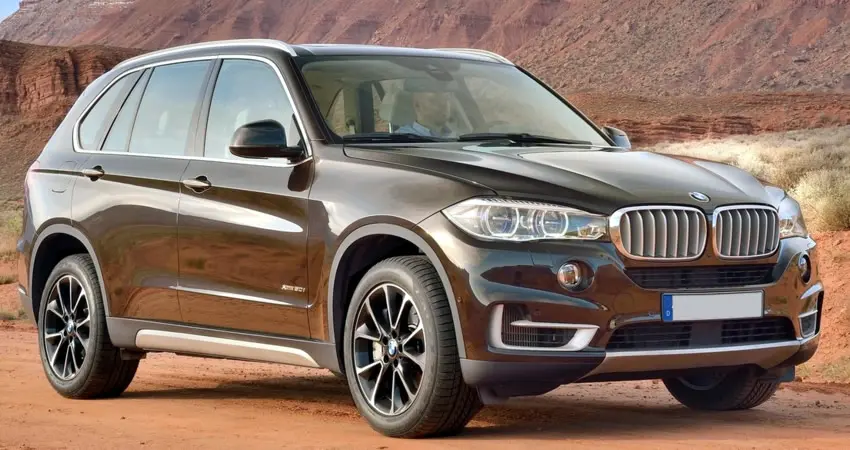
BMW X5 F15, front view
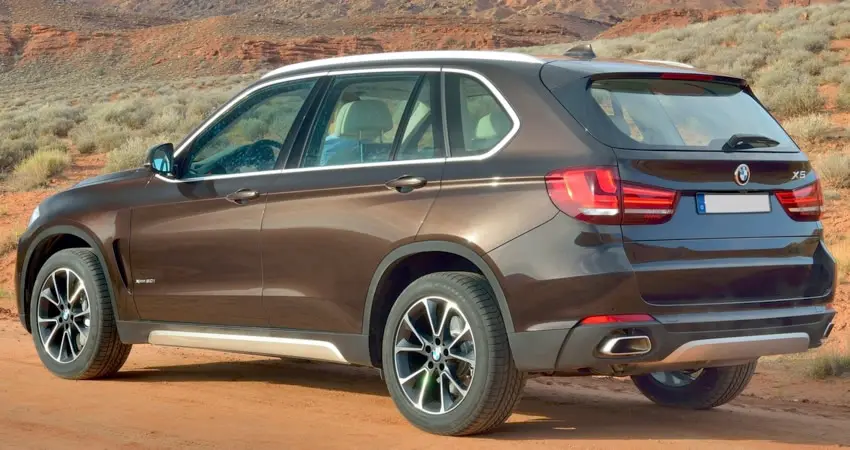
BMW X5 F15, back view
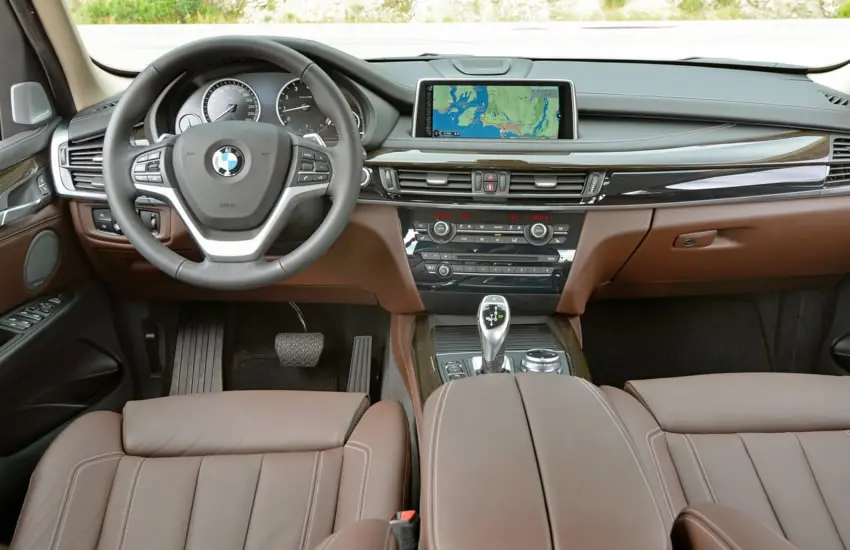 BMW X5 F15, control panel | 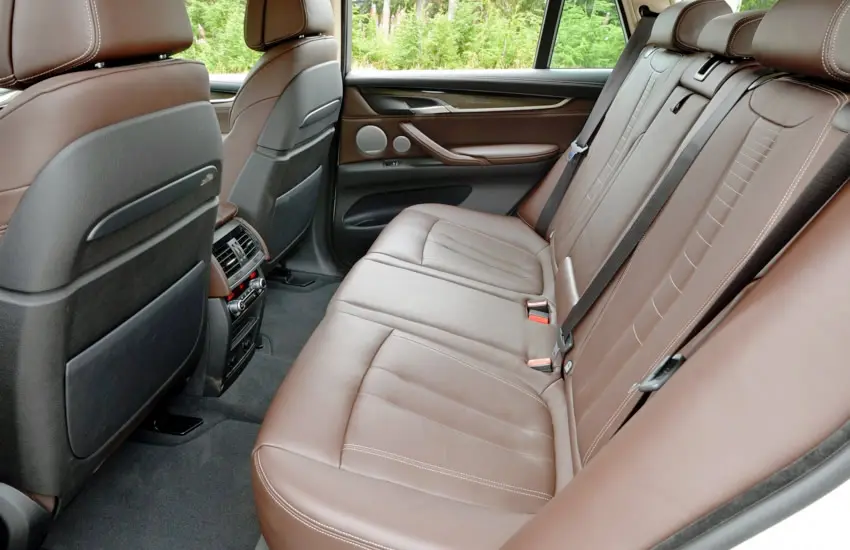 BMW X5 F15, rear seats | 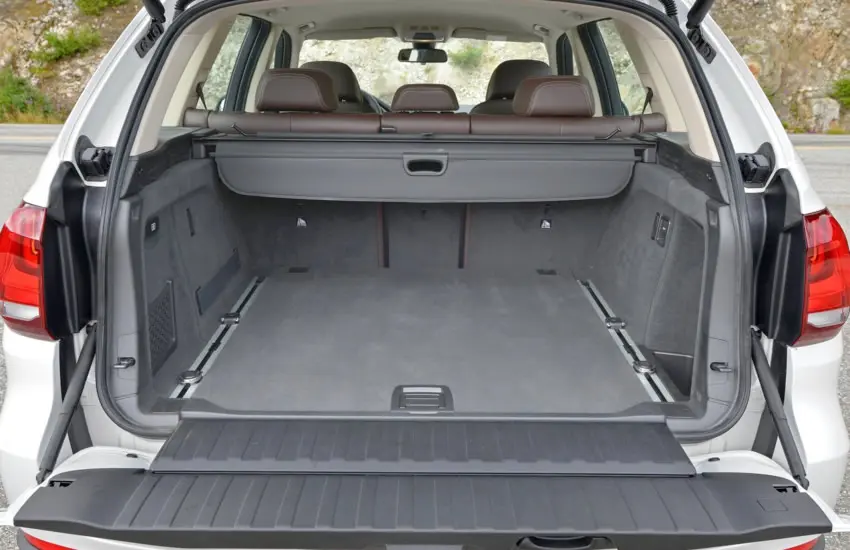 BMW X5 F15, trunk |
Fourth generation (G05; 2018–2026)
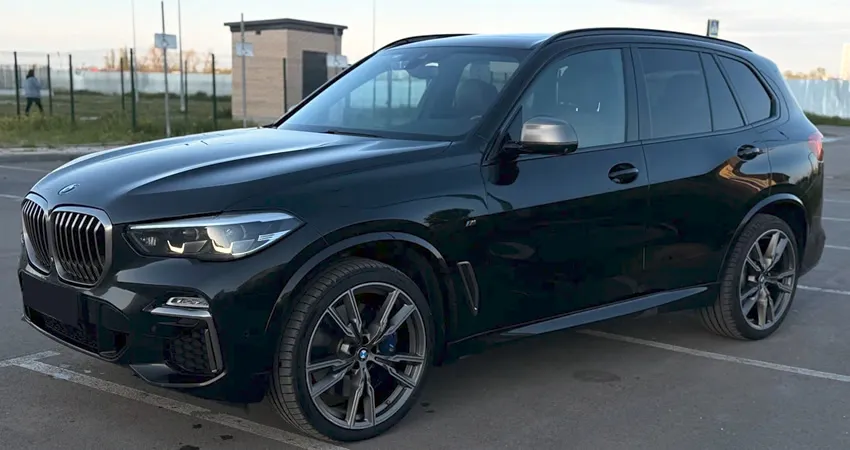
BMW X5 G05, front view
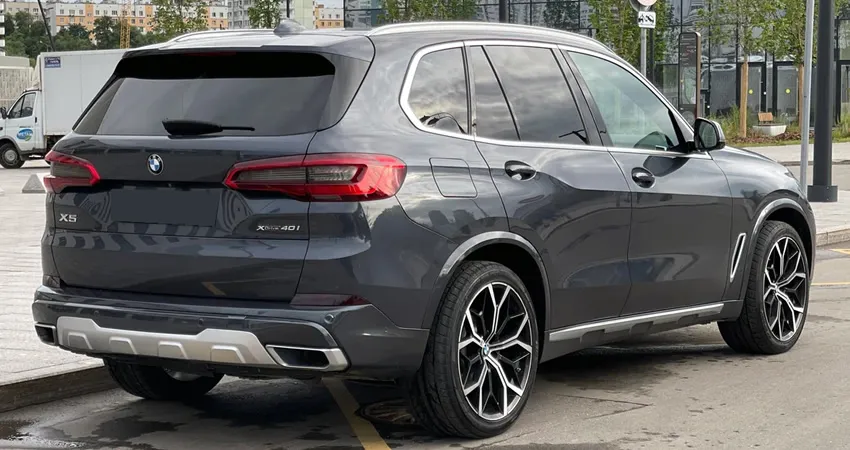
BMW X5 G05, back view
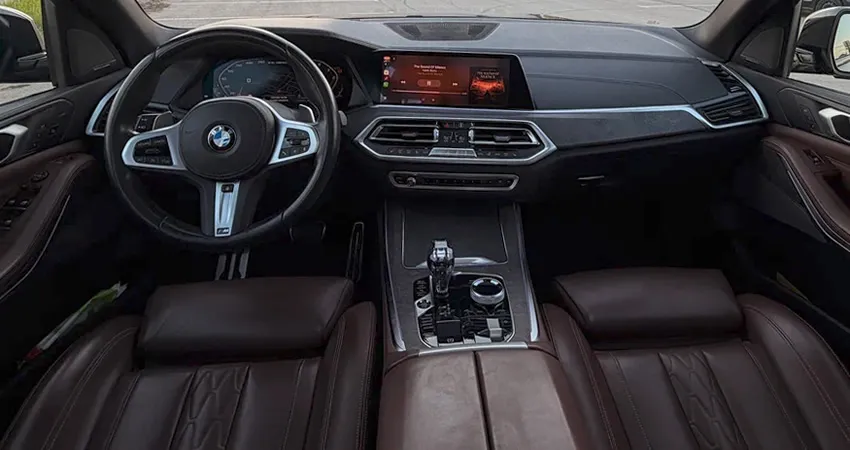
BMW X5 G05, interior
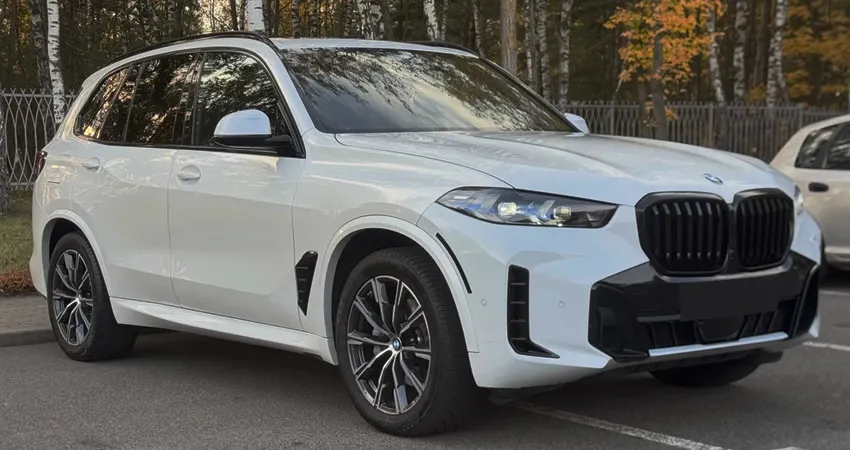
BMW X5 G05, restyling
The model was updated in March 2023. The front grille and bumper, headlights and taillights have been redesigned, and new wheel options have been introduced. The Highway Assistant driver assistance system has appeared, which is also present in G70 7 Series.
Fifth generation (G65; 2026–present)
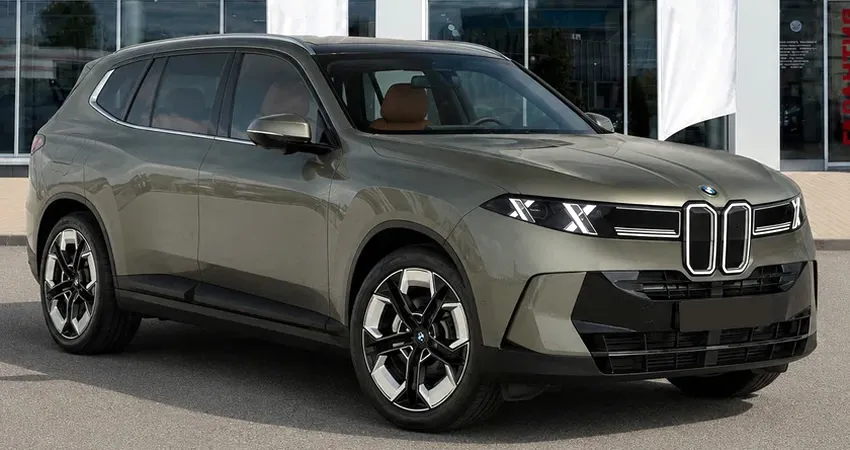
BMW X5 G65, front view
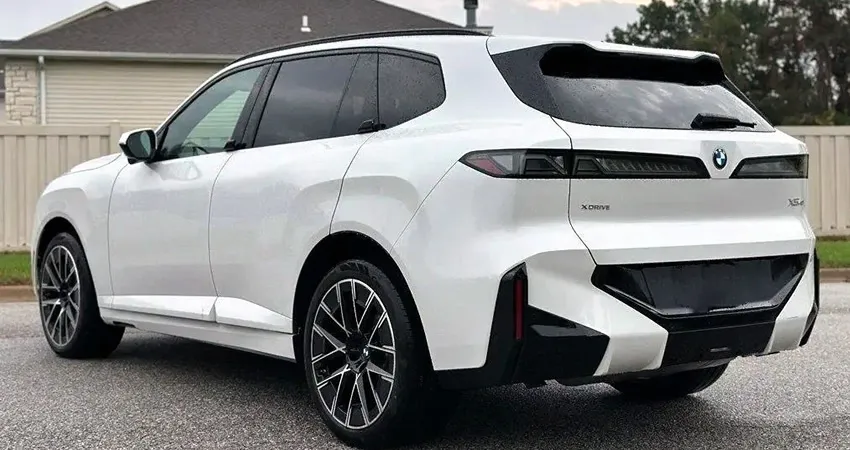
BMW X5 G65, back view
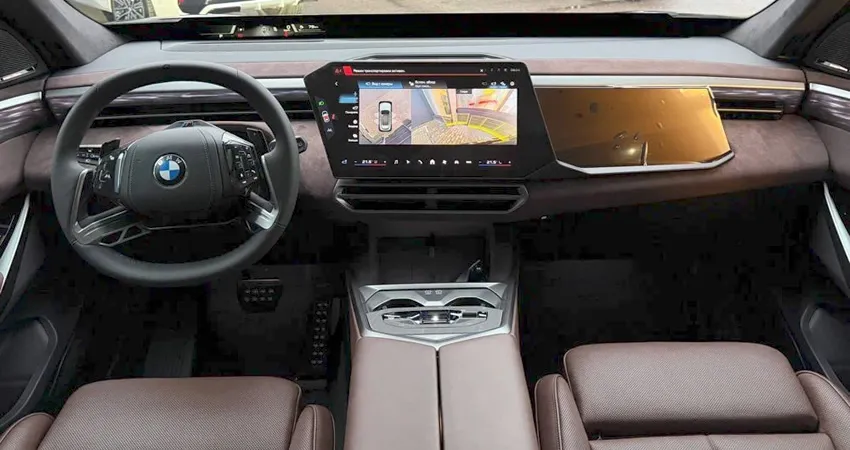
BMW X5 G65, interior
Share information:
Link in different formats to this page
TextHTMLBB Code
- General information
- Manual
- Maintenance
- M54 petrol engine
- Engine repair
- Lubrication system
- Cooling system
- Supply system
- Injection system
- Exhaust system
- Engine electrics
- M62 petrol engine
- Engine repair
- Lubrication system
- Cooling system
- Supply system
- Exhaust system
- Engine electrics
- N62 petrol engine
- Engine repair
- Cooling and lubrication system
- Power and exhaust system
- Engine electrics
- Diesel engine M57
- Engine repair
- Lubrication system
- Cooling system
- Power and exhaust system
- Engine electrics
- Turbocharging system
- Transmission
- Clutch
- Mechanical gearbox
- Automatic gearbox
- Transfer case and cardan
- Chassis
- Brake system
- Steering
- Front suspension
- Rear suspension
- Wheels and tires
- Body
- Exterior
- Interior
- Doors and windows
- Repair and maintenance
- Heater and air conditioner
- Electrical equipment
- Equipment and devices
- Levers and switches
- Electrical circuits