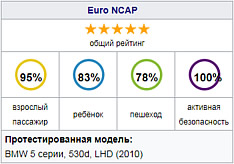
Car names start with the number 5 (means series) and ends with two digits indicating the engine capacity in liters, if you put a comma between them. For example, BMW 520 is decoded as a 5 series with a two-liter engine. They also add the letter "i" at the end if the engine is injection, for example 525i, or the letter "d", which means a diesel engine.
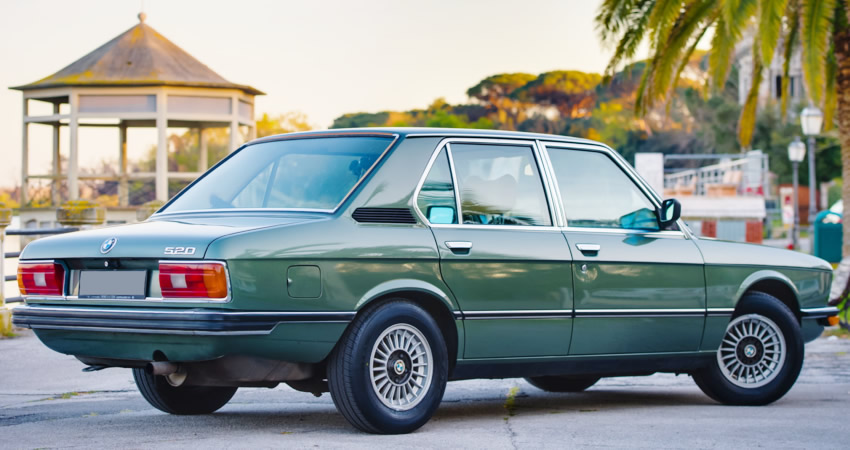
First generation (E12; 1972–1981)
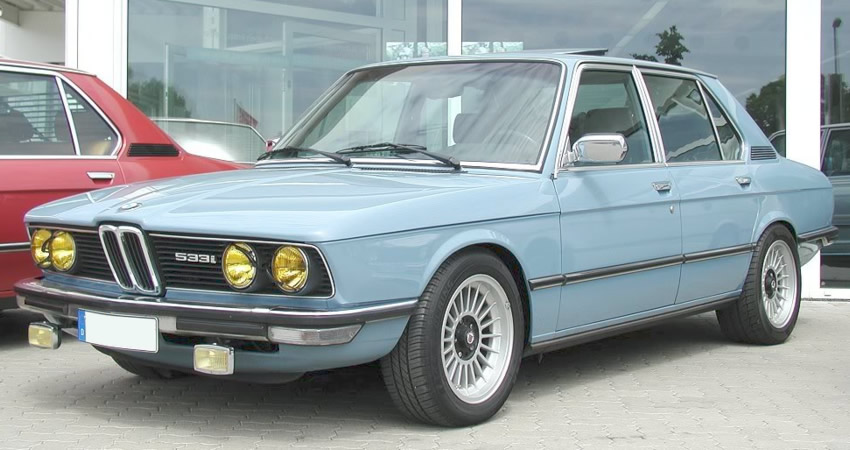
The first generation appeared in 1972 and this car replaced the outdated "New Class Sedans". At the Geneva Motor Show in 1970, BMW presented the 2200ti Gamish concept car. And although it was planned to replace the "New Class" that entered production E12 visually different. The lead designer was French automobile designer Paul Bracq (Paul Bracq).
The first models 518, 520 and 520i were equipped with in-line 4-cylinder engines with a volume of 1.8 and 2.0 liters and a power of 89 to 129 hp. A year and later, in-line 6-cylinder gasoline engines with a volume of 2.0 to 3.3 liters and a power of 123 to 197 hp appeared. Diesel engines were not installed yet. Transmissions were 4-speed manual (Getrag 242 or ZF S4-18), 5-speed mechanical Getrag (235, 245 or 265) and 3-speed automatic ZF (3HP12, 3HP20 or 3HP22).
The E12 was restyled in September 1976. This mainly affected the exterior elements of the car.
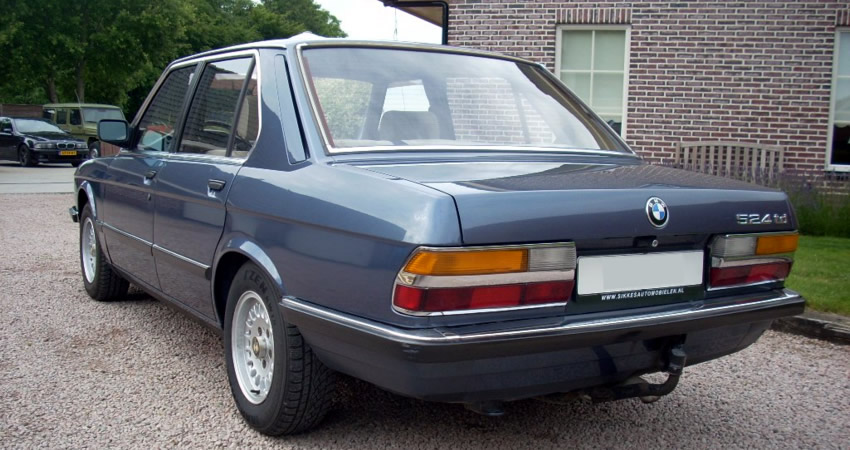
Second generation (E28; 1981–1988)
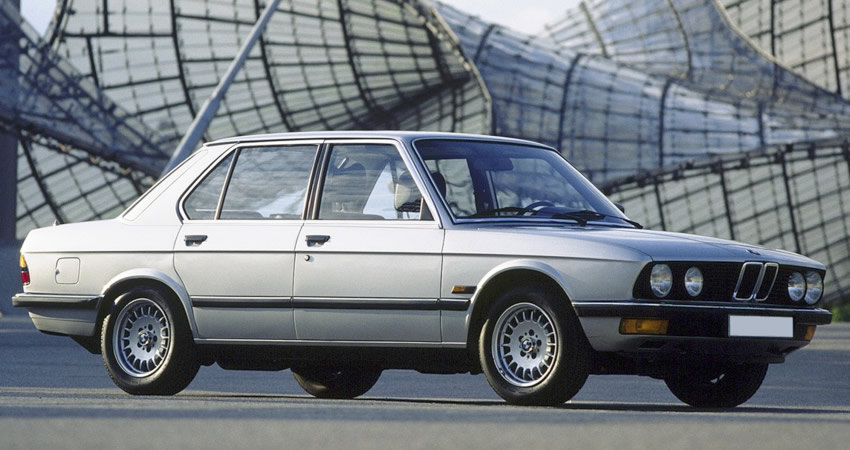
The second generation was presented in June 1981. The most striking innovation was the central console facing the driver, and diesel engines were used for the first time. The engine was located in the front with rear-wheel drive. The body shape was only in the form of a 4-door sedan. This was the last model with a slanted front (popularly called "shark"). In total, more than 700 thousand cars were produced.
The range of petrol engines includes 16 modifications of 4- and 6-cylinder in-line engines with a volume of 1.8 to 3.5 liters and a power of 89 to 215 hp. All engines except one are injection engines. There are two diesel engines with a volume of 2.4 liters and a power of 84 and 114 hp, one is naturally aspirated, the second is turbocharged. Mechanical transmissions: 4-speed Getrag (242, 262); 5-speed Getrag (240, 245, 260, 265 and 280) or ZF S5-16. Automatic transmissions: 3-speed ZF 3 HP 22; 4-speed ZF 4 HP 22.
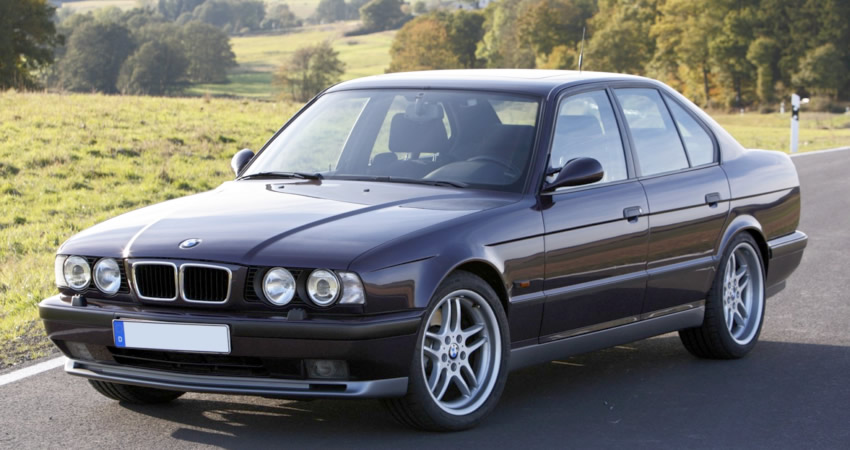
Third generation (E34; 1988–1996)
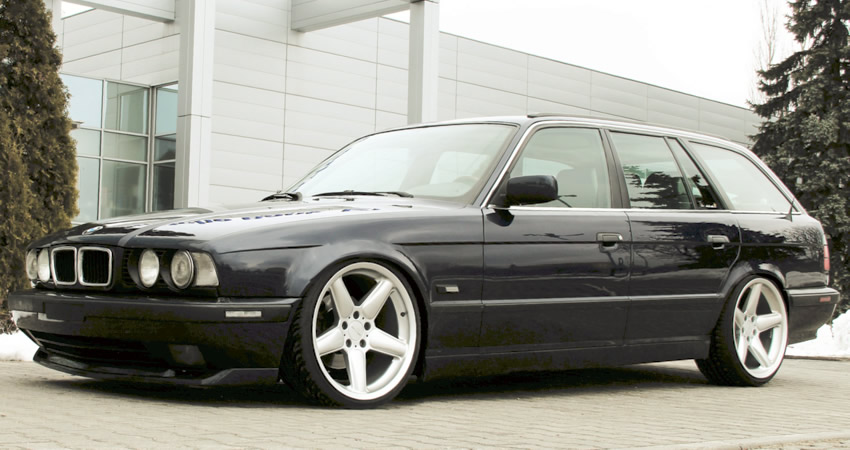
The design was developed from July 1981 to the end of 1987 under the direction of chief designer Klaus Luth. Particular attention was paid to aerodynamics - the E34 has a drag coefficient of 0.30. The third generation was launched in February 1988 and more than 1.3 million cars were built. At first there was only a 4-door sedan body, and in 1990 a 5-door "Touring" station wagon appeared.
The range of petrol engines includes: two 4-cylinder 1.8-litre engines with 111 and 114 hp, eight 6-cylinder in-line engines with 2.0 to 3.5 litre capacities and 127 to 208 hp, as well as two 8-cylinder V-engines with 3.0 and 4.0 litre capacities and 215 and 282 hp. There are three diesel engines with 2.4 and 2.5 litre capacities, all 6-cylinder in-line engines with 114 and 141 hp.
The gearboxes were mechanical: 5-speed Getrag, 5-speed ZF and 6-speed Getrag 420G. Automatic transmissions: 4-speed ZF 4HP22, 4-speed GM 4L30-E, 5-speed ZF 5HP18 and 5-speed ZF 5HP30.
Fourth generation (E39; 1995–2003)
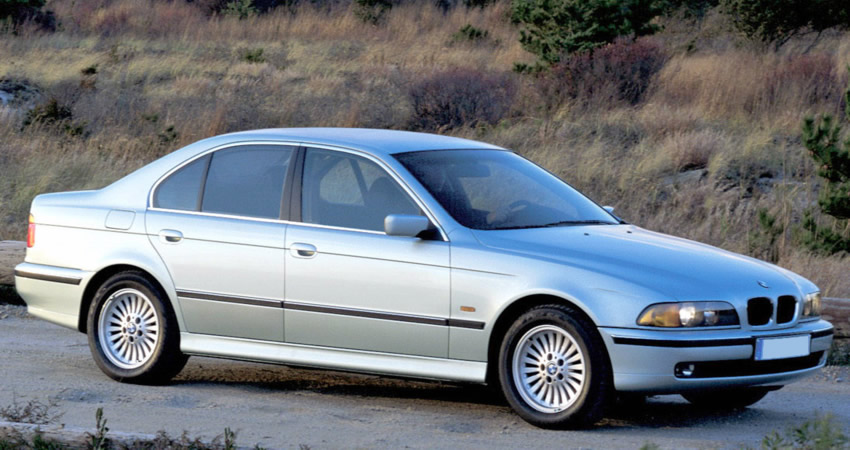
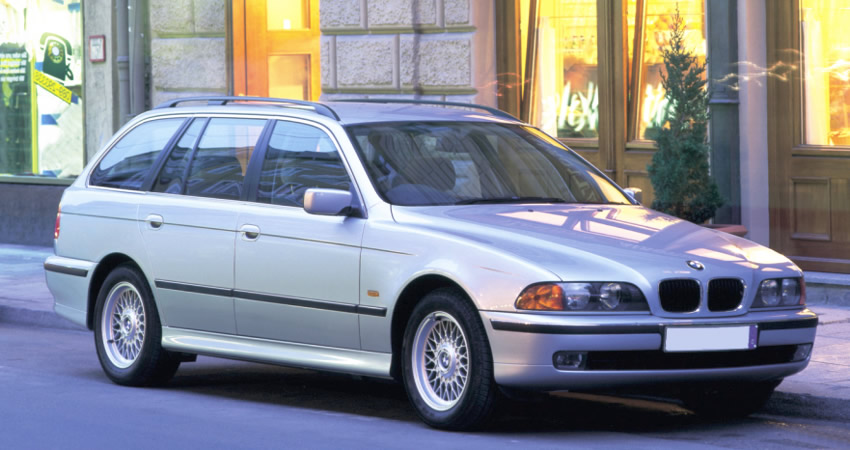
Development of the fourth generation began in early 1989, and the final design by Joji Nagashima was selected in June 1992. The first experimental production models were built in February 1995, and production began in September of that year. The body style was available in two variants - a 4-door sedan and a 5-door station wagon ("Touring"). The engine was located at the front with rear-wheel drive.
Petrol four-cylinder engines are a thing of the past. What remains are 6-cylinder in-line engines with a capacity of 2.0 to 3.0 liters and a capacity of 148 to 228 hp and 8-cylinder V-shaped engines with a capacity of 3.5 to 4.0 liters and a capacity of 232 to 282 hp. But for the first time, a diesel 4-cylinder in-line engine with a capacity of 2.0 liters and 134 hp appeared. Other diesel engines are 6-cylinder in-line engines with a capacity of 2.5 to 3.0 liters and a capacity of 161 to 190 hp.
There is a very large choice of transmissions – five mechanical 5- or 6-speed (ZF, S5D, Getrag) and six automatic 4- or 5-speed (GM, ZF).
Fifth generation (E60, E61; 2003–2010)
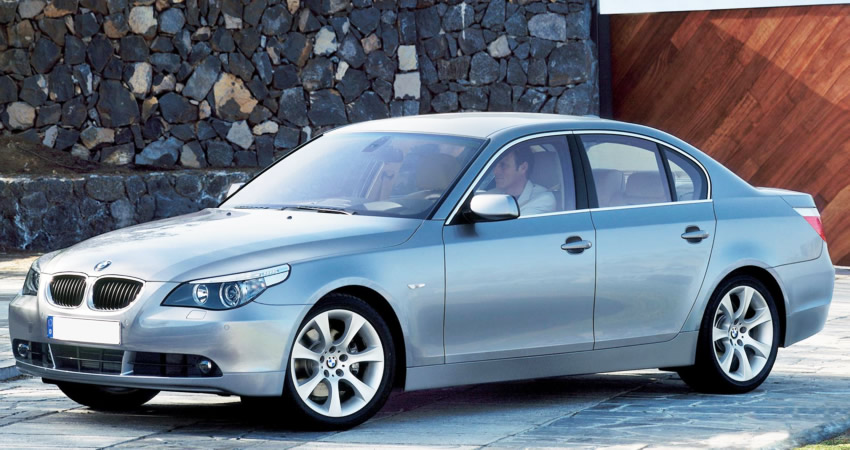
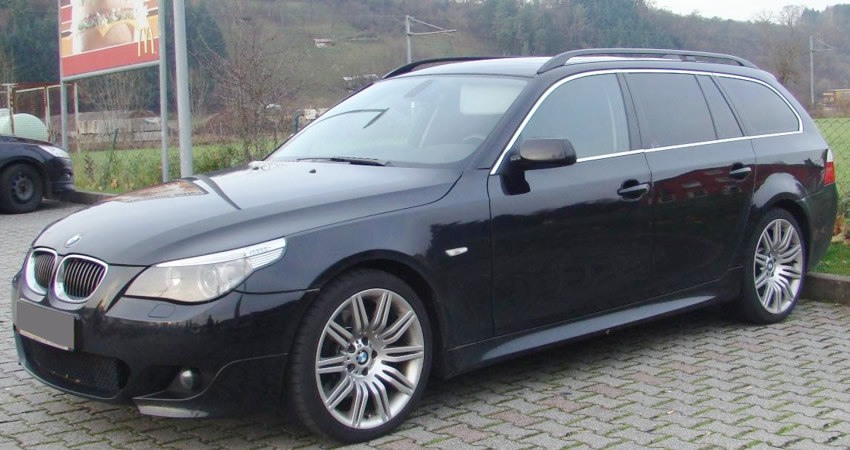
The development programme began in 1997 and was completed in 2003. The final design, written by Davide Arcangeli under the supervision of Chris Browne, was approved in 2000. Two body styles were produced, each assigned a code - E60 for the 4-door saloon and E61 for the 5-door estate. The car body is made of aluminium for the front of the car, and steel for the passenger compartment and rear. This resulted in a 50:50 weight distribution. Over the entire period, approximately 1.3 million cars were produced.
The range of petrol engines includes 15 modifications of 6-cylinder in-line and 8-cylinder V8 engines with a volume of 2.0 to 5.0 liters and a power of 168 to 362 hp. Diesel engines include 10 modifications of 4- and 6-cylinder in-line engines with a volume of 2.0 to 3.5 liters and a power of 161 to 282 hp. Two 5-speed manual transmissions are available (ZF S6-37, ZF S6-53) and two automatic 6-speed (ZF 6HP19, ZF 6HP26).
All models of this generation, in addition to rear-wheel drive, were available with an all-wheel drive option called xDrive.
Sixth generation (F10, F11, F07; 2010–2017)
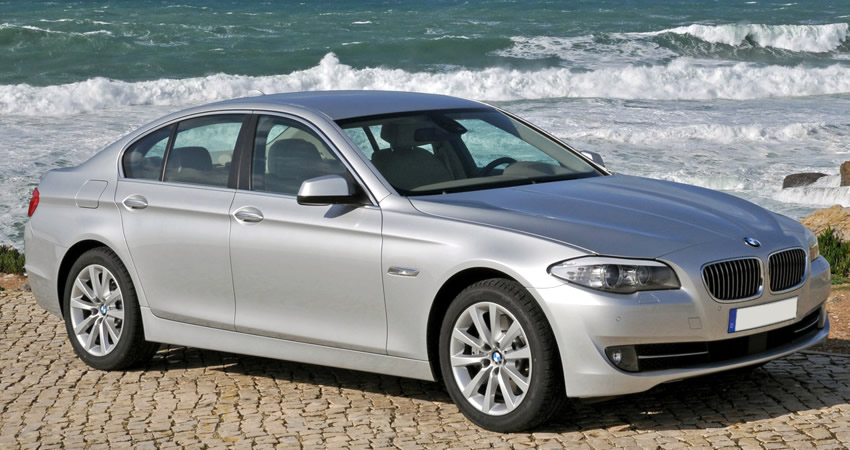
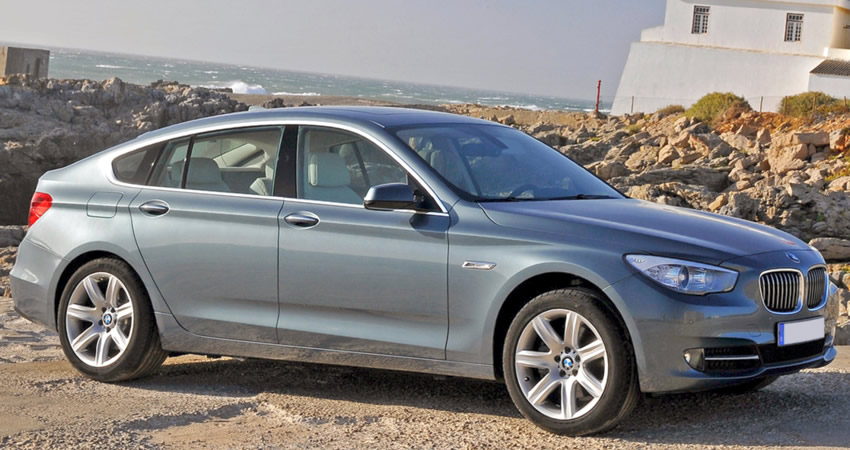
This generation was presented to the public in November 2009, and production began in January 2010 and was produced until March 2017. The exterior was designed by Jacek Frohlich and the car became more similar to the traditional BMW style, compared to the E60. The external dimensions became slightly larger. The range of bodies expanded - in addition to the 4-door sedan (F10) and 5-door station wagon (F11), a 5-door hatchback (F07) appeared, called "Gran Turismo". There is also an extended sedan (F18) for China, Mexico and the Middle East. Rear-wheel drive or all-wheel drive (xDrive).
The petrol engine lineup includes a 2.0-litre 4-cylinder in-line engine with 168 and 181 hp, but with turbocharging. The other engines are 6-cylinder in-line engines with a capacity of 2.3 to 3.5 litres and a capacity of 201 to 302 hp. There are also two 5.0-litre V8 engines with 402 and 444 hp. There are 11 modifications of 4- and 6-cylinder in-line engines with a capacity of 1.8 to 3.5 litres and a capacity of 141 to 308 hp, all turbocharging. There are two transmission options – a 6-speed manual and an 8-speed ZF 8HP automatic.
Seventh generation (G30, G31; 2017-present time)
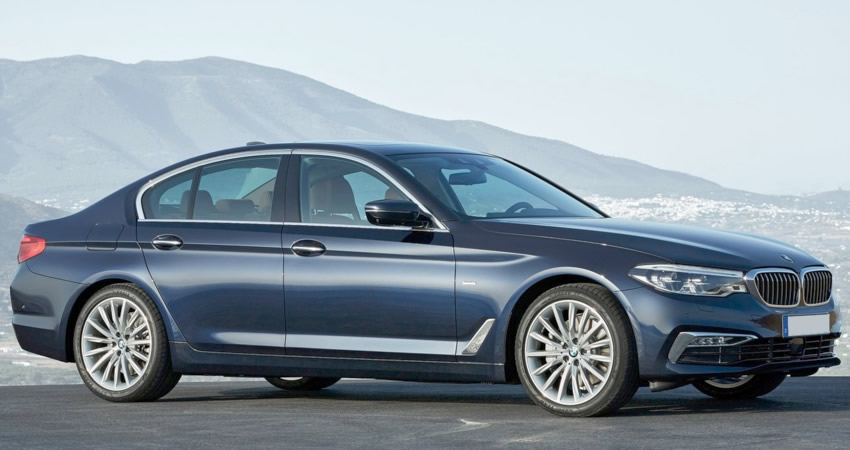
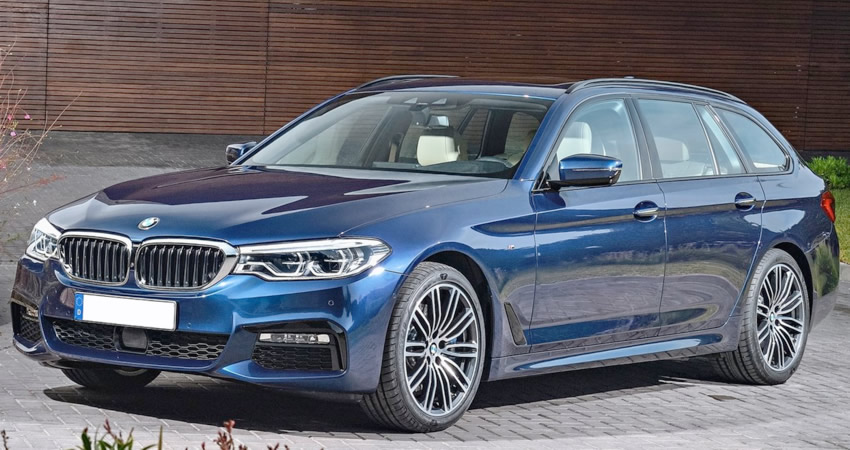
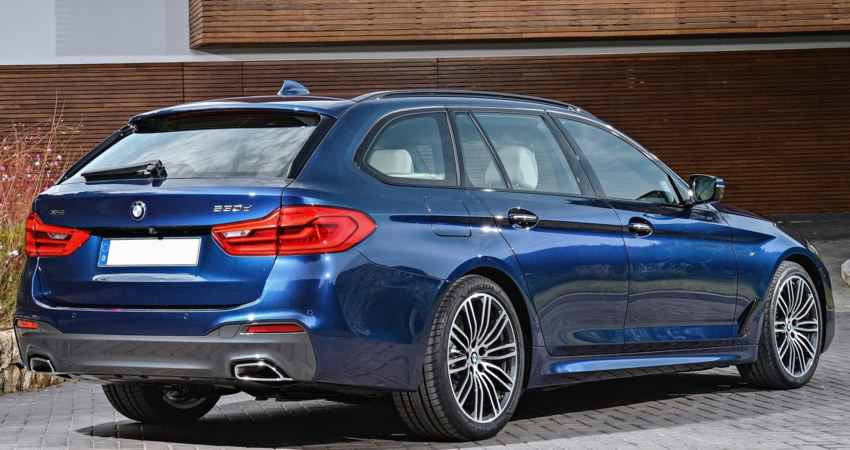
Officially announced in October 2016, with sales beginning in February 2017, the G30 is based on the same modular platform as the Episode 7 (G11). At the time of release, only a 4-door sedan (G30) and a 5-door station wagon (G31) are available. The body is made of multi-phase ultra-strong steel and aluminum. The weight of the car was reduced by 100 kg compared to the previous generation. The engine is located in the front with rear-wheel drive or all-wheel drive (xDrive).
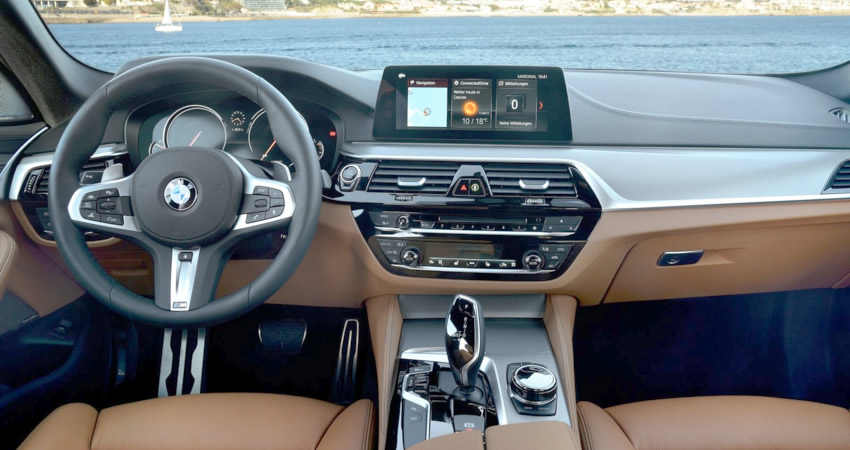
The front grille has louvers that can be closed and opened, allowing optimal engine cooling and reducing aerodynamic drag. The 5 Series is equipped with BMW's sixth-generation iDrive vehicle control system, which offers four manual input options, including gesture control.
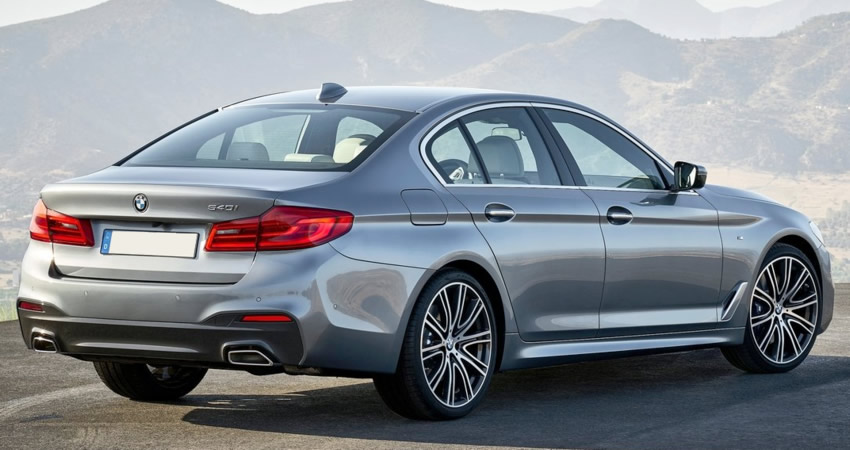
Initially, only three petrol engines are available – two 4-cylinder 2.0 and 3.0 litre engines with 184 and 252 hp and one 6-cylinder in-line 4.0 litre engine with 335 hp. Four diesel engine modifications are available – two 4-cylinder 2.0 and 2.5 litre engines with 190 and 231 hp and two 6-cylinder in-line 3.0 and 4.0 litre engines with 261 and 315 hp. A hybrid engine configuration is also available. There are two transmissions to choose from – a 6-speed manual and an 8-speed Steptronic automatic.
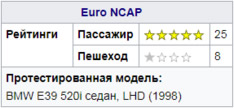
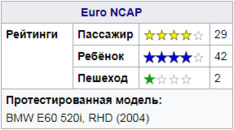
Testing the safety of some cars
![]() | ![]() | ![]() |