The first two generations were equipped only with petrol engines, and since 1995 they have been equipped with diesel engines. Unlike 3 Series and 5 Series this model was not produced with the "M" index (motorsport). The main competitors are Mercedes-Benz S-Class, Audi A8, Lexus LS and Jaguar XJ. About 1 million cars were produced between 1997 and 2016.
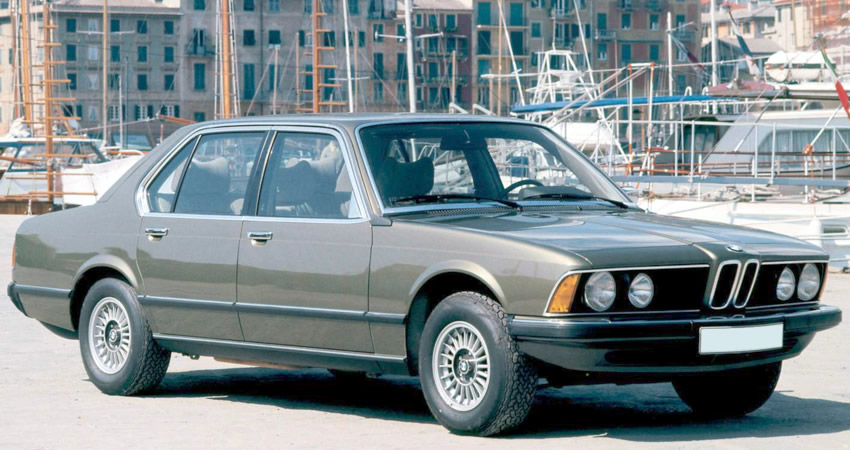
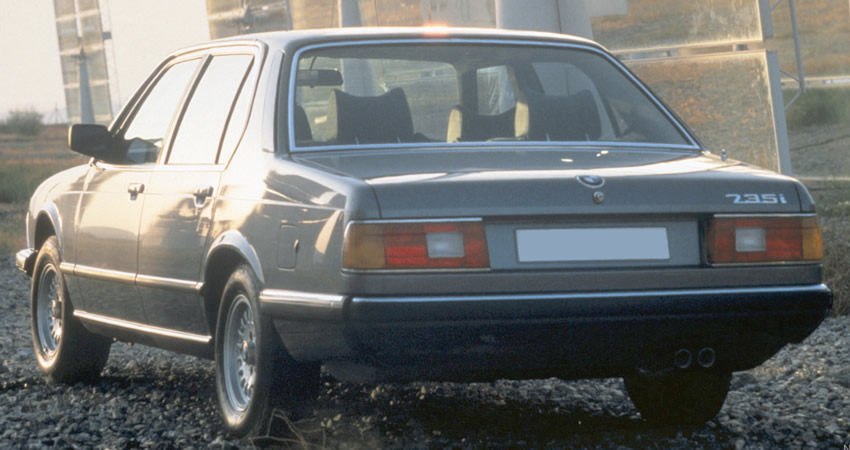
First generation (E23; 1977–1986)
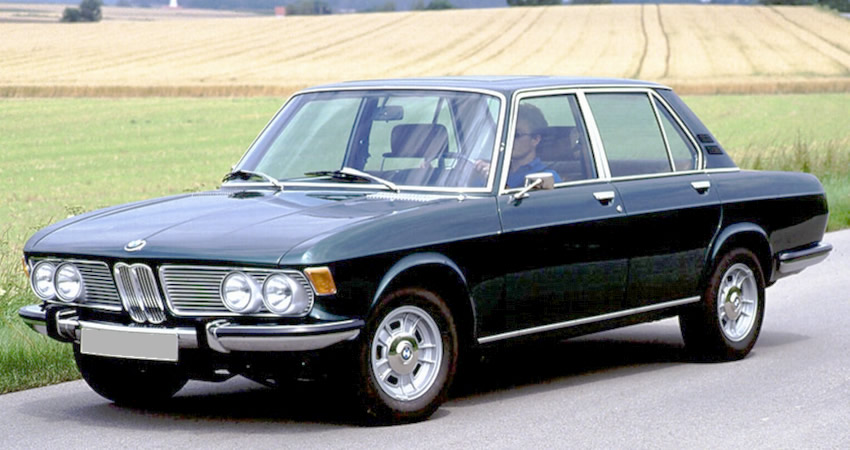
In 1977, the first generation of the 7 Series was launched. It is a sedan with a front engine and rear-wheel drive. The car had many electronic components, such as an on-board computer, a service indicator, warning lights, a voice recorder, and sophisticated climate control. It was the first BMW to use an anti-lock braking system (ABS) and a driver's airbag.
All models were powered by six-cylinder petrol engines, most of which were fuel-injected, although the 728 and 730 (1978-1979) used Solex carburettors. Fuel-injected models used the Bosch L-Jectronic system until 1979, and then switched to the Bosch Motronic fuel injection system. Engine capacities ranged from 2.5 to 4.5 litres and power outputs ranged from 148 to 286 bhp. Gearboxes were available in manual five- and four-speed and automatic three- or four-speed.
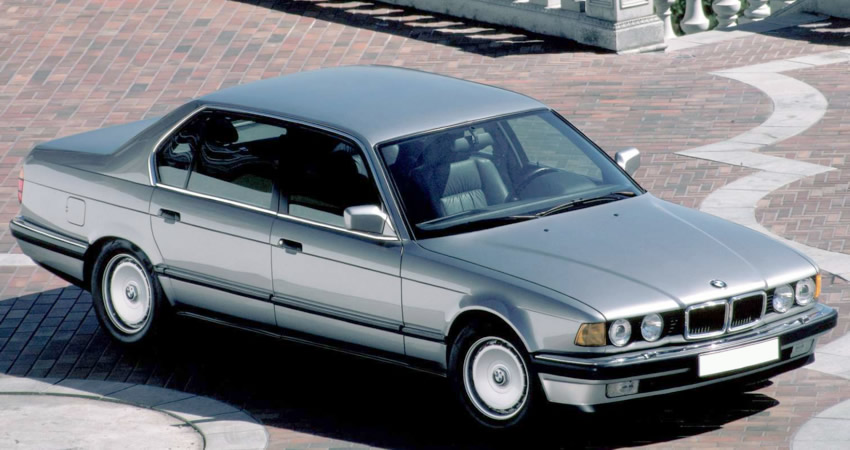
Second generation (E32; 1986–1994)
In September 1986, the second generation of the 7 Series was released. The car's appearance is attributed to the then chief stylists Ercole Spada and Hans Kerschbaum. Design work began in late 1979, and by 1983 a 1:1 scale model was presented. The engine is located at the front with rear-wheel drive. A total of about 300,000 cars were built.
The 7 Series is packed with modern options in the automotive industry at the time. These include built-in telephones, refrigerators, electric seats, xenon headlights, active suspension, double glazing, CAN bus, climate control and much more.
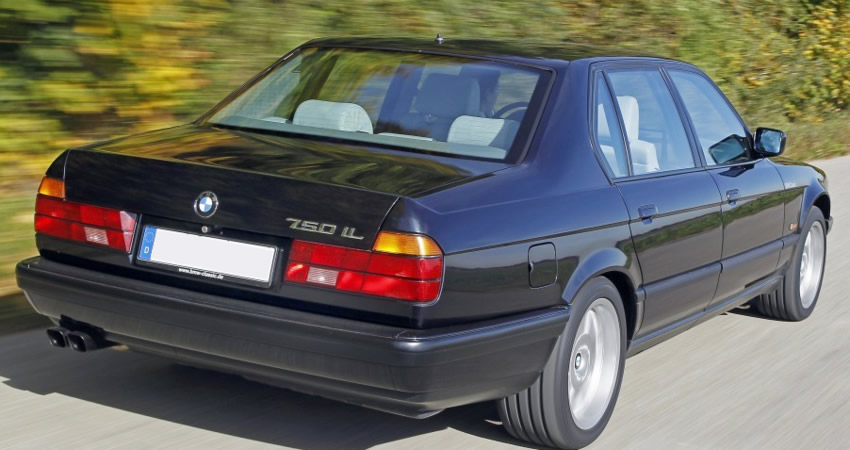
At first, only 6-cylinder in-line petrol engines were available (3.0 and 3.5 liters, 185 and 208 hp) and 12-cylinder V-shaped (5.0 liters, 295 hp). In 1992, 8-cylinder V8 engines appeared (3.0 and 4.0 liters, 215 and 282 hp). All engines with fuel injection. Gearboxes 4- and 5-speed automatic or 5-speed manual.
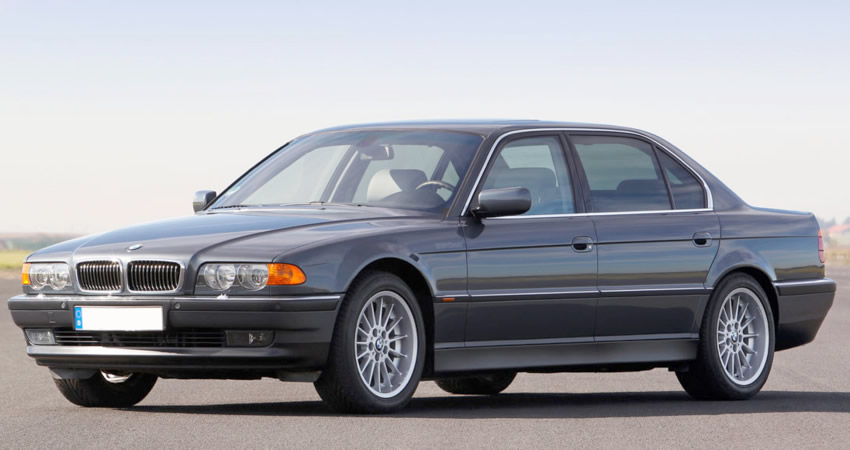
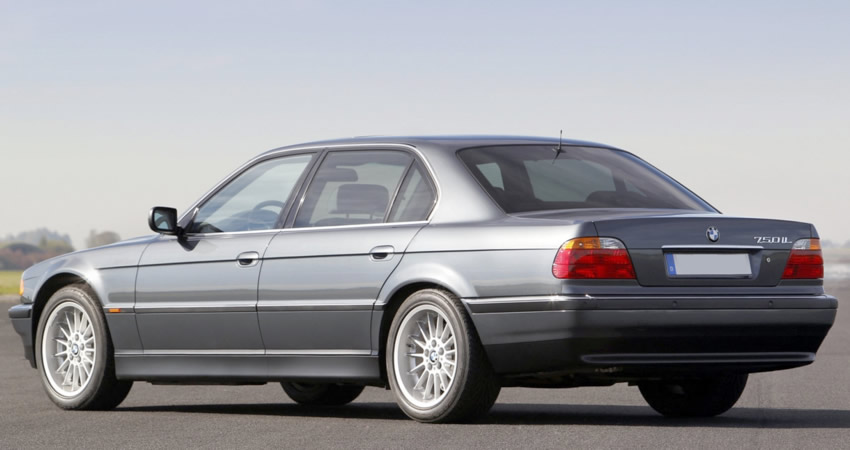
Third generation (E38; 1994–2001)
In early 1988, the development of the third generation of the 7-series began. The exterior was designed by Boyke Boyer. Production of experimental samples began on July 23, 1993, and serial production began on February 17, 1994. The engine and drive layout remains unchanged - front and rear. This is the first car to use curtain airbags. Traditionally, the car is "stuffed" with new electronics and options at that time. A total of about 340 thousand cars were produced.
The range of petrol engines includes a 6-cylinder in-line engine with a volume of 2.8 liters and a capacity of 190 hp, five 8-cylinder V8 engines with a volume of 3.0 to 4.0 liters and a capacity of 215 to 282 hp, as well as a 12-cylinder V12 with a volume of 5.0 liters and a capacity of 322 hp. For the first time, diesel engines were installed on the car - two 6-cylinder in-line engines with a volume of 2.5 and 3.0 liters and a capacity of 141 and 190 hp, and an 8-cylinder V8 with a volume of 4.0 liters and a capacity of 241 hp.
All models were available with a 5-speed ZF 5HP automatic transmission, and a 5- or 6-speed manual could also be specified.
Fourth generation (E65, E66, E67, E68; 2001–2008)
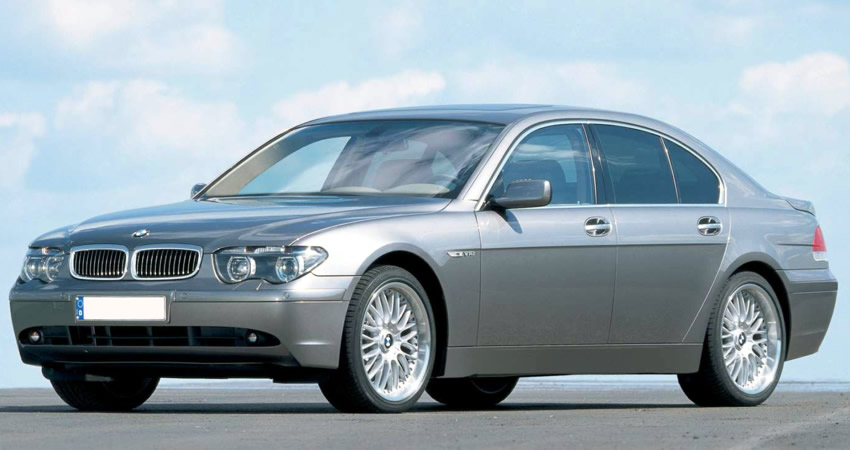
Development began in early 1996. In early 1997, Chris Bangle presented a brief of his vision for the future car to DesignworksUSA, and after a competition between 20 designers, Adrian van Hooydonk's design was approved in the spring of 1998. The car was unveiled at the Frankfurt International Motor Show in September 2001. About 330,000 cars were produced over the entire period.
It was the first BMW to feature iDrive, active anti-roll bars, a 6-speed automatic transmission, a smart key, and night vision. Body styles include a saloon (E65), a stretch saloon (E66), an armoured saloon (E67), and a hydrogen-powered saloon (E68). The engine is front-mounted with rear-wheel drive.
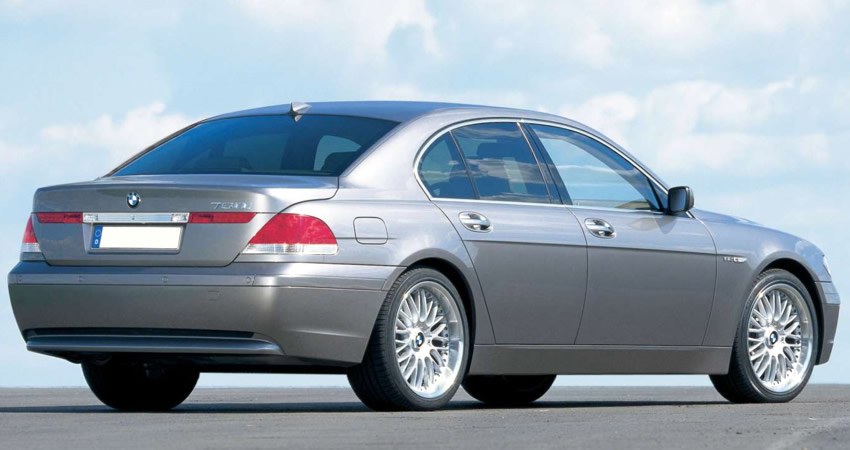
The engine lineup remained almost unchanged. Petrol engines are 6-cylinder in-line 3.0-liter engines with 228 and 255 hp, 8-cylinder V8 engines with 3.5, 4.0, 4.5 and 5.0 liters with 268, 302, 329 and 362 hp, and one 12-cylinder V12 with 6.0 liters with 439 hp. Diesel engines are 3.0 liters with 215 and 228 hp, 4.0 liters with 259 hp and 4.5 liters with 295 and 322 hp.
Fifth generation (F01, F02, F03, F04; 2008–2015)
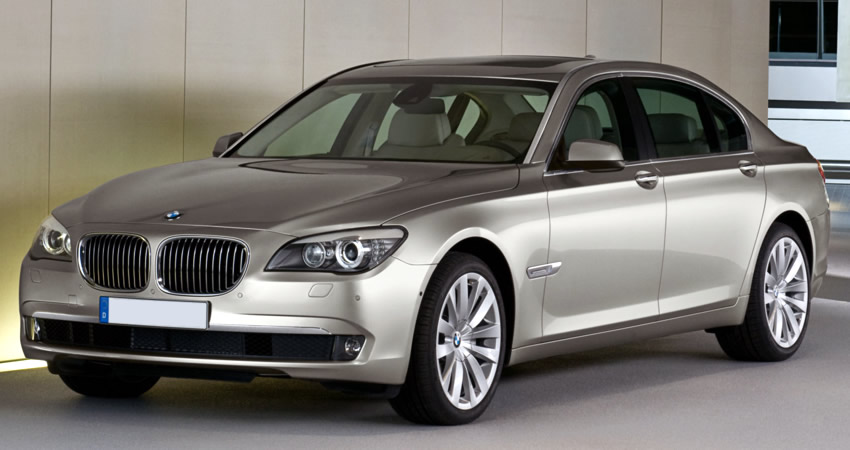
The car's exterior was designed by Karim Habib. It was first shown on Red Square in Moscow on July 8, 2008. The car was then shown at the Paris Motor Show in October and the Los Angeles International Auto Show in November. In addition to the traditional rear-wheel drive, an all-wheel drive version of xDrive became available. Also, for the first time, a rear-wheel steering system was used.
The body numbers were as follows: sedan (F01), sedan with an extended wheelbase (F02), armored sedan (F03) and hybrid sedan (F04). The car used almost all the modern options and technologies from the world of automotive engineering - pedestrian recognition for night vision, blind spot monitor, adaptive cruise control, video cameras, two-stage brake lights and other safety and driver assistance systems.
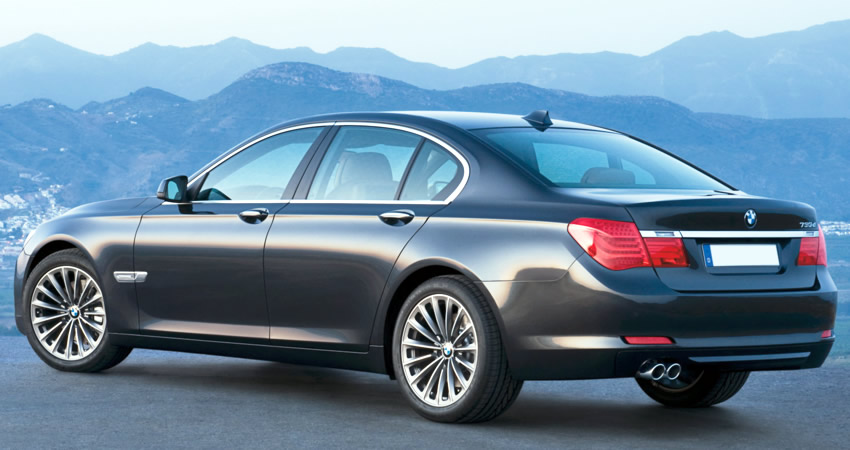
The petrol engines were 6-cylinder in-line engines with a volume of 3.0 and 4.0 liters and a capacity of 255, 322 and 315 hp, 8-cylinder V8 with a volume of 5.0 liters and a capacity of 402 and 443 hp and a 12-cylinder with a volume of 6.0 liters and a capacity of 536 hp. There were also two hybrid models with l6 and V8 engines. There were five diesel engines - all 6-cylinder in-line engines, with a volume of 3.0, 4.0 and 5.0 liters and a capacity of 241, 255, 302, 308 and 375 hp, all turbocharged. There were four transmissions to choose from - two 6-speed automatic (ZF 6HP19 and ZF 6HP26) and two 8-speed automatic (ZF 8HP70 and ZF 8HP90).
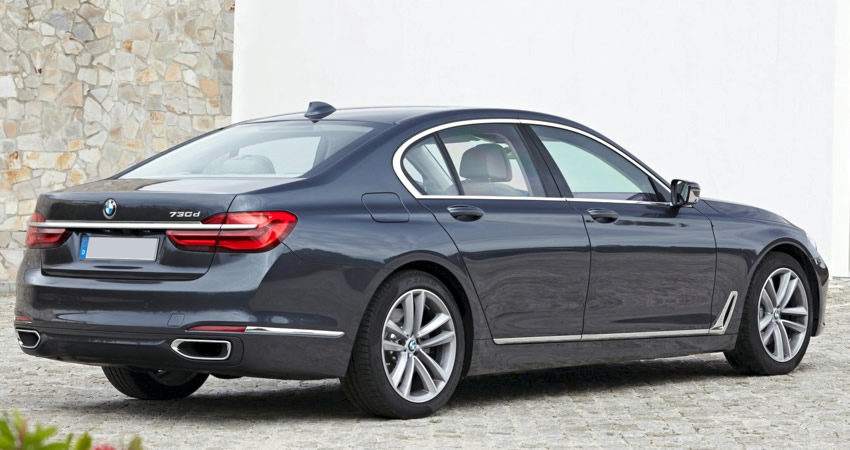
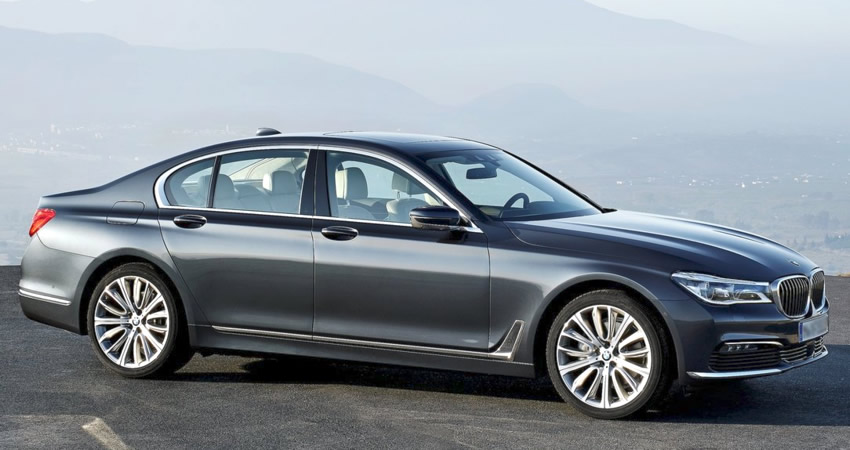
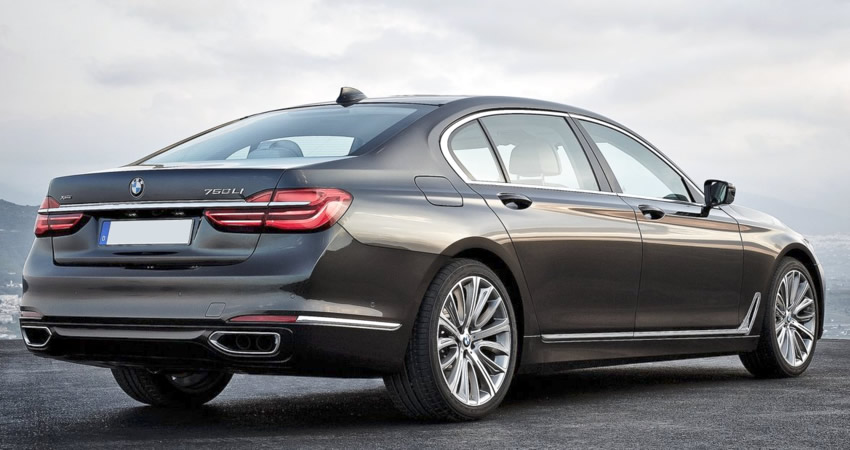
Sixth generation (G11, G12; 2015-present time)
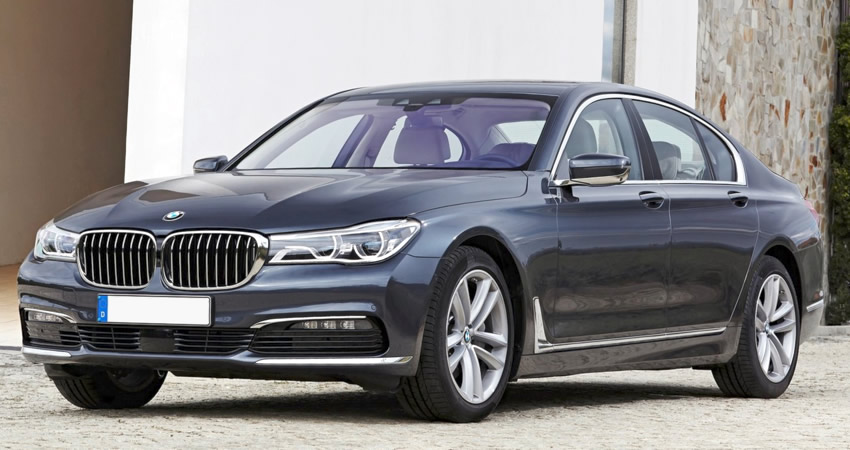
The new BMW 7 Series was unveiled at the International Motor Show in Frankfurt am Main from 17 to 27 September 2015. Production began in July 2015 and sales began in October 2015. G11 is the code name for the regular wheelbase sedan, while G12 is the extended wheelbase sedan, which is designated by the additional letter L. The use of composite materials helped to reduce weight slightly.
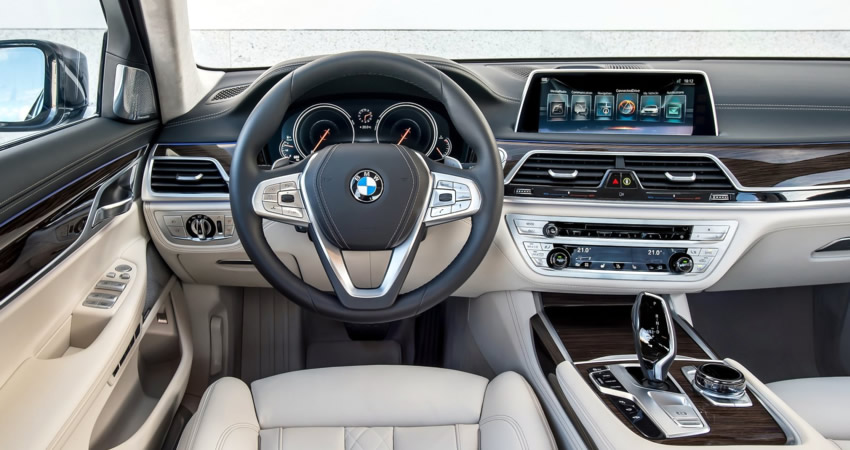
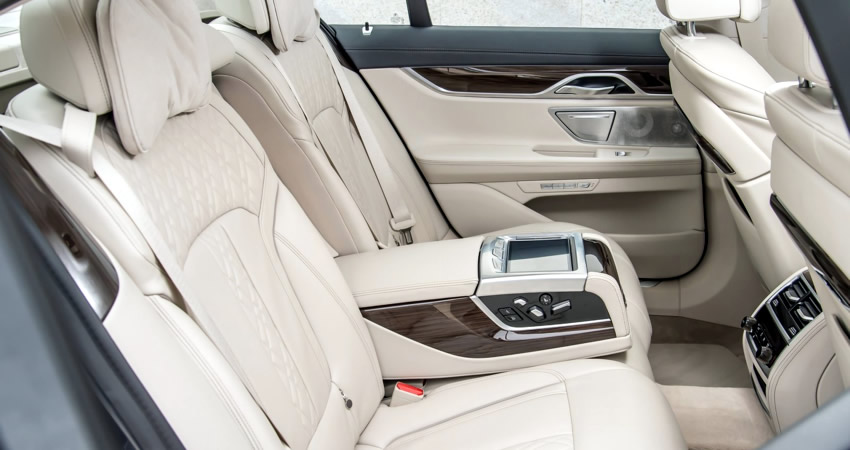
The sixth generation of the 7 Series uses almost all modern automotive technologies, such as the iDrive system with gesture recognition, radar sensors, cruise control, driver warning systems, lane recognition, optional laser headlights, and much more. The front panel is equipped with lattice shutters to control the aerodynamic drag, which is 0.24.
Petrol engines are offered l4 (2.0 liters, 255 hp, turbocharged), l6 (3.0 liters, 322 hp, turbocharged), V8 (4.4 liters, 443 hp, turbocharged) and V12 (6.6 liters, 601 hp, turbocharged). There are also hybrid cars with 4-cylinder petrol engines with a volume of 2.0 liters and a total power of 322 hp. There are three diesel engines - all with a volume of 3.0 liters and a power of 261, 315 and 394 hp. The transmission on all cars is an automatic 8-speed ZF Steptronic.