
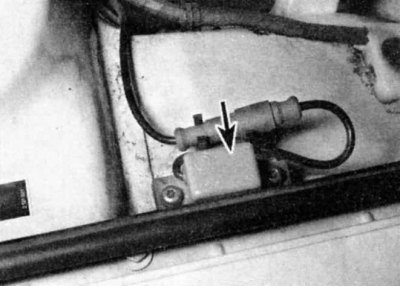
The latest models are equipped with a supplemental restraint system (SRS), which includes an airbag. This system is designed to protect the driver from serious injury in the event of a frontal collision. The system consists of an airbag module in the center of the steering wheel, two impact sensors mounted on the inside of the front fender panels, and a safety sensor located in the passenger compartment. SRS impact sensors (indicated by the arrow) located in the engine compartment - check regularly for damage to the wiring.
The air bag module includes a housing for the air bag and pump units to inflate the air bag. The pump assembly is mounted to the rear of the housing above the opening through which gas enters, inflating the air bag almost immediately after the system sends an electrical signal. This signal is transmitted through a wire that is specially twisted several times so that the signal is transmitted regardless of the position of the steering wheel.
The SRS system has three sensors: two in the front, mounted on the inside of the fender panels, and a crash sensor located inside the passenger compartment. The crash sensors typically respond to pressure, completing an electrical circuit during an impact of sufficient force. An electrical signal from the crash sensors is sent to a third sensor, which then completes the circuit and inflates the air bag.
The module containing the safety sensor monitors the system's operation. It checks the system's operation every time the ignition is turned on, causing the AIRBAG indicator light to light up (air cushion), and then turning off if the system is working properly. If the system is faulty, the warning light will remain on. If the AIRBAG light remains on, or if it comes on while the vehicle is running, take your vehicle to a dealer service department immediately.