
Table of contents: Removal ↓ Installation ↓
- Home
- BMW 3 Series
- E36
- Power unit
- Cooling system
- Removal and installation the radiator
Removal and installation the radiator (BMW 3 Series E36)
If the car has a high mileage, the radiator may be clogged with particles contained in the coolant and lime deposits. Because of this, the cooling efficiency decreases and the engine quickly overheats. In this case, only replacing the radiator helps.
Remove the fan.
Drain the coolant from the engine.
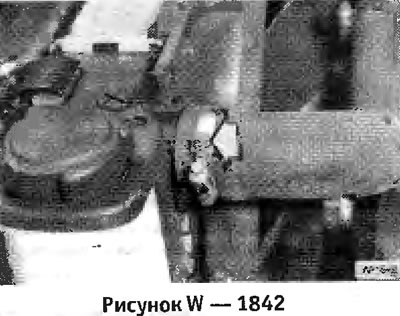
Disconnect the upper and lower hoses from the radiator, having first released and moved back the mounting clamps.
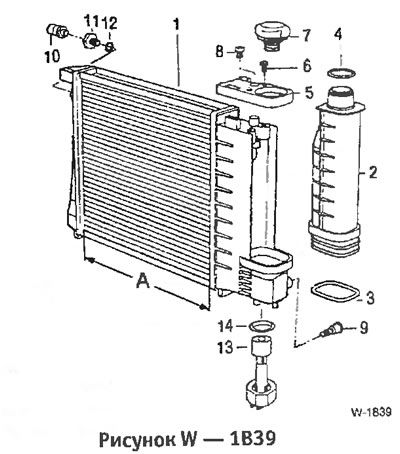
1 Radiator
2 Expansion tank
3 Gasket
4 Sealing ring
5 Lid
6 Bolt
7 Radiator cap
8 Air release valve
9 Cork
10 Temperature switch (cooling systems only)
11 Cork
12 Sealing ring
13 Level sensor
14 O-ring
Model 3251: Disconnect the level sensor wire "13" at the lower left side of the radiator.
If there is an air conditioner, disconnect the temperature switch connector "1" on the right side of the radiator.
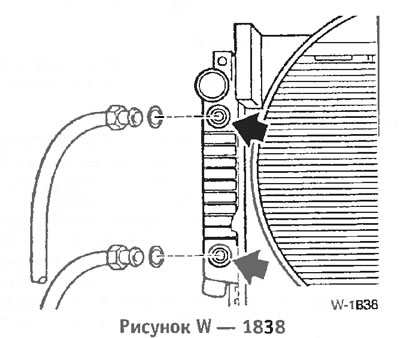
Only on cars with automatic transmission: Disconnect the hoses from the gearbox oil cooler, collect the leaking oil. Close the wires with clean plugs, no dirt should get into the hoses.
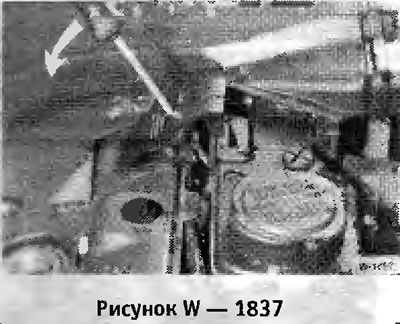
Press the two radiator mounting clamps. To do this, insert a screwdriver as shown in the picture, press and tilt slightly forward. This will release the plastic clamp from the front cross member.
Pull the radiator upward.
Check all water hoses for cuts, cracks and other damage and, if necessary, replace damaged hoses. Check the condition of the rubber radiator mounting tips.
Screw in the coolant level sensor with a new O-ring.
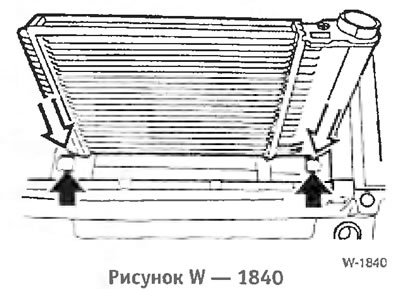
Insert the radiator from above so that the rubber supports fit precisely into the receiving parts.
If removed, insert the mounting clamps into the radiator, press the radiator against the front crossmember and snap the clamps into place.
Screw the automatic transmission oil hoses to the radiator with new seals, tightening torque 20 Nm.
Connect the water hoses and secure them with clamps.
If removed, connect the temperature switch and level sensor wire.
Install the fan.
Fill with coolant and bleed air from the cooling system.
Only on vehicles with automatic transmission: Check and, if necessary, adjust the oil level in the gearbox:
Warm up the engine and check for leaks at the hose connections.
Check and, if necessary, adjust the coolant level.
Removal
Remove the fan.
Drain the coolant from the engine.
Disconnect the upper and lower hoses from the radiator, having first released and moved back the mounting clamps.
1 Radiator
2 Expansion tank
3 Gasket
4 Sealing ring
5 Lid
6 Bolt
7 Radiator cap
8 Air release valve
9 Cork
10 Temperature switch (cooling systems only)
11 Cork
12 Sealing ring
13 Level sensor
14 O-ring
Model 3251: Disconnect the level sensor wire "13" at the lower left side of the radiator.
If there is an air conditioner, disconnect the temperature switch connector "1" on the right side of the radiator.
Only on cars with automatic transmission: Disconnect the hoses from the gearbox oil cooler, collect the leaking oil. Close the wires with clean plugs, no dirt should get into the hoses.
Press the two radiator mounting clamps. To do this, insert a screwdriver as shown in the picture, press and tilt slightly forward. This will release the plastic clamp from the front cross member.
Pull the radiator upward.
Caution: The radiator fins have sharp edges, so it is recommended to wear work gloves when removing the radiator.
Installation
Check all water hoses for cuts, cracks and other damage and, if necessary, replace damaged hoses. Check the condition of the rubber radiator mounting tips.
Screw in the coolant level sensor with a new O-ring.
Insert the radiator from above so that the rubber supports fit precisely into the receiving parts.
If removed, insert the mounting clamps into the radiator, press the radiator against the front crossmember and snap the clamps into place.
Screw the automatic transmission oil hoses to the radiator with new seals, tightening torque 20 Nm.
Connect the water hoses and secure them with clamps.
If removed, connect the temperature switch and level sensor wire.
Install the fan.
Fill with coolant and bleed air from the cooling system.
Only on vehicles with automatic transmission: Check and, if necessary, adjust the oil level in the gearbox:
Warm up the engine and check for leaks at the hose connections.
Check and, if necessary, adjust the coolant level.
This article is available at russian, bulgarian, belarusian, ukrainian, serbian, croatian, romanian, polish, slovak, hungarian
Article verified: Chebotarev Vladislav
Share information:
Previous articles
БМВ E36: Cooling system
Next articles
Similar articles on other types of BMW cars:
Removal and installation the radiator BMW 5 Series E34 (1988-1996)
Removal and installation the radiator BMW 5 Series E39 (1995-2003)
Removal and installation the EGR system radiator BMW 7 Series E38 (1994-2001)
Radiator — removal and installation BMW 7 Series E32 (1986-1994)
Pistons — removal and installation BMW X3 E83 (2003-2010)
Removal and installation the radiator BMW X5 E53 (1999-2006)
Removal and installation the radiator BMW 5 Series E34 (1988-1996)
Removal and installation the radiator BMW 5 Series E39 (1995-2003)
Removal and installation the EGR system radiator BMW 7 Series E38 (1994-2001)
Radiator — removal and installation BMW 7 Series E32 (1986-1994)
Pistons — removal and installation BMW X3 E83 (2003-2010)
Removal and installation the radiator BMW X5 E53 (1999-2006)
Link in different formats to this page
Visitor comments
No comments yet
- General information
- Manual
- Maintenance
- Power unit
- Engine repair
- Cooling system
- Power system (gasoline)
- Injection system (gasoline)
- Fuel system (diesel)
- Exhaust system
- Ignition system
- Charge and launch systems
- Transmission
- Car gearbox
- Clutch and drive shafts
- Chassis
- Brake system
- Suspension front and rear
- Steering
- Body
- Body care and repair
- Exterior
- Interior
- Electrical equipment
- Troubleshooting
- Lighting and signaling
- Equipment and devices
- Heater and air conditioner
- Electrical circuits
- General information
- Manual
- Repair on the road
- Weekly checks
- Maintenance
- Troubleshooting
- Power unit
- 4 cylinder engines
- 6 cylinder engines
- Engine overhaul
- Cooling and heating
- Fuel and exhaust system
- Starting and charging system
- Ignition system
- Transmission
- Clutch
- Mechanical gearbox
- Automatic gearbox
- Cardan and drive shafts
- Chassis
- Brake system
- Wheel suspension
- Steering
- Body
- Exterior
- Interior
- Electrical equipment
- Equipment and devices
- Electrical circuits
- General information
- Maintenance
- Power unit
- Engine repair
- Cooling system
- Ignition system
- Supply system
- Fuel injection system
- Exhaust system
- Transmission
- Clutch
- Car gearbox
- Front and rear axle
- Chassis
- Steering
- Brake system
- Body
- Exterior
- Interior
- Electrical equipment
- Heating system
- Equipment and devices
- Power devices
- Electrical circuits
- Power unit
- M10/M20 engine
- M40 engine
- Ignition system
- Lubrication system
- Cooling system
- Supply system
- Fuel injection
- Exhaust system
- Transmission
- Clutch
- Manual gearbox
- Front axle
- Rear axle
- Chassis
- Steering
- Brake system
- Body
- Exterior
- Interior
- Electrical equipment
- Heating system
- Equipment and devices
- Electrical circuits
- General information
- Specifications
- Operation and maintenance
- 4-cylinder engine
- Engine repair
- Cooling and lubrication system
- Supply system
- Ignition system
- 6-cylinder engine
- Engine repair
- Cooling and lubrication system
- Supply system
- Fuel injection system
- Ignition system
- Transmission
- Clutch
- 4-speed manual gearbox
- 5-speed manual gearbox
- Automatic gearbox
- Cardan and rear axle
- Chassis
- Steering
- Front suspension
- Rear suspension
- Brake system
- Electrical equipment
- Equipment and devices
- Electrical circuits