
Hydraulic clutch systems are self-adjusting, so a clutch pedal that is initially adjusted correctly should not become out of adjustment. However, the clutch pedal height should be checked when installing a new clutch master cylinder to ensure proper initial adjustment.
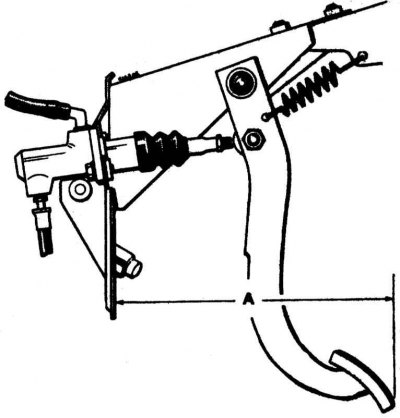
1. Measure the distance from the lower rear edge of the clutch pedal pad to the bulkhead (dimension A) and compare the result with the dimension specified in Table of sizes and adjustment data at the end of the Guide.
2. If the comparison result is not satisfactory, loosen the tappet nut and bolt. This bolt is an eccentric; its rotation changes the distance from the pedal to the bulkhead. When this distance reaches the desired value, tighten the nut and bolt. Where there is a mark on the eccentric bolt, it should be placed opposite the master cylinder as a reference point.
3. Some models also have an adjustable master cylinder pushrod. If the pedal cannot be adjusted by turning the eccentric bolt, loosen the pushrod lock nut and turn the pushrod until the distance between the pedal and the bulkhead reaches the desired value, then tighten the lock nut securely.
Do not screw the pushrod all the way in. This may cause the lock nut to stick in the clutch pedal during operation, which in turn will cause the pushrod to break. If you do change the pushrod length, be sure to check the lock nut clearance before depressing the clutch pedal. Also, do not overtighten the pushrod lock nut. If the threads are stripped, the master cylinder may stick, causing clutch failure.