



Table of contents: Model 524td ↓ Models 525td/tds ↓
- Home
- BMW 5 Series
- E34
- Power unit
- Fuel system (diesel)
- Removal air from the fuel system
Removal air from the fuel system (BMW 5 Series E34)
After emptying the fuel tank or after replacing fuel system components, air bleeding from the fuel system is generally not required, since air bleeding occurs automatically when the starter is activated.
In case of difficulties with starting the engine, to check whether fuel is supplied to the injectors, unscrew the union nuts on two injectors and start the engine without preheating until fuel comes out through the union nuts. Tighten the union nuts with a torque of 20 Nm and start the engine in the usual way.
Fill the high pressure fuel pump with diesel fuel.
Fill the fuel filter with diesel fuel.
Loosen the air bleed screw 4 on the filter flange (Figure W - 2412).
Turn the engine with the starter until the fuel comes out. Then tighten the bolt to a torque of 15 Nm. If there are any leaks, tighten the bolt to a tightening torque of 20 Nm.
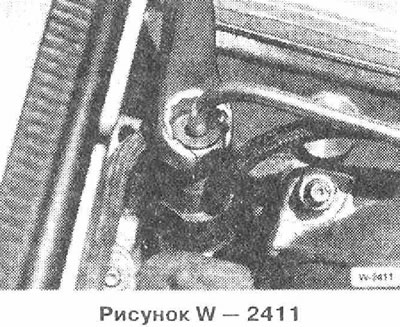
Loosen the union nuts on the injection pipes. Turn the engine with the starter until the fuel comes out. Then tighten the union nuts to a torque of 20 Nm. If there are any leaks, tighten the union nuts to a tightening torque of 25 Nm.
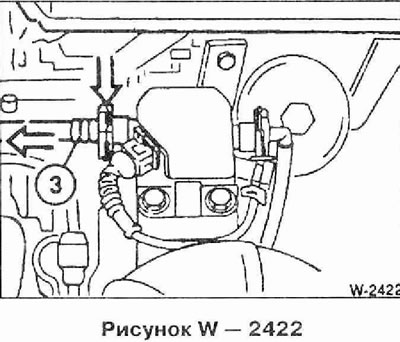
Press the clamp to disconnect fuel hose 3 from the fuel pump, which goes to the high-pressure fuel pump. Wipe off any leaking fuel with a rag.
Insert a suitable hose into the connection hole and lower the other end of the hose into the vessel.
Remove the fuel pump relay and short-circuit the terminals on the relay base to start the pump.
If fuel flows out of the connector, remove the jumper and insert the relay.
Reconnect the fuel hose, after coating the gaskets with acid-free grease. Replace damaged gaskets.
Snap the bracket into place.
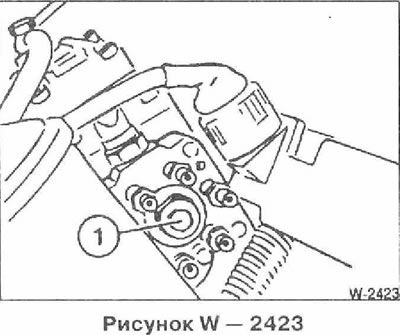
Loosen plug 1 on the high-pressure fuel pump by two turns.
Turn the engine with the starter until the fuel comes out through the plug. Wipe off the leaking fuel.
Tighten the plug with a tightening torque of 25 Nm.
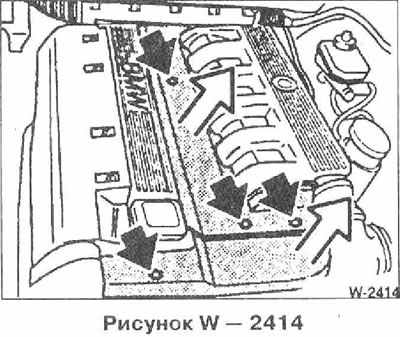
After unscrewing the screws, remove the covers from the intake manifold.
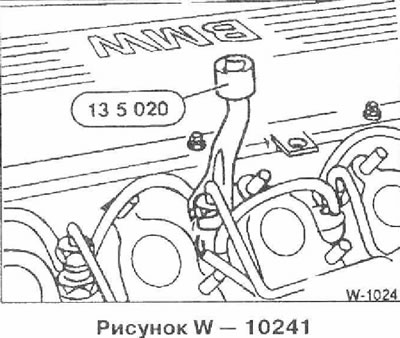
Loosen all union nuts of the injection pipes on the injectors using a special tool, such as HAZET 4550. Turn the engine with the starter until fuel comes out. Then tighten the nuts with a tightening torque of 20 Nm. If there are any leaks, tighten the union nuts to a tightening torque of 25 Nm.
Carefully wipe away any spilled fuel in the engine compartment.
Install the pads in place.
In case of difficulties with starting the engine, to check whether fuel is supplied to the injectors, unscrew the union nuts on two injectors and start the engine without preheating until fuel comes out through the union nuts. Tighten the union nuts with a torque of 20 Nm and start the engine in the usual way.
Note: If automatic air removal does not occur, proceed as follows:
- When working with the fuel injection system, observe strict cleanliness.
- Make sure that diesel fuel does not come into contact with the water hoses. If it does, wipe the hoses clean immediately. Damaged hoses must be replaced.
Model 524td
Fill the high pressure fuel pump with diesel fuel.
Fill the fuel filter with diesel fuel.
Loosen the air bleed screw 4 on the filter flange (Figure W - 2412).
Turn the engine with the starter until the fuel comes out. Then tighten the bolt to a torque of 15 Nm. If there are any leaks, tighten the bolt to a tightening torque of 20 Nm.
Loosen the union nuts on the injection pipes. Turn the engine with the starter until the fuel comes out. Then tighten the union nuts to a torque of 20 Nm. If there are any leaks, tighten the union nuts to a tightening torque of 25 Nm.
Models 525td/tds
Press the clamp to disconnect fuel hose 3 from the fuel pump, which goes to the high-pressure fuel pump. Wipe off any leaking fuel with a rag.
Insert a suitable hose into the connection hole and lower the other end of the hose into the vessel.
Remove the fuel pump relay and short-circuit the terminals on the relay base to start the pump.
If fuel flows out of the connector, remove the jumper and insert the relay.
Reconnect the fuel hose, after coating the gaskets with acid-free grease. Replace damaged gaskets.
Snap the bracket into place.
Loosen plug 1 on the high-pressure fuel pump by two turns.
Turn the engine with the starter until the fuel comes out through the plug. Wipe off the leaking fuel.
Tighten the plug with a tightening torque of 25 Nm.
After unscrewing the screws, remove the covers from the intake manifold.
Loosen all union nuts of the injection pipes on the injectors using a special tool, such as HAZET 4550. Turn the engine with the starter until fuel comes out. Then tighten the nuts with a tightening torque of 20 Nm. If there are any leaks, tighten the union nuts to a tightening torque of 25 Nm.
Carefully wipe away any spilled fuel in the engine compartment.
Install the pads in place.
This article is available at russian, bulgarian, belarusian, ukrainian, serbian, croatian, romanian, polish, slovak, hungarian
Article verified: Polikarpov Saveliy
Share information:
Previous articles
БМВ E34: Fuel system (diesel)
Next articles
Similar articles on other types of BMW cars:
Fuel system expansion tank — removal and installation BMW 3 Series E46 (1998-2006, petrol)
Removal air from the fuel system BMW 3 Series E36 (1990-2000)
Removal air from the fuel system BMW 7 Series E32 (1986-1994)
Fuel and exhaust system specifications BMW 7 Series E38 (1994-2001)
Removal and installation the fuel filler cap BMW X3 E83 (2003-2010)
Fuel injection system defect BMW X5 E53 (1999-2006)
Fuel system expansion tank — removal and installation BMW 3 Series E46 (1998-2006, petrol)
Removal air from the fuel system BMW 3 Series E36 (1990-2000)
Removal air from the fuel system BMW 7 Series E32 (1986-1994)
Fuel and exhaust system specifications BMW 7 Series E38 (1994-2001)
Removal and installation the fuel filler cap BMW X3 E83 (2003-2010)
Fuel injection system defect BMW X5 E53 (1999-2006)
Link in different formats to this page
Visitor comments
No comments yet
- General information
- Governing bodies
- Manual
- Maintenance
- Power unit
- Engine repair
- Lubrication system
- Cooling system
- Ignition system
- Supply system
- Injection system (gasoline)
- Injection system (diesel)
- Exhaust system
- Transmission
- Clutch
- Car gearbox
- Front axle
- Rear axle
- Chassis
- Steering
- Brake system
- Wheels and tires
- Body
- Interior
- Exterior
- Heating system
- Electrical equipment
- Equipment and devices
- Power devices
- Windscreen wipers
- Electrical circuits
- General information
- Manual
- Maintenance
- Power unit
- Engine repair
- Ignition system
- Engine lubrication system
- Cooling system
- Fuel system (gasoline)
- Fuel system (diesel)
- Exhaust system
- Transmission
- Clutch
- Car gearbox
- Chassis
- Front and rear suspension
- Steering
- Brake system
- Body
- Exterior
- Interior
- Electrical equipment
- Heating system
- Equipment and devices
- Power devices
- Electrical circuits
- General information
- Manual
- Maintenance
- Power unit
- Engine in a car
- Engine overhaul
- Cooling system
- Supply system
- Ignition system
- Control system
- Transmission
- Clutch
- Manual gearbox
- Automatic gearbox
- Transmission line
- Chassis
- Steering
- Front suspension
- Rear suspension
- Brake system
- Body
- Body elements
- Car care and painting
- Electrical equipment
- Heater and air conditioner
- Equipment and devices
- Starter and generator
- Electrical circuits
- General information
- Operation and maintenance
- Specifications
- Power unit
- Engine repair
- Cooling and lubrication system
- Supply system
- Ecotronic power supply system
- Fuel injection system
- Ignition system
- Transmission
- Clutch
- Gearbox BMW 242/4
- Gearbox Getrag 262/8
- Gearbox Getrag 265/6
- Automatic gearbox
- Cardan gear
- Rear axle
- Chassis
- Steering
- Front suspension
- Rear suspension
- Brake system
- Electrical equipment
- Equipment and devices
- Electrical circuits