
In case of difficulties with starting the engine, to check whether fuel is supplied to the injectors, unscrew the union nuts on two injectors and start the engine without preheating until fuel comes out through the union nuts. Tighten the union nuts with a torque of 20 Nm and start the engine in the usual way.
Note: If automatic air removal does not occur, proceed as follows:
- When working with the fuel injection system, observe strict cleanliness.
- Make sure that diesel fuel does not come into contact with water hoses. If it does, wipe the hoses clean immediately. Affected hoses must be replaced.
Press the clamp and disconnect the fuel hose "3" from the fuel pump, which goes to the high-pressure fuel pump. Wipe off any leaking fuel with a rag.
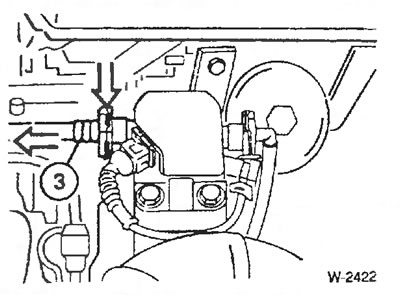
Insert a suitable hose into the connection hole and lower the other end of the hose into the vessel.
Remove the fuel pump relay and short-circuit the terminals on the relay base to start the pump.
If fuel flows out of the connector, remove the jumper and insert the relay.
Reconnect the fuel hose after covering the gaskets with acid-free grease. Replace damaged gaskets. Snap the clamp into place.
Loosen plug "1" on the high-pressure fuel pump by two turns.
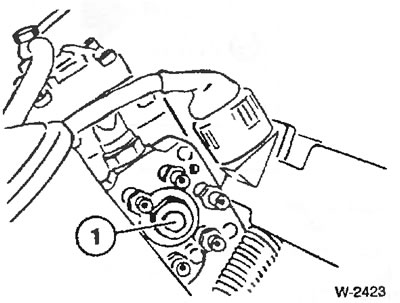
Turn the engine with the starter until the fuel comes out through the plug. Wipe off the leaking fuel.
Tighten the plug with a tightening torque of 25 Nm.
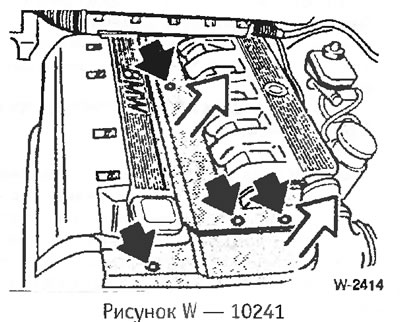
After unscrewing the screws, remove the covers from the intake manifold.
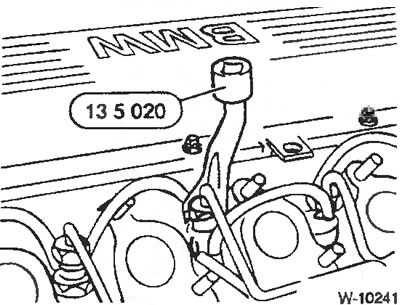
Loosen all union nuts of the injection pipes on the injectors using a special tool, such as HAZET 4550. Turn the engine with the starter until fuel comes out. Then tighten the nuts with a tightening torque of 20 Nm. If there are any leaks, tighten the union nuts to a tightening torque of 25 Nm.
Carefully wipe away any spilled fuel in the engine compartment.
Install the pads in place.