



Inspect all accessible connectors and clamps. Make sure the contacts and fasteners are secure, and pay attention to any abrasions or other damage.
Haynes advises: To check the brake lights, back the car up to a wall or garage door and press the brake pedal. The reflected light will show that they are working properly.
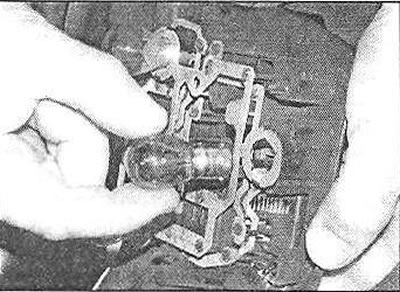
1. If any light device does not light up (one of the side lights, headlight or brake light), this most likely means that the corresponding light bulb has burned out and needs to be replaced. For details, contact chapter 12. If both brake lights are not lit, it most likely means that the brake light switch under the brake pedal needs adjustment. This operation is described in chapter 9.
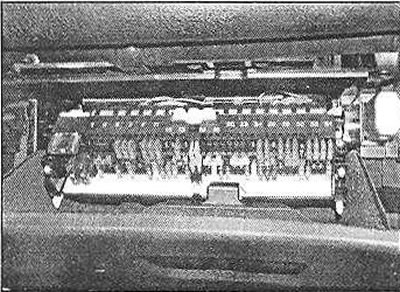
2. If both side lights or more than one turn signal light do not light, this most likely means that a fuse has blown or the corresponding circuit is faulty (see chapter 12). The fuses are located in a box in the glove compartment on the passenger side. The circuits they protect are marked on the box cover. Open the glove compartment, turn the fuse box cover latches 90° counterclockwise and remove the cover.
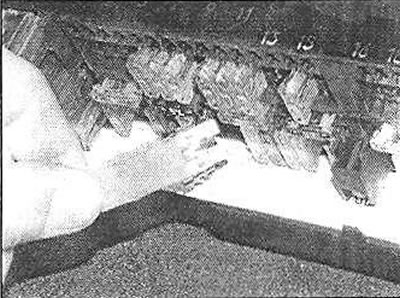
3. To replace a blown fuse, simply remove it and insert a new fuse of the same rating (see chapter 12). If the fuse blows again, it is important to find the cause - a complete check procedure is given in chapter 12.