
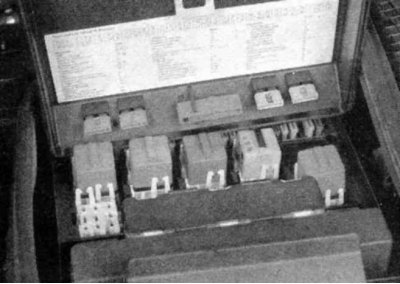
The electrical circuits of the vehicle are protected by a combination of fuses, circuit breakers and fuse links. The fuse box is located under the instrument panel on the left side, in the wiring harness. The latest models also have a service center located next to the fuse box, which contains certain components such as the horn relay and the hazard warning light.
Each fuse is installed to protect its own individual circuit, which one is indicated on the fuse panel itself.
Miniature fuses are mounted in a block. These fuses are of the "blade" type, easy to remove and replace with your fingertips. If any component in the circuit malfunctions, always check the fuse first. A blown fuse is easy to identify visually: any damage can be seen through its transparent body. If it becomes necessary to check the conductivity of the circuit, the tips of the "blade" terminals are easy to find on the fuse body.
When replacing a fuse, make sure the new fuse is the same type as the blown fuse. All fuses are physically interchangeable, but only the type required should be used. It is not recommended to install fuses of a higher or lower value, as each electrical circuit requires a certain degree of protection. The amperage value of each fuse is marked on its body.
If the replaced fuse blows immediately, do not replace it again until the cause of the problem has been identified and corrected. In most cases, the cause is a short circuit in the wiring caused by a frayed or broken wire.