



Air is removed from the brake system by bleeding the brake pedal, which requires an assistant.
Note: The operating procedures are identical for vehicles with and without ABS. At service stations, a special unit connected to the brake fluid reservoir is used to bleed the air. If this unit is connected to a vehicle equipped with ABS, the air must also be bled by pressing the brake pedal, as described below.
If it is necessary to bleed the entire system, the air is removed separately from each cylinder. This is necessary if air gets into all cylinders. If only one wheel cylinder was replaced or repaired, it is usually sufficient to bleed the corresponding brake cylinder.
Air bleeding sequence: 1. Rear right brake caliper or wheel cylinder, 2. Rear left brake caliper or wheel cylinder, 3. Front right brake caliper, 4. Front left brake caliper.
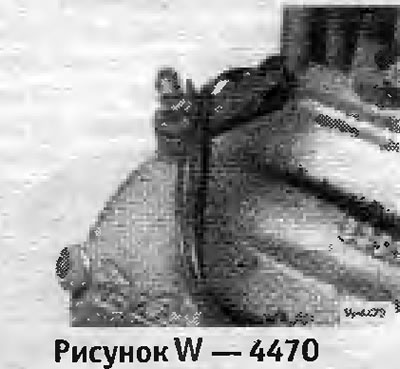
Remove the boot from the brake cylinder air bleed valve. Clean the valve, put a clean hose on it, lower the other end of the hose into a container half filled with brake fluid.
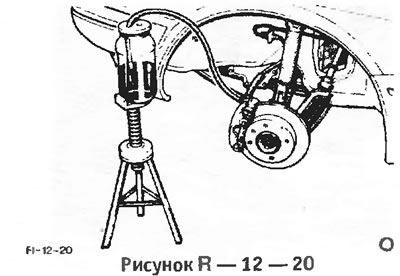
The vessel must be positioned at least 30 cm above the air bleed valve. This prevents air from entering through the air bleed valve threads.
The assistant "pumps" the brake pedal until pressure is created in the system. This is felt by the increased resistance when pressing the pedal.
Once sufficient pressure has been created, press the pedal all the way down and keep your foot on the pedal.
Open the valve about half a turn. Collect the flowing liquid in a vessel. Make sure that the end of the hose is always in the vessel below the liquid level.
Release the brake pedal and press it until it stops approximately 12 times (pump up). The pedal is easily pressed. Brake fluid flows through the valve into the vessel.
Keep the pedal pressed and have your assistant close the valve.
Repeat the process of removing air from one cylinder until there are no more air bubbles in the liquid flowing into the vessel.
After removing the air, remove the hose and put the boot on the valve.
Remove air from other cylinders in the same way.
Caution: During the bleeding process, monitor the fluid level in the expansion tank from time to time. The fluid level should not drop too low, otherwise air will be sucked in through the tank. Top up with new brake fluid only!
After removing the air, add brake fluid to the expansion tank up to the MAX mark.