
Air is removed from the brakes by pressing the brake pedal, so an assistant is needed for this operation.
In workshops, air is usually removed using a special device. This device pumps brake fluid through the brake circuits under a pressure of no more than 2.0 bar.
If you need to remove air from the entire brake system, then the air is removed from the brakes of each wheel separately. This procedure is performed when air has entered through the reservoir or into each brake cylinder. If only one caliper was replaced or repaired, then it is quite sufficient to remove air from it only.
Air removal sequence:
- 1 - rear right wheel support;
- 2 — rear left wheel support;
- 3 — front right wheel support;
- 4 — front left wheel support.
Remove the cap from the bleed valve on the caliper. Clean the valve, put a clean transparent hose on it, and lower the other end into a container half filled with brake fluid.
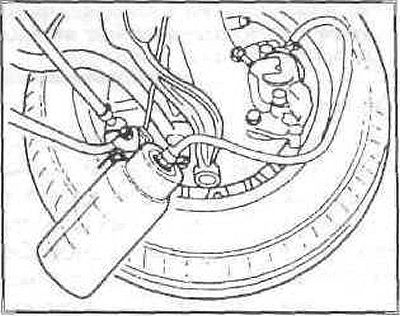
The assistant should pump the brake pedal to create pressure in the brake system. This will be felt by increased resistance when pressing the pedal.
Once the pressure has been created, you need to press the brake pedal fully and hold it in this position.
Loosen the bleed valve on the caliper by about half a turn using a spanner. The brake fluid flowing out of the hose should be collected in a container, with the end of the hose constantly immersed in brake fluid. As soon as the fluid stops flowing out, tighten the valve.
Repeat the pumping process until pressure is built up and keep the brake pedal depressed. Loosen the bleed valve and when no more brake fluid comes out of the hose, tighten the valve.
Continue bleeding each caliper until no more air bubbles appear in the brake fluid coming out of the hose.
After bleeding the air, remove the hose from the bleed valve and replace the protective cap on it.
Note: When removing air, periodically check the fluid level in the reservoir. It should not drop too much, otherwise air will enter the system through the reservoir. Always add only fresh brake fluid.
Remove air from the remaining calipers in the same manner.
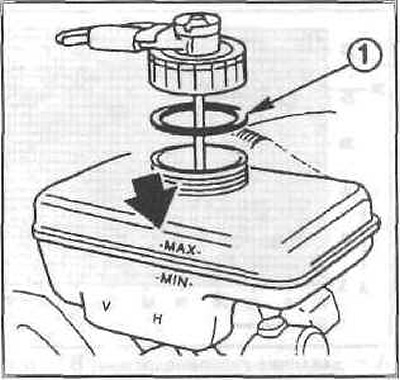
After finishing bleeding the air, add brake fluid to the reservoir to the MAX level.
Check the condition of the rubber gasket (1) in the tank lid.
Conduct a security check.
After bleeding, the brake pedal should feel firm and not springy when you press it. If not, repeat the bleeding operation.