
Table of contents: Removal ↓ Installation ↓
- Home
- BMW 5 Series
- E28
- Power unit
- Cooling system
- Removal and installation the radiator
Removal and installation the radiator (BMW 5 Series E28)
Allow the engine to cool completely before starting work.
If you are going to remove the radiator due to leaks, remember that minor leaks can be fixed without removing the radiator using a special sealant.
If your vehicle's radio is equipped with an anti-theft system, make sure you enter the correct code before disconnecting the battery.
If the instrument cluster displays the wrong language after connecting the battery, refer to Section Anti-theft audio system and instrument cluster language, which describes the procedure for installing the required language.
Removal
1. Disconnect the negative battery cable.
2. Drain the cooling system (see chapter Routine car maintenance). If the coolant is relatively new or in good condition, do not pour it out and then reuse it.
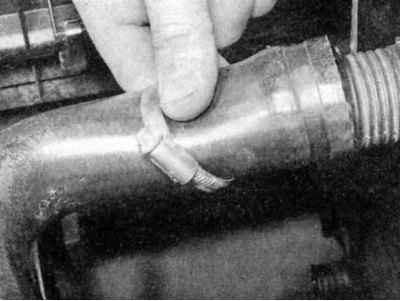
3. Loosen the hose clamps...
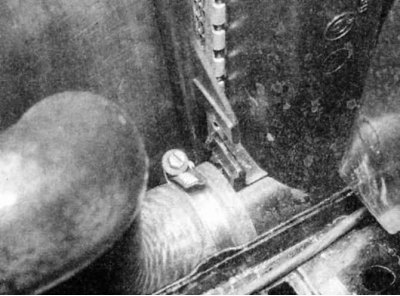
...and disconnect the hoses from the radiator.
4. If they are stuck, grab each hose at the end with water pump pliers, gently twist to break the sealant, then remove - be careful not to deform or break the radiator outlet ports! If the hoses are old or worn, cut them off and replace with new ones.
5. On M20 and M30 engines, disconnect the expansion tank hose from the radiator filler neck.
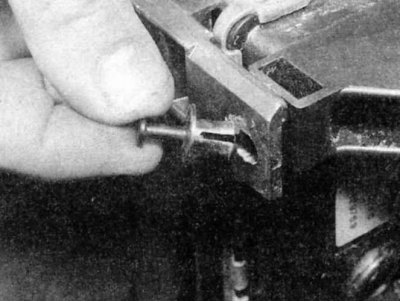
6. Loosen the screws or remove the plastic fasteners of the radiator shroud and move the shroud towards the engine.
7. On some engines the cover can be removed completely.
8. If the vehicle is equipped with automatic transmission, disconnect the transmission fluid cooling lines from the radiator. Place a tray to catch any spilled fluid. Cap the open ends of the lines and fittings.
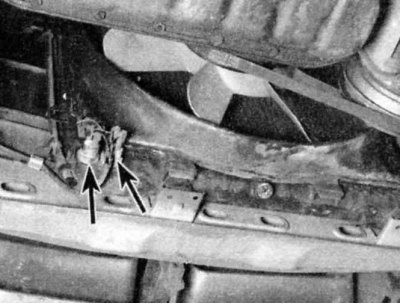
9. Disconnect the auxiliary fan thermal switches located on the radiator tanks.
10. Thermostat-controlled high and low speed auxiliary fan switches are located in the radiator tanks, in different locations depending on engine type and vehicle model.
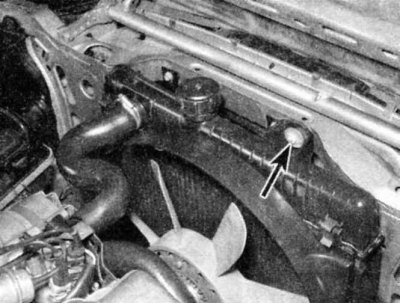
11. Remove the radiator mounting bolts. The bolts are usually located either at the top or on both sides of the radiator.
12. Carefully remove the radiator from the lower supports, being careful not to damage the cooling fins. Do not spill the coolant or scratch the painted surfaces of the car.
13. The removed radiator can be inspected for leaks and damage. If it requires repair, contact a specialist, as this will require special equipment.
14. Dirt and insect debris can be removed from the radiator using compressed air and a soft brush. Be careful not to damage the cooling fins.
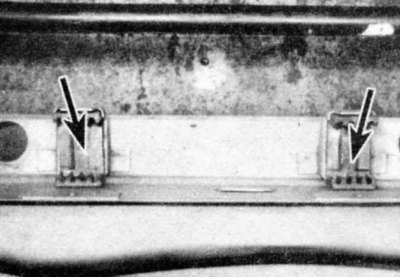
15. Check the radiator supports for signs of damage or wear and replace them if necessary.
Installation
1. Install in reverse order.
2. After installation, fill the cooling system with the recommended antifreeze/water mixture. If necessary, refer to Chapter Routine car maintenance.
3. Start the engine and check for coolant leaks. Warm the engine to normal operating temperature, indicated by a hot upper radiator hose. Check the coolant level and top up if necessary.
4. If your vehicle is equipped with automatic transmission, check the level and top up the transmission fluid if necessary.
This article is available at russian, bulgarian, belarusian, ukrainian, serbian, croatian, romanian, polish, slovak, hungarian
Article verified: Zhuravleva Isolda
Share information:
Previous articles
БМВ E28: Cooling system
Next articles
Similar articles on other types of BMW cars:
Removal and installation the radiator BMW 3 Series E30 (1982-1994)
Removal and installation the radiator BMW 3 Series E36 (1990-2000)
Removal and installation the EGR system radiator BMW 7 Series E38 (1994-2001)
Radiator — removal and installation BMW 7 Series E32 (1986-1994)
Pistons — removal and installation BMW X3 E83 (2003-2010)
Removal and installation the radiator BMW X5 E53 (1999-2006)
Removal and installation the radiator BMW 3 Series E30 (1982-1994)
Removal and installation the radiator BMW 3 Series E36 (1990-2000)
Removal and installation the EGR system radiator BMW 7 Series E38 (1994-2001)
Radiator — removal and installation BMW 7 Series E32 (1986-1994)
Pistons — removal and installation BMW X3 E83 (2003-2010)
Removal and installation the radiator BMW X5 E53 (1999-2006)
Link in different formats to this page
Visitor comments
No comments yet
- General information
- Governing bodies
- Manual
- Maintenance
- Power unit
- Engine repair
- Lubrication system
- Cooling system
- Ignition system
- Supply system
- Injection system (gasoline)
- Injection system (diesel)
- Exhaust system
- Transmission
- Clutch
- Car gearbox
- Front axle
- Rear axle
- Chassis
- Steering
- Brake system
- Wheels and tires
- Body
- Interior
- Exterior
- Heating system
- Electrical equipment
- Equipment and devices
- Power devices
- Windscreen wipers
- Electrical circuits
- General information
- Manual
- Maintenance
- Power unit
- Engine repair
- Ignition system
- Engine lubrication system
- Cooling system
- Fuel system (gasoline)
- Fuel system (diesel)
- Exhaust system
- Transmission
- Clutch
- Car gearbox
- Chassis
- Front and rear suspension
- Steering
- Brake system
- Body
- Exterior
- Interior
- Electrical equipment
- Heating system
- Equipment and devices
- Power devices
- Electrical circuits
- General information
- Manual
- Maintenance
- Power unit
- Engine in a car
- Engine overhaul
- Cooling system
- Supply system
- Ignition system
- Control system
- Transmission
- Clutch
- Manual gearbox
- Automatic gearbox
- Transmission line
- Chassis
- Steering
- Front suspension
- Rear suspension
- Brake system
- Body
- Body elements
- Car care and painting
- Electrical equipment
- Heater and air conditioner
- Equipment and devices
- Starter and generator
- Electrical circuits
- General information
- Operation and maintenance
- Specifications
- Power unit
- Engine repair
- Cooling and lubrication system
- Supply system
- Ecotronic power supply system
- Fuel injection system
- Ignition system
- Transmission
- Clutch
- Gearbox BMW 242/4
- Gearbox Getrag 262/8
- Gearbox Getrag 265/6
- Automatic gearbox
- Cardan gear
- Rear axle
- Chassis
- Steering
- Front suspension
- Rear suspension
- Brake system
- Electrical equipment
- Equipment and devices
- Electrical circuits