
Engines M20/M30
Removal
Caution: If the valve train components are to be reinstalled, they must be installed in their original positions by stacking them in the order they were installed when removed.
Remove the cylinder head.
Remove the rocker arm shafts.
Remove the intake manifold.
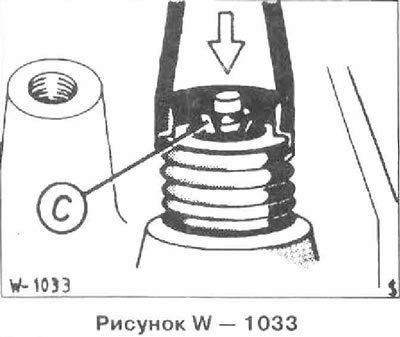
Compress the valve springs using BMW tool 111 060 and remove the C crackers.
Attention; A standard valve compression tool can also be used to compress the springs. Depending on the tool used, it may be necessary to remove the exhaust manifold.
Unload the springs and remove the upper spring cup, valve spring, and lower spring cup.
Remove the valve stem seals with a special tool. The best tools for this are the valve stem seal pliers 791-5 or the inertial puller 791-2 from HAZET.
Pull the valve out of the cylinder head towards the combustion chamber.
Remove the next valve.
Installation
Before installing the valves, check the valve guide bushings and possibly grind the valve seats.
Caution: When installing a new valve, lapping the valve seat is mandatory.
Remove burrs from the contact surface of the valve stem with crackers.
Lightly lubricate the valve stem and guide with engine oil and insert the valve.
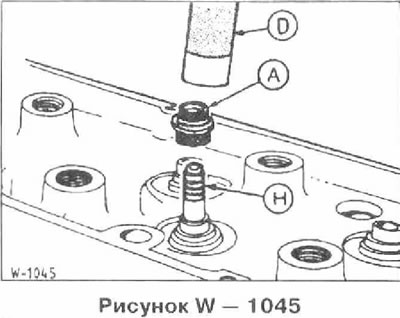
Lightly lubricate with engine oil and fit the oil deflector ring A using the appropriate tool D until it stops.
Caution: To avoid damaging the oil deflector ring, place the mounting sleeve H on the valve stem before installing it. If the mounting sleeve is missing, cover the contact surfaces of the valve crackers with smooth adhesive tape. Remove the adhesive tape after installation.
Insert the lower valve spring cup.
Insert the spring and the upper valve spring cup. Install only springs with the same manufacturer's marking, the same wire thickness and spring length.
Compress the valve spring and insert the crackers. Slowly release the valve spring, ensuring that the crackers are seated correctly.
After this, install the next valve. Be careful not to mix up the inlet and outlet valves.
Install the rocker shafts.
Install the cylinder head.
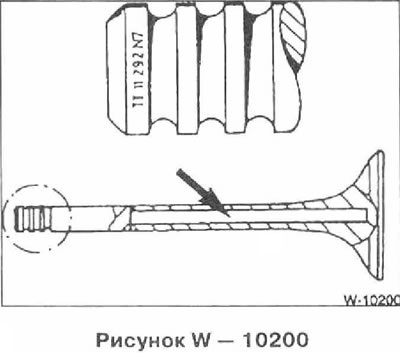
Caution: The exhaust valves of the 4-cylinder engine are filled with sodium to improve heat dissipation. They must not burn out and be used as a tool (for example, as punches). Explosive! Also, these valves should not be simply thrown away. To dispose of them, cut the valves with a hacksaw in the middle of the valve stem into 2 parts. Do not allow the valve to come into contact with water and then throw them away.
Caution: When sodium comes into contact with water, a rapid chemical reaction occurs, during which the sodium burns.
[The original article is posted on the resource BMWMan]