
Spark plugs should only be replaced when the engine is cold or slightly warm. Removing the spark plugs when the engine is hot can damage the threads in the cylinder head.
1. Switch off the ignition and remove the corresponding ignition coil (see chapter Engine electrical systems).
2. Remove the spark plug using a long socket wrench, being careful not to tilt it.
3. Assess the condition of the spark plugs (see illustrations Condition of spark plugs). If necessary, correct any possible faults that can be judged by the condition of the spark plugs. Carbon deposits on the electrodes can be removed with compressed air under pressure, do not use a wire brush for this purpose. Checking and adjusting the interelectrode gap between spark plug replacements is not required.
4. Install new spark plugs and tighten them to the specified torque.
5. Install the ignition coils.
Condition of spark plugs
Coal deposits
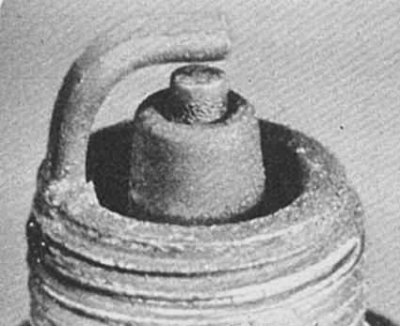
Symptoms: The presence of soot indicates an over-enriched fuel-air mixture or weak spark intensity. Causes misfires, makes starting difficult and leads to unstable engine operation.
Recommendations: Check for a clogged air cleaner, too much fuel in the float chamber, a stuck choke, or excessively worn contacts. Try using spark plugs with a longer insulator, which increases resistance to contamination.
Oiling
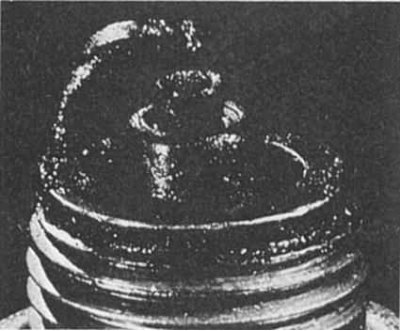
Symptoms: Oiling of the spark plug is caused by wear of the oil-deflecting caps. Oil gets into the combustion chamber through worn valve guides or piston rings. It causes misfires, makes starting difficult and leads to instability of engine operation.
Recommendations: Perform mechanical repairs and replace spark plugs.
Overheat
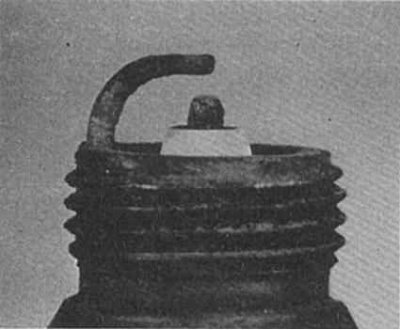
Symptoms: Porous, white insulator, erosion of electrodes and absence of any deposits. Leads to a reduction in spark plug life.
Recommendations: Check that the spark plug heat range is correct, that the ignition timing is set correctly, that the fuel/air mixture is not too lean, that there are no vacuum leaks in the intake manifold, and that the valves are not stuck. Also check the coolant level and that the radiator is not clogged.
Too early ignition
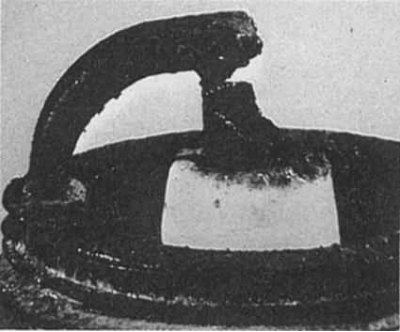
Symptoms: The electrodes are melted. The insulator is white, but may also be contaminated due to misfires or foreign particles entering the combustion chambers. May cause engine failure.
Recommendations: Check the glow number of the installed spark plugs, the ignition timing, and the quality of the mixture (isn't it too poor?), whether the cooling system is clogged and whether the lubrication system is functioning normally.
Conductive gloss
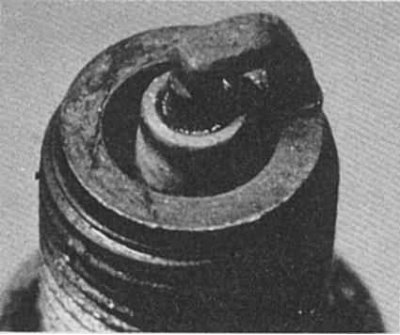
Symptoms: The insulator has a yellowish color and a polished appearance. Indicates a sudden increase in temperature in the combustion chambers during sharp acceleration. Normal deposits melt, acquiring the appearance of a varnish coating. Leads to misfires at high speeds.
Recommendations: Change the spark plugs (cooler, while maintaining the same driving style).
Short circuit of electrodes
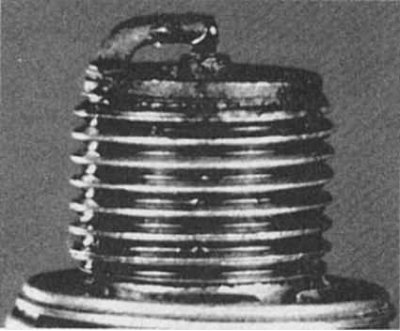
Symptoms: Waste combustion products enter the interelectrode space. Solid deposits accumulate, forming a bridge between the electrodes. Leads to ignition failure in the cylinder.
Recommendations: Remove deposits from the interelectrode space.
Normal condition of the candle
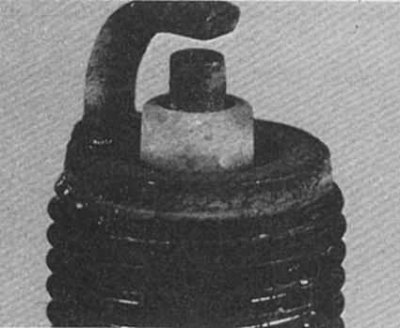
Symptoms: Gray-brown color and slight wear of the electrodes. The glow number of the spark plugs corresponds to the type of engine and its general condition.
Recommendations: When replacing spark plugs, install spark plugs of the same type.
Ash formation
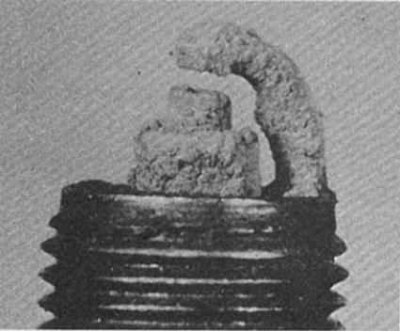
Symptoms: Soft, brownish deposits on one or both spark plug electrodes. They are caused by oil and/or fuel additives. Excessive buildup can insulate the electrodes and cause misfires and rough running under acceleration.
Recommendations: If deposits accumulate quickly, replace the oil seals to prevent oil from entering the combustion chambers. Try changing the fuel brand.
Wear
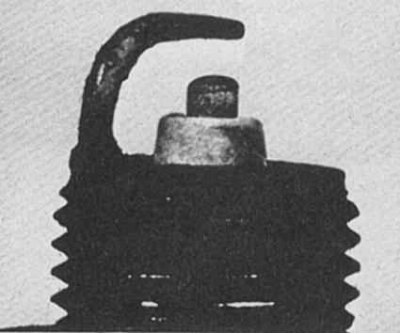
Symptoms: Rounding of the electrodes with a small accumulation of deposits at the working end. The color is normal. It leads to difficulty in starting the engine in cold, wet weather and increased fuel consumption.
Recommendations: Replace the spark plugs with new ones of the same type.
Detonation
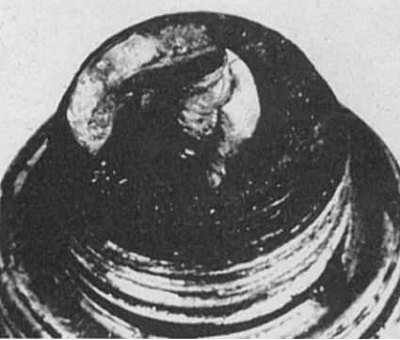
Symptoms: Insulators may be chipped or cracked. Inaccurate spark plug gap adjustment techniques may also damage the insulator. Piston damage may result.
Splashing
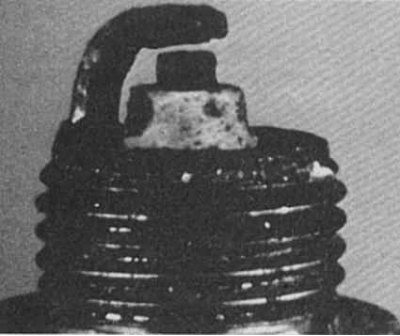
Symptoms: After a long period of misfire, deposits may become loose while the combustion chamber remains at operating temperature. At high speeds, deposits flake off the piston and stick to the hot insulator, causing misfires.
Recommendations: Replace the spark plugs or clean and reinstall the old ones.
Mechanical damage
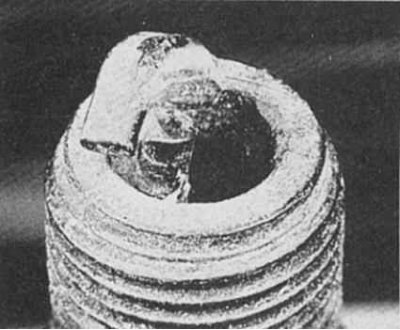
Symptoms: Can be caused by foreign materials entering the combustion chamber or occur when the piston hits a spark plug that is too long. Leads to cylinder failure and piston damage.
Recommendations: Remove foreign particles from the engine and/or replace the components.