
Attention:
Do not check the wheel alignment angles when the vehicle is loaded according to DIN:
- if there are no technical conditions for measurement with the input of the ground clearance height value.
- if, despite the repair work carried out, the ground clearance height on the left/right is outside the tolerances.
- if the car has been in an accident.
Note: Monitor compliance with verification conditions. If necessary, repair the car.
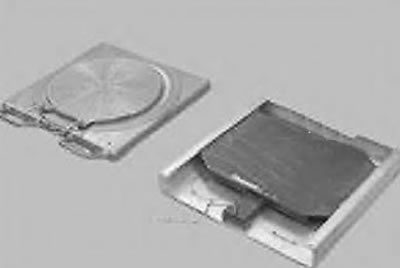
1. Prepare a lift if necessary.
2. Place the car on a lift.
Note: The front and rear wheels must be centered on the turntables/sliding supports.
3. Remove the locking pins from both pivot/sliding supports, adjust the level and turn on the measuring sensors.
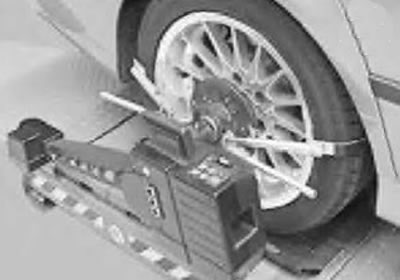
4. Secure the quick-release assemblies to the vehicle and remove the clamping arms in the area of the front wheels.
5. Attach the sensors to the quick-release clamps, align them with the level and connect them to the turntable.
Note: When using quick-release assemblies, rim runout compensation must be performed after installing the sensors.
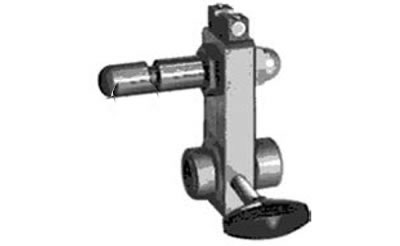
6. If necessary, secure the spoiler adapter.
7. If necessary, turn on the wheel alignment system.
8. Enter vehicle and customer details.
9. Determine the suspension type and select the car model.
10. Enter tire pressure and tread depth.
11. Measure and enter the ride height.
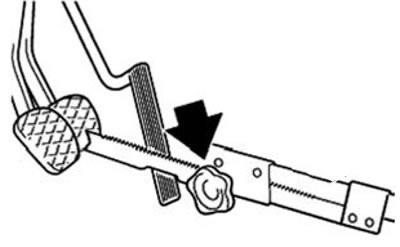
12. Install the brake pedal stop.
13. Take the first measurement (measurement upon admission) in accordance with the appliance manufacturer's instructions.
14. Compare the specified values with the actual ones.
15. If necessary, adjust the front and rear wheels.
16. Repeat the measurement (before issuance) in accordance with the appliance manufacturer's instructions.
17. Save and print the measurement protocol.
18. Perform steering wheel angle sensor correction.
19. Insert the locking pins into both pivot/extendable supports.
20. Disconnect the vehicle from the wheel alignment system.
21. Lower the vehicle from the lift.