



- Home
- BMW 3 Series
- E36
- Chassis
- Brake system
- Checking and replacing the brake light switch
Checking and replacing the brake light switch (BMW 3 Series E36)
The brake light switch is located in the footwell on the handbrake pedal lever
Turn on the ignition and press the brake pedal.
If the brake lights do not come on, first check the fuse. Then check the bulbs. If the corresponding bulbs are not burnt out, check the brake light switch.
To do this, remove the left lower trim (above the pedal).
Disconnect the connector from the brake light switch by squeezing the tabs of the retainer.
Turn on the ignition.
Short-circuit both wires of the brake light switch. If the brake light does not light, adjust or replace the brake light switch.
Disconnect the connector from the brake light switch by squeezing the tabs of the retainer.
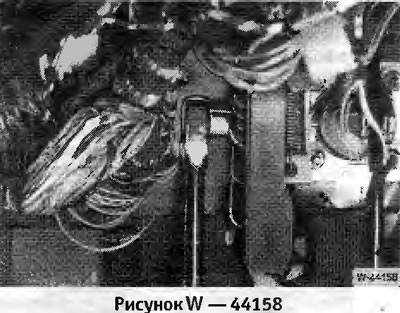
Loosen the brake light switch mount on the pedal support, do not remove the bolt.
Pull out the button and the red locking sleeve of the switch with your fingers in the direction of the arrow so that the protrusions "6" can be compressed.
Press the tabs together and pull the brake light switch "7" out of the mount "8". 9 clutch pedal switch, installed only on vehicles equipped with the Tempomat system.
Insert the switch with the sleeve completely pulled out into the pedal support and snap it into place.
Slide the red locking sleeve into the switch until the sleeve lug is flush with the pedal support.
Screw the mount onto the pedal support.
Connect and snap the connector into place.
Check that the brake lights come on when the ignition is on and the brake pedal is pressed.
Install the bottom trim.
Depending on the model and equipment composition, BMW vehicles may be equipped with the MARK IV anti-lock brake system manufactured by TEVES. Since September 1991, the ABS system has been installed on all serially produced vehicles. Subsequent equipment of a vehicle with the ABS system is not possible.
The ABS system prevents the wheels from locking during sudden braking. Thanks to this, the car remains fully controllable during full braking.
The ABS system is ready to operate when the ignition is turned on and at speeds starting from approximately 8 km/h. It controls all braking processes in the locking area
Two speed sensors located on each wheel measure the speed of rotation of the wheels. Based on signals from individual wheels, the control unit calculates the average speed, which approximately corresponds to the speed of the vehicle. As a result of comparing the rotation speed of an individual wheel with the average rotation speed of all wheels, the electronic control unit determines the state of wheel slippage and can thus determine that the wheel is approaching a locking state.
As soon as the locking starts, i.e. when the pressure in the brake caliper is still too high in relation to the wheel's grip on the road surface, the control unit maintains the fluid pressure constant based on the signals from the speed sensors. This means that the pressure in the brake caliper does not increase even when the brake pedal is pressed harder. If the tendency to lock does not disappear, the brake fluid pressure is reduced by opening the outlet valve. In this case, it opens just enough to allow the wheel to start rotating again, then the pressure is kept constant again.
If the wheel speed exceeds a certain value, the hydraulic system increases the pressure again, but not exceeding the braking pressure value that is created by the driver when pressing the brake pedal.
This process is repeated for each wheel until the brake pedal is released or until the vehicle is nearly stopped (about 3 km/h).
The control circuit in the electronic control unit ensures that the ABS system is switched off in the event of its failure (for example, a broken wire) or when the supply voltage drops (battery voltage below 10.5 volts), which is indicated by the ABS warning light on the dashboard lighting up. In this case, the vehicle's braking behavior is the same as if the ABS system was not installed.
When the ABS warning light comes on (ABS system shutdown alarms) pay attention to the following points:
Raise the car, remove the wheels, check the integrity of the electrical wires of the speed sensors (absence of abrasions).
Further checks of the ABS system should be carried out at a service station.
(The original article is posted on the resource: «BMWMAN»)
Examination
Turn on the ignition and press the brake pedal.
If the brake lights do not come on, first check the fuse. Then check the bulbs. If the corresponding bulbs are not burnt out, check the brake light switch.
To do this, remove the left lower trim (above the pedal).
Disconnect the connector from the brake light switch by squeezing the tabs of the retainer.
Turn on the ignition.
Short-circuit both wires of the brake light switch. If the brake light does not light, adjust or replace the brake light switch.
Removal
Disconnect the connector from the brake light switch by squeezing the tabs of the retainer.
Loosen the brake light switch mount on the pedal support, do not remove the bolt.
Pull out the button and the red locking sleeve of the switch with your fingers in the direction of the arrow so that the protrusions "6" can be compressed.
Press the tabs together and pull the brake light switch "7" out of the mount "8". 9 clutch pedal switch, installed only on vehicles equipped with the Tempomat system.
Installation
Insert the switch with the sleeve completely pulled out into the pedal support and snap it into place.
Slide the red locking sleeve into the switch until the sleeve lug is flush with the pedal support.
Screw the mount onto the pedal support.
Connect and snap the connector into place.
Check that the brake lights come on when the ignition is on and the brake pedal is pressed.
Install the bottom trim.
ABS system
Depending on the model and equipment composition, BMW vehicles may be equipped with the MARK IV anti-lock brake system manufactured by TEVES. Since September 1991, the ABS system has been installed on all serially produced vehicles. Subsequent equipment of a vehicle with the ABS system is not possible.
The ABS system prevents the wheels from locking during sudden braking. Thanks to this, the car remains fully controllable during full braking.
The ABS system is ready to operate when the ignition is turned on and at speeds starting from approximately 8 km/h. It controls all braking processes in the locking area
Two speed sensors located on each wheel measure the speed of rotation of the wheels. Based on signals from individual wheels, the control unit calculates the average speed, which approximately corresponds to the speed of the vehicle. As a result of comparing the rotation speed of an individual wheel with the average rotation speed of all wheels, the electronic control unit determines the state of wheel slippage and can thus determine that the wheel is approaching a locking state.
As soon as the locking starts, i.e. when the pressure in the brake caliper is still too high in relation to the wheel's grip on the road surface, the control unit maintains the fluid pressure constant based on the signals from the speed sensors. This means that the pressure in the brake caliper does not increase even when the brake pedal is pressed harder. If the tendency to lock does not disappear, the brake fluid pressure is reduced by opening the outlet valve. In this case, it opens just enough to allow the wheel to start rotating again, then the pressure is kept constant again.
If the wheel speed exceeds a certain value, the hydraulic system increases the pressure again, but not exceeding the braking pressure value that is created by the driver when pressing the brake pedal.
This process is repeated for each wheel until the brake pedal is released or until the vehicle is nearly stopped (about 3 km/h).
The control circuit in the electronic control unit ensures that the ABS system is switched off in the event of its failure (for example, a broken wire) or when the supply voltage drops (battery voltage below 10.5 volts), which is indicated by the ABS warning light on the dashboard lighting up. In this case, the vehicle's braking behavior is the same as if the ABS system was not installed.
When the ABS warning light comes on (ABS system shutdown alarms) pay attention to the following points:
- Stop the car, turn off the engine and start it again.
- Check the battery voltage. If the voltage is less than 10.5 V, charge the battery.
Caution: If the ABS warning light comes on at the start of a journey and then goes out, this means that the battery voltage was initially low and then increased due to charging from the alternator.
Raise the car, remove the wheels, check the integrity of the electrical wires of the speed sensors (absence of abrasions).
Further checks of the ABS system should be carried out at a service station.
Caution: Before carrying out electric welding work, the connector of the electronic control unit must be disconnected. The connector must be disconnected only when the ignition is switched off. During painting work, the control unit may only be exposed to short-term temperatures of up to a maximum of 95°C and long-term temperatures of up to 100°C (approximately up to 2 hours) exposure to temperatures up to a maximum of 85°C.
(The original article is posted on the resource: «BMWMAN»)
This article is available at russian, bulgarian, belarusian, ukrainian, serbian, croatian, romanian, polish, slovak, hungarian
Article verified: Chebotarev Vladislav
Share information:
Previous articles
БМВ E36: Brake system
Next articles
Similar articles on other types of BMW cars:
Checking and replacing the brake light switch BMW 5 Series E34 (1988-1996)
Checking/Replacing the Brake Light Switch BMW 5 Series E39 (1995-2003)
Brake Light Switch — Checking and Replacing BMW 7 Series E32 (1986-1994)
Checking the brake system and clutch BMW 7 Series E38 (1994-2001)
Reversing light switch BMW X3 E83 (2003-2010)
Brake light switch wiring diagram BMW X5 E53 (1999-2006)
Checking and replacing the brake light switch BMW 5 Series E34 (1988-1996)
Checking/Replacing the Brake Light Switch BMW 5 Series E39 (1995-2003)
Brake Light Switch — Checking and Replacing BMW 7 Series E32 (1986-1994)
Checking the brake system and clutch BMW 7 Series E38 (1994-2001)
Reversing light switch BMW X3 E83 (2003-2010)
Brake light switch wiring diagram BMW X5 E53 (1999-2006)
Link in different formats to this page
Visitor comments
No comments yet
- General information
- Manual
- Maintenance
- Power unit
- Engine repair
- Cooling system
- Power system (gasoline)
- Injection system (gasoline)
- Fuel system (diesel)
- Exhaust system
- Ignition system
- Charge and launch systems
- Transmission
- Car gearbox
- Clutch and drive shafts
- Chassis
- Brake system
- Suspension front and rear
- Steering
- Body
- Body care and repair
- Exterior
- Interior
- Electrical equipment
- Troubleshooting
- Lighting and signaling
- Equipment and devices
- Heater and air conditioner
- Electrical circuits
- General information
- Manual
- Repair on the road
- Weekly checks
- Maintenance
- Troubleshooting
- Power unit
- 4 cylinder engines
- 6 cylinder engines
- Engine overhaul
- Cooling and heating
- Fuel and exhaust system
- Starting and charging system
- Ignition system
- Transmission
- Clutch
- Mechanical gearbox
- Automatic gearbox
- Cardan and drive shafts
- Chassis
- Brake system
- Wheel suspension
- Steering
- Body
- Exterior
- Interior
- Electrical equipment
- Equipment and devices
- Electrical circuits
- General information
- Maintenance
- Power unit
- Engine repair
- Cooling system
- Ignition system
- Supply system
- Fuel injection system
- Exhaust system
- Transmission
- Clutch
- Car gearbox
- Front and rear axle
- Chassis
- Steering
- Brake system
- Body
- Exterior
- Interior
- Electrical equipment
- Heating system
- Equipment and devices
- Power devices
- Electrical circuits
- Power unit
- M10/M20 engine
- M40 engine
- Ignition system
- Lubrication system
- Cooling system
- Supply system
- Fuel injection
- Exhaust system
- Transmission
- Clutch
- Manual gearbox
- Front axle
- Rear axle
- Chassis
- Steering
- Brake system
- Body
- Exterior
- Interior
- Electrical equipment
- Heating system
- Equipment and devices
- Electrical circuits
- General information
- Specifications
- Operation and maintenance
- 4-cylinder engine
- Engine repair
- Cooling and lubrication system
- Supply system
- Ignition system
- 6-cylinder engine
- Engine repair
- Cooling and lubrication system
- Supply system
- Fuel injection system
- Ignition system
- Transmission
- Clutch
- 4-speed manual gearbox
- 5-speed manual gearbox
- Automatic gearbox
- Cardan and rear axle
- Chassis
- Steering
- Front suspension
- Rear suspension
- Brake system
- Electrical equipment
- Equipment and devices
- Electrical circuits