



2. Drive belts, sometimes called V-belts or simply fan belts, are located at the front of the engine and play an important role in the operation of the vehicle and its individual components. Due to the nature of the material and operating conditions, drive belts wear out over time and should therefore be checked periodically and the tension adjusted to avoid serious engine damage.
3. The number of belts used on a particular vehicle depends on the units and systems installed on it. Drive belts are used to drive the alternator, steering pump, water pump, and air conditioning compressor. Depending on the arrangement of the pulleys, one belt can drive several components at once.
4. Turn off the engine, open the hood and locate the various drive belts at the front of the engine. Use your fingers (and using a flashlight if necessary) walk the entire length of each belt, feeling for cracks and delamination. Also check for any frayed or polished areas. Each belt should be inspected on both sides, which means twisting it to check the condition of the reverse side.
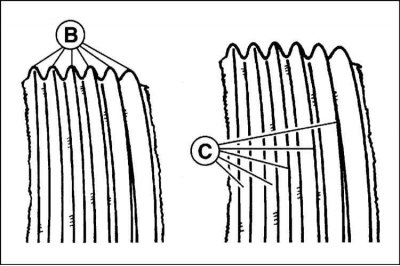
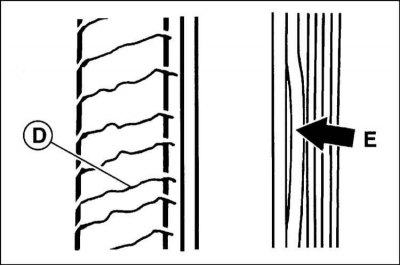
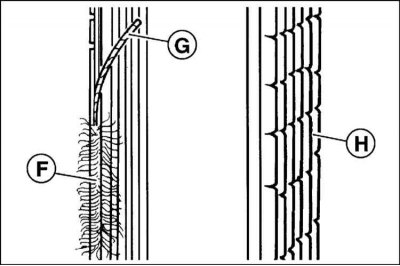
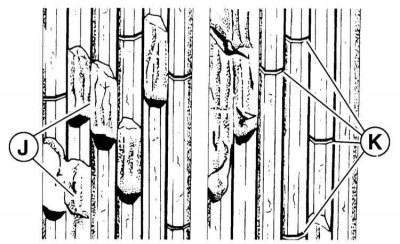
5. The belt tension is checked by pressing firmly with your thumb and determining the degree of its deflection. Measure the deflection with a ruler. If the distance between the pulley centers is from 180 to 280 mm, then the deflection when pressing with your thumb should be 6 mm. If the distance between the pulley centers is between 300 and 400 mm, the deflection should be 13 mm.
(The article was copied from an online resource BMWMAN.RU)