
Checking for leaks
Apply 12V to pins "2" and "3" of the servo connector (polarity does not matter). In this case, the vacuum valve should switch with a characteristic click.
Connect the tester (in ohmmeter mode) to plugs "4" and "7" of the servo drive connector.
Attach the hand vacuum pump hose to the servo drive port "A". Create a vacuum so that the resistance value is 500-700 Ohms (in this case the servo pusher is not fully retracted). The plunger is fully retracted at a vacuum of approximately 250 mbar.
Disconnect the electrical wires from the servo drive connector, then disconnect the vacuum pump hose from the "A" branch pipe and read the tester readings - within 1 min the resistance should increase by no more than 200 Ohms. If the resistance has increased by a greater amount, replace the servo drive.
Apply 12V to servo connector pins "2" and "3" again and read the tester reading. If the resistance value increases by more than 650 ohms in 5 seconds, replace the check valve.
Fully retract the servo pusher, applying a vacuum of approximately 250 mbar.
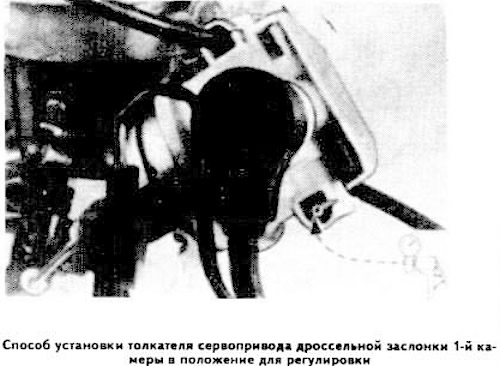
Apply 12V to pins "2" and "8" of the servo connector (polarity does not matter). In this case, the atmospheric valve should switch with a characteristic click, and the servo pusher should extend within 1 s.
If the tappet extends for a longer time or does not extend, check the vacuum valve hose, the condition of the electrical wires and the air filter of the throttle servo of the 1st chamber. Replace the filter or the servo itself if necessary.
Note: When applying voltage directly from the battery to the servo connector, it is recommended to include a fuse with a current of 1-5 A in the supply wire circuit.