
Table of contents: Removal ↓ Installation ↓
- Home
- BMW 3 Series
- E46
- Power unit
- Power system (gasoline)
- Removal and installation the fuel level sensor / fuel pump
Removal and installation the fuel level sensor / fuel pump (BMW 3 Series E46)
The BMW 3 Series has a fuel level sensor in each chamber of the fuel tank. To check the sensors, they must be removed. The fuel pump is located in the sensor of the right chamber, when viewed in the direction of travel. Therefore, to remove the pump, you must remove the right sensor.
Before removing the fuel pump, empty the fuel tank by driving the vehicle. If possible, work should be carried out outdoors and with good ventilation. A radial fan with an electric motor located outside the air flow can also be used to ventilate the work area.
1. Disconnect the negative (-) battery cable with the ignition off. The battery is located in the luggage compartment behind the cover on the right side. In BMW 316i, 318i cars, the battery is located in the engine compartment.
2. Remove the rear seat, refer to Section Removal and installation the rear seat.
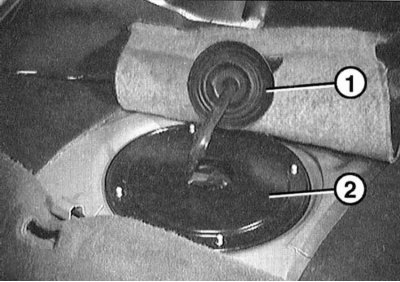
3. Remove the rubber seal "1" on the left or right under the seat. Fold back the insulating mat.
4. Loosen the mounting screws and remove cover "2".
Right sensor with fuel pump:
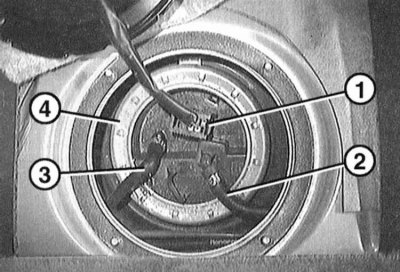
5. Disconnect connector "1". At the same time, release the lock by squeezing it.
6. Mark fuel hoses "2" and "3" with tape and disconnect them from the fuel gauge by opening the clamps.
7. Carefully loosen the union nut "4" using blows. The service station uses the BMW 161020 tool for this. This can also be done using a wooden block.
8 Lift the reserve sensor up, move it to the side and remove it. Place a rag underneath and wipe off any leaked fuel.
Left stock sensor:
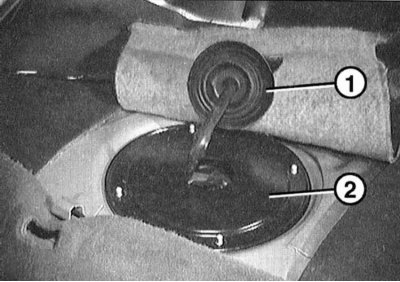
9. Loosen the mounting screws and remove cover "2".
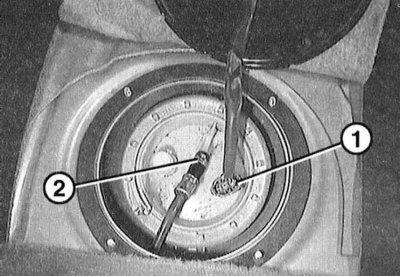
10. Disconnect connector "1" of the reserve sensor. At the same time, squeeze the clamps.
11. Disconnect fuel hose "2" from the reserve sensor by loosening clamp "2".
12. Carefully loosen the union nut using blows. The service station uses the BMW 161020 tool for this. This can also be done using a wooden block.
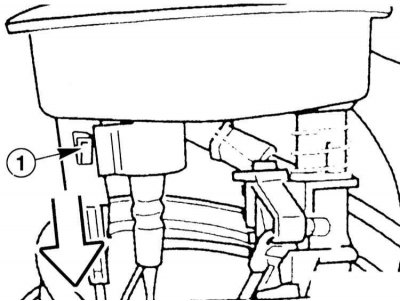
13. Lift the reserve sensor, move it aside and remove it. Press the lock "1" from the bottom and remove the equalizing hose of the tank. Remove the sensor. At the same time, put a rag under it and wipe off the leaked fuel.
Left stock sensor:
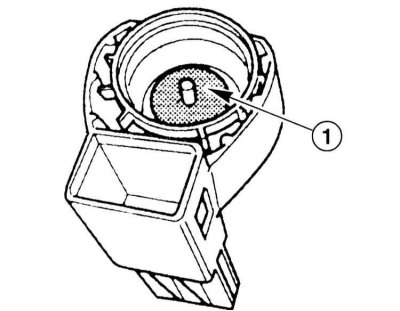
14. Make sure that the check valve "1" is inserted into the tank equalizing hose.
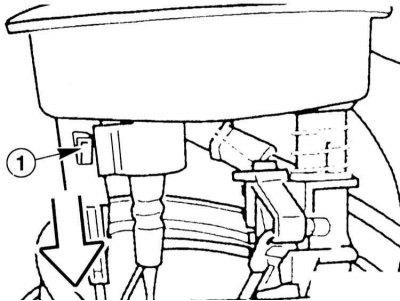
15. Insert the sensor and hold it about 5 cm above the tank. Fix the sensor in the groove on the tank.
16 Align the sensor by turning it until the tab at the top of the sensor fits into the groove in the tank.
17. Put on and tighten the union nut. The lock should enter the tab into the corresponding groove on the tank, clearly fixing.
18. Connect the fuel hoses according to the markings and secure them with new clamps.
19. Connect the plug connections and secure them.
20. Install the cover and secure it, making sure the seal is in the correct position.
21. Insert the rubber seal into the cover. Put the insulating mat in place.
22. Reinstall the rear seat, refer to Section Removal and installation the rear seat.
23. Connect the negative (-) battery cable with the ignition off. Set the clock.
24. Check the operation of the fuel gauge on the instrument panel.
This article is based on data from the website: BMWMan.ru
Do not use open fire near the workplace, do not smoke or hold any very hot objects. There is a risk of accident! Keep a fire extinguisher at hand.
Ensure adequate ventilation of the work area. Fuel vapors are toxic.
The fuel system is under pressure. When opening the system, fuel may escape under pressure. Collect the fuel with a rag. Use safety glasses.
Removal
Before removing the fuel pump, empty the fuel tank by driving the vehicle. If possible, work should be carried out outdoors and with good ventilation. A radial fan with an electric motor located outside the air flow can also be used to ventilate the work area.
1. Disconnect the negative (-) battery cable with the ignition off. The battery is located in the luggage compartment behind the cover on the right side. In BMW 316i, 318i cars, the battery is located in the engine compartment.
Disconnecting the battery will erase the fault memory of some control units. If necessary, read the fault memory before disconnecting the battery. Refer to Section Troubleshooting. It is advisable to carry out the work in a service station.
2. Remove the rear seat, refer to Section Removal and installation the rear seat.
3. Remove the rubber seal "1" on the left or right under the seat. Fold back the insulating mat.
4. Loosen the mounting screws and remove cover "2".
Right sensor with fuel pump:
5. Disconnect connector "1". At the same time, release the lock by squeezing it.
6. Mark fuel hoses "2" and "3" with tape and disconnect them from the fuel gauge by opening the clamps.
The fuel system is under pressure, so remove the hose slowly and wipe away any leaking fuel.
7. Carefully loosen the union nut "4" using blows. The service station uses the BMW 161020 tool for this. This can also be done using a wooden block.
8 Lift the reserve sensor up, move it to the side and remove it. Place a rag underneath and wipe off any leaked fuel.
Left stock sensor:
9. Loosen the mounting screws and remove cover "2".
10. Disconnect connector "1" of the reserve sensor. At the same time, squeeze the clamps.
11. Disconnect fuel hose "2" from the reserve sensor by loosening clamp "2".
The fuel system is under pressure, so the hose must be removed slowly. If necessary, wipe off any leaked fuel.
12. Carefully loosen the union nut using blows. The service station uses the BMW 161020 tool for this. This can also be done using a wooden block.
13. Lift the reserve sensor, move it aside and remove it. Press the lock "1" from the bottom and remove the equalizing hose of the tank. Remove the sensor. At the same time, put a rag under it and wipe off the leaked fuel.
Installation
Be sure to replace the O-rings on the reserve sensors.
Left stock sensor:
14. Make sure that the check valve "1" is inserted into the tank equalizing hose.
15. Insert the sensor and hold it about 5 cm above the tank. Fix the sensor in the groove on the tank.
16 Align the sensor by turning it until the tab at the top of the sensor fits into the groove in the tank.
17. Put on and tighten the union nut. The lock should enter the tab into the corresponding groove on the tank, clearly fixing.
18. Connect the fuel hoses according to the markings and secure them with new clamps.
19. Connect the plug connections and secure them.
20. Install the cover and secure it, making sure the seal is in the correct position.
21. Insert the rubber seal into the cover. Put the insulating mat in place.
22. Reinstall the rear seat, refer to Section Removal and installation the rear seat.
23. Connect the negative (-) battery cable with the ignition off. Set the clock.
24. Check the operation of the fuel gauge on the instrument panel.
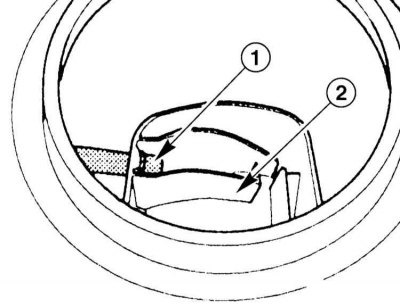
If the fuel tank cannot be emptied while driving, this indicates that the tank equalizer between the right and left chambers is not working properly. In this case, you must first remove the right sensor with the fuel pump. Then remove the left sensor and check whether the equalizer hose "1" is fixed in the sump "2". After checking, reinstall both sensors.
This article is based on data from the website: BMWMan.ru
This article is available at russian, bulgarian, belarusian, ukrainian, serbian, croatian, romanian, polish, slovak, hungarian
Article verified: Sevastyanov Nikolay
Share information:
Previous articles
БМВ E46: Power system (gasoline)
Next articles
Similar articles on other types of BMW cars:
Removal and installation the fuel level sensor / fuel pump BMW 5 Series E39 (1995-2003)
Removal and installation the fuel pump, intermediate pump and fuel… BMW 5 Series E28 (1981-1988)
Fuel/Fuel Pump Sensor — Removal and Installation BMW 7 Series E32 (1986-1994)
Removal and installation the fuel pump BMW 7 Series E38 (1994-2001)
Removal and installation the fuel filler cap BMW X3 E83 (2003-2010)
Fuel level indicator sensor BMW X5 E53 (1999-2006)
Removal and installation the fuel level sensor / fuel pump BMW 5 Series E39 (1995-2003)
Removal and installation the fuel pump, intermediate pump and fuel… BMW 5 Series E28 (1981-1988)
Fuel/Fuel Pump Sensor — Removal and Installation BMW 7 Series E32 (1986-1994)
Removal and installation the fuel pump BMW 7 Series E38 (1994-2001)
Removal and installation the fuel filler cap BMW X3 E83 (2003-2010)
Fuel level indicator sensor BMW X5 E53 (1999-2006)
Link in different formats to this page
Visitor comments
No comments yet
- General information
- Manual
- Maintenance
- Power unit
- Engine repair
- Cooling system
- Power system (gasoline)
- Injection system (gasoline)
- Fuel system (diesel)
- Exhaust system
- Ignition system
- Charge and launch systems
- Transmission
- Car gearbox
- Clutch and drive shafts
- Chassis
- Brake system
- Suspension front and rear
- Steering
- Body
- Body care and repair
- Exterior
- Interior
- Electrical equipment
- Troubleshooting
- Lighting and signaling
- Equipment and devices
- Heater and air conditioner
- Electrical circuits
- General information
- Manual
- Repair on the road
- Weekly checks
- Maintenance
- Troubleshooting
- Power unit
- 4 cylinder engines
- 6 cylinder engines
- Engine overhaul
- Cooling and heating
- Fuel and exhaust system
- Starting and charging system
- Ignition system
- Transmission
- Clutch
- Mechanical gearbox
- Automatic gearbox
- Cardan and drive shafts
- Chassis
- Brake system
- Wheel suspension
- Steering
- Body
- Exterior
- Interior
- Electrical equipment
- Equipment and devices
- Electrical circuits
- General information
- Maintenance
- Power unit
- Engine repair
- Cooling system
- Ignition system
- Supply system
- Fuel injection system
- Exhaust system
- Transmission
- Clutch
- Car gearbox
- Front and rear axle
- Chassis
- Steering
- Brake system
- Body
- Exterior
- Interior
- Electrical equipment
- Heating system
- Equipment and devices
- Power devices
- Electrical circuits
- Power unit
- M10/M20 engine
- M40 engine
- Ignition system
- Lubrication system
- Cooling system
- Supply system
- Fuel injection
- Exhaust system
- Transmission
- Clutch
- Manual gearbox
- Front axle
- Rear axle
- Chassis
- Steering
- Brake system
- Body
- Exterior
- Interior
- Electrical equipment
- Heating system
- Equipment and devices
- Electrical circuits
- General information
- Specifications
- Operation and maintenance
- 4-cylinder engine
- Engine repair
- Cooling and lubrication system
- Supply system
- Ignition system
- 6-cylinder engine
- Engine repair
- Cooling and lubrication system
- Supply system
- Fuel injection system
- Ignition system
- Transmission
- Clutch
- 4-speed manual gearbox
- 5-speed manual gearbox
- Automatic gearbox
- Cardan and rear axle
- Chassis
- Steering
- Front suspension
- Rear suspension
- Brake system
- Electrical equipment
- Equipment and devices
- Electrical circuits