
Twice a year or every 10,000 km (whichever comes first).
Check the power steering fluid level periodically to avoid vehicle handling problems such as damage to the steering pump. Follow these steps:.
Do not hold the steering wheel fully turned in one direction or the other for more than five seconds. This may damage the steering pump.
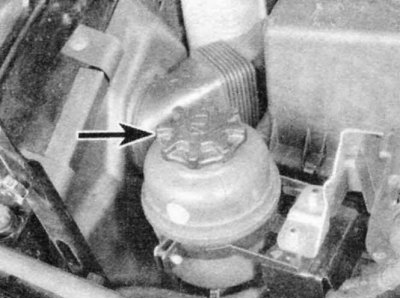
On some models, the power steering reservoir is located on the left side of the engine compartment and has a screw-on cap with a built-in dipstick. On other models, the power steering system and vacuum booster are used, which have one common reservoir, located in the right rear corner of the engine compartment.
1. Park the vehicle on a level surface and apply the parking brake.
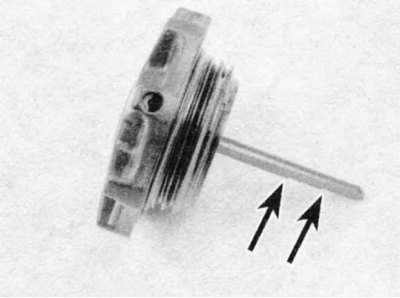
2. On models with a built-in dipstick, start the engine and warm it up to normal temperature. With the engine idling, turn the steering wheel from lock to lock several times to bleed the air from the steering system. Turn off the engine, remove the reservoir cap by turning it counterclockwise, wipe the dipstick dry and close the cap. Open the cap again and check the fluid level. It should be between the two marks.
3. On models with vacuum power steering, depress the brake pedal ten times or until it begins to "resist". Loosen the nut, remove the cap and make sure the fluid level is no lower than 6.0 mm from the top of the reservoir.
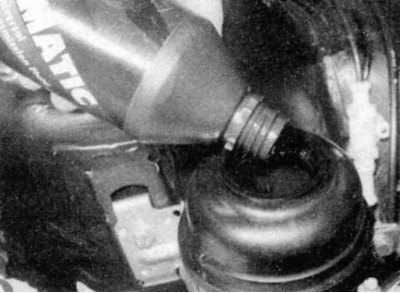
4. Add liquid in small doses until it reaches the desired level.
Do not allow the liquid to overflow. If this does happen, remove the excess with a clean syringe. Close the lid.
5. If frequent fluid top-up is required, check the power steering hoses and fittings for signs of wear and leaks (see section Checking the condition and replacing the engine compartment hoses).
6. Check the condition and tension of the drive belt (see section Checking the condition, adjusting the tension and replacing the drive belts).
(Information obtained from this online resource «BMWman.ru»)