
- Home
- BMW 5 Series
- E28
- General information
- Maintenance
- Changing engine oil and oil filter
Changing engine oil and oil filter (BMW 5 Series E28)
Twice a year or every 10,000 km (whichever comes first).
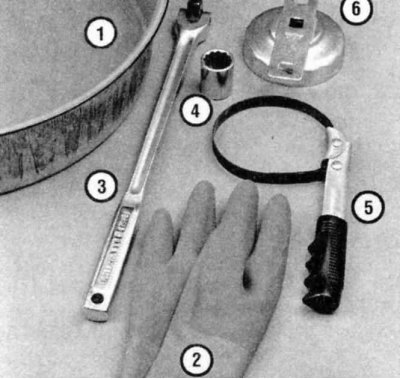
These tools are necessary to change the engine oil and oil filter.
1 — Drainage tank - should not be very deep, but wide enough to avoid spilling
2 - Rubber gloves - when removing the drain plug and oil filter, oil will inevitably get on your hands (gloves will protect against burns)
3 - Gate - sometimes the drain plug is tightened very tightly and it is necessary to use a long wrench to loosen it. You can also use a suitable size open-end wrench
4 — Socket head- used in combination with a winch or ratchet drive (must match the size of the drain plug head
5 — Oil filter removal key - is a metal strap wrench that requires a certain amount of free space around the filter to use. This wrench is not needed for all engine types
6 — Oil filter removal key - this key fits onto the bottom of the filter and can be turned using a ratchet or a gate (there are different size keys for different types of filters). This key is not required for all types of engines
Prolonged skin contact with used engine oil is quite dangerous. Use a barrier cream and wear gloves during this procedure. Change oil-soaked clothing immediately.
Frequent engine oil changes are the most important preventative maintenance procedure available to the amateur mechanic. Over time, oil is susceptible to dilution and contamination, leading to premature engine wear.
1. Before you begin, make sure you have all the tools you need. You should also have plenty of rags or old newspapers on hand to soak up any spilled oil.
2. Start the engine and warm it up to normal operating temperature - warm oil and sediment flow out of the engine better. If you need to buy new oil, a filter or any tools, go get them in the car, this way you will warm up the engine oil at the same time.
3. Park the car on a level surface and turn off the engine when it is warm enough. Remove the oil filler cap from the cylinder head cover.
4. To gain access to the drain plug and oil filter, jack up the vehicle and support it securely on axle stands.
Never work under a vehicle supported only by a hydraulic or scissor jack - always use axle stands!
5. If this is your first time changing the oil on this vehicle, get underneath the vehicle and familiarize yourself with the location of the drain plug and oil filter. Note that on some engines, the oil filter is located on the upper left side of the engine. The exhaust components will be hot during this procedure, so note where the pipes are located so you don't come into contact with them while you're working.
6. Being careful not to touch hot components, place a drain pan under the drain plug at the bottom of the engine.
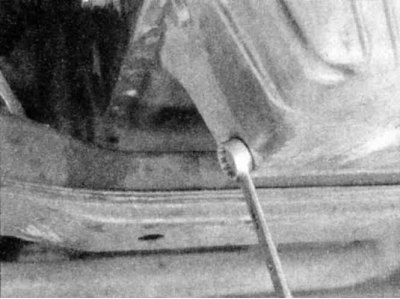
7. Clean the area around the plug, then loosen the plug. It is recommended to use rubber gloves when loosening the plug the last few turns to avoid getting burned by hot oil. When unscrewing the plug, try to press it against the crankcase, and then pull it out sharply. This will help you avoid contact with the stream of hot oil, as well as the possibility of the plug falling into the drain container.
8. As the oil pressure weakens when leaking, it may be necessary to change the position of the container under the crankcase. Check the old oil for metal particles, this can warn you in advance of engine wear.
9. After draining the old oil, wipe the drain plug with a clean rag. Any metal particles, even the smallest ones, stuck to the plug will immediately contaminate the new oil.
10. Install the plug and tighten it securely. Use a new washer if necessary.
11. Place the drain pan back under the oil filter.
Oil filter housing type
1. Loosen the screw-out oil filter by turning it counterclockwise with a filter wrench. Any filter wrench will do.
2. Sometimes the unscrewing filter is screwed in so tightly that it is not easy to release. In this case, pierce it with a metal rod or a long screwdriver and use it as a winch to turn the filter. Be prepared for oil to spray out of the filter housing when piercing it.
3. After releasing the filter, unscrew it from the cylinder block by hand. After removing the filter, quickly turn it over with the open end up to prevent oil spillage.
4. Wipe the cylinder block surface with a clean rag. Make sure that none of the old sealing rings are stuck in the block mounting surface. If necessary, they can be removed with a scraper.
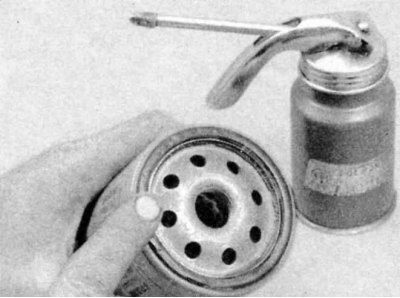
5. Make sure the new filter is the same type as the old one. Lubricate the rubber sealing ring of the new filter with engine oil and install it. Do not use a filter wrench, as overtightening the filter will damage the seal. Most filter manufacturers recommend hand tightening only. It is common practice to tighten them three-quarters of a turn after the sealing ring contacts the block, but it is better to follow the instructions on the filter itself.
Cartridge type oil filter
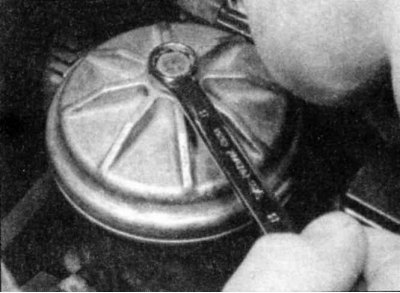
1. Some models are equipped with a cartridge type oil filter. Loosen the bolt, remove the cover and pull out the filter.
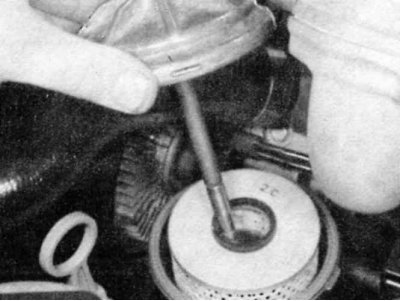
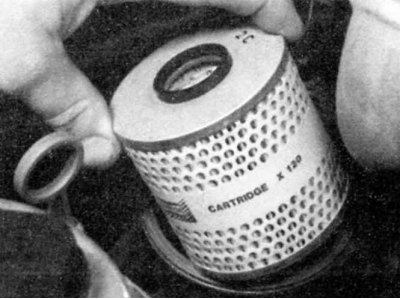
2. Compare the new element with the old one and make sure it is the same type, then install it into the filter housing.
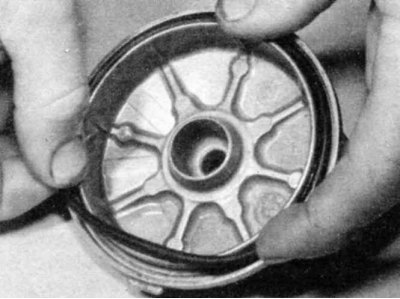
3. Wipe the mounting surface of the housing and cover with a clean cloth. If necessary, replace the rubber O-ring. Lubricate the new O-ring with clean oil and install the cover and bolt. Tighten the bolt securely.
All models
1. Remove all tools and rags from under the vehicle, being careful not to spill oil from the drain pan, then lower the vehicle to the ground.
2. Pour new oil into the engine through the filler neck in the cylinder head cover. Use a funnel to avoid spilling oil on the engine. Pour the specified amount of oil into the engine Table of sizes and adjustment data at the end of the Manual for the amount of fresh oil. Wait a few minutes to allow the oil to drain into the oil pan, then check the level with the dipstick (see section Checking fluid levels). If the level is within the normal range, close the filler neck with a lid.
3. Start the engine and let it run for about a minute. The low oil pressure warning light may take a few seconds to go out while the new oil fills the filter; while it is on, do not turn off the engine. While the engine is running, look under the car and check for leaks at the drain plug and around the oil filter. If there is a leak, turn off the engine and tighten the plug and/or filter a little.
4. Wait a few minutes and check the oil level again. Top up if necessary.
5. During the first few days after changing the oil, check the oil level frequently and for signs of leaks.
6. Used oil drained from the engine cannot be reused in its current form and must be discarded. Recycling centers and some auto repair shops may accept used oil, which can then be recycled. Once the drained oil has cooled, it can be poured into a suitable container and sent to a collection point.
Disposal of used oil down the drain is illegal and antisocial. Contact your local waste collection point.
(The original text of the article is available on the resource: «BMWman.ru»)
This article is available at russian, bulgarian, belarusian, ukrainian, serbian, croatian, romanian, polish, slovak, hungarian
Article verified: Zhuravleva Isolda
Share information:
Previous articles
БМВ E28: Maintenance
Next articles
Similar articles on other types of BMW cars:
Changing engine oil and oil filter BMW 3 Series E46 (1998-2006, petrol)
Changing engine oil and oil filter BMW 3 Series E46 (1998-2006)
Changing engine oil and oil filter BMW 7 Series E38 (1994-2001)
Removal water/replacing diesel engine fuel filter BMW 7 Series E32 (1986-1994)
Diesel particulate filter (engine M47 T2) BMW X3 E83 (2003-2010)
Features of winter operation of a diesel engine BMW X5 E53 (1999-2006)
Changing engine oil and oil filter BMW 3 Series E46 (1998-2006, petrol)
Changing engine oil and oil filter BMW 3 Series E46 (1998-2006)
Changing engine oil and oil filter BMW 7 Series E38 (1994-2001)
Removal water/replacing diesel engine fuel filter BMW 7 Series E32 (1986-1994)
Diesel particulate filter (engine M47 T2) BMW X3 E83 (2003-2010)
Features of winter operation of a diesel engine BMW X5 E53 (1999-2006)
Link in different formats to this page
Visitor comments
No comments yet
- General information
- Governing bodies
- Manual
- Maintenance
- Power unit
- Engine repair
- Lubrication system
- Cooling system
- Ignition system
- Supply system
- Injection system (gasoline)
- Injection system (diesel)
- Exhaust system
- Transmission
- Clutch
- Car gearbox
- Front axle
- Rear axle
- Chassis
- Steering
- Brake system
- Wheels and tires
- Body
- Interior
- Exterior
- Heating system
- Electrical equipment
- Equipment and devices
- Power devices
- Windscreen wipers
- Electrical circuits
- General information
- Manual
- Maintenance
- Power unit
- Engine repair
- Ignition system
- Engine lubrication system
- Cooling system
- Fuel system (gasoline)
- Fuel system (diesel)
- Exhaust system
- Transmission
- Clutch
- Car gearbox
- Chassis
- Front and rear suspension
- Steering
- Brake system
- Body
- Exterior
- Interior
- Electrical equipment
- Heating system
- Equipment and devices
- Power devices
- Electrical circuits
- General information
- Manual
- Maintenance
- Power unit
- Engine in a car
- Engine overhaul
- Cooling system
- Supply system
- Ignition system
- Control system
- Transmission
- Clutch
- Manual gearbox
- Automatic gearbox
- Transmission line
- Chassis
- Steering
- Front suspension
- Rear suspension
- Brake system
- Body
- Body elements
- Car care and painting
- Electrical equipment
- Heater and air conditioner
- Equipment and devices
- Starter and generator
- Electrical circuits
- General information
- Operation and maintenance
- Specifications
- Power unit
- Engine repair
- Cooling and lubrication system
- Supply system
- Ecotronic power supply system
- Fuel injection system
- Ignition system
- Transmission
- Clutch
- Gearbox BMW 242/4
- Gearbox Getrag 262/8
- Gearbox Getrag 265/6
- Automatic gearbox
- Cardan gear
- Rear axle
- Chassis
- Steering
- Front suspension
- Rear suspension
- Brake system
- Electrical equipment
- Equipment and devices
- Electrical circuits