
Do not ground the ignition coil, otherwise the coil and/or pulse sensor may be damaged.
On models equipped with the Motronic system, a faulty ECU can cause damage to the ignition coil. Remember to check the ignition coil if the engine does not start and you suspect a faulty ECU.
1. Mark the wires and terminals, and then disconnect the high-tension wire and primary circuit wires from the ignition coil.
2. Remove the ignition coil fasteners, then clean its outer surface and inspect it for cracks and other damage.
3. Inspect the primary circuit terminals and the high-voltage contact of the ignition coil for corrosion. Remove any corrosion found with a wire brush.
4. Check the resistance of the ignition coil primary winding by connecting an ohmmeter to its terminals. Some Motronic systems use a different type of coil. First, remove the coil boot and use an ohmmeter to measure the resistance between the terminals of the ignition coil primary winding.
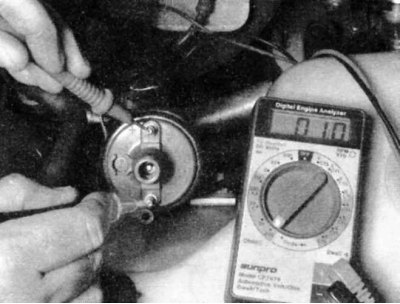
5. Compare the measured resistance with the requirements Size charts and adjustment data at the end of the Guide.
6. Check the resistance of the secondary winding of the ignition coil by connecting one probe of the ohmmeter to one of the terminals of the primary winding, and the second probe to the high-voltage contact of the ignition coil.
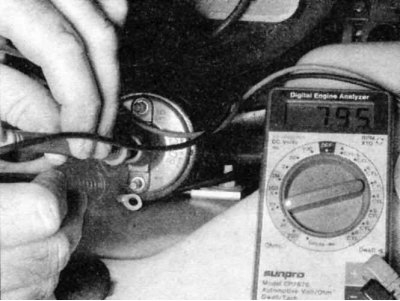
7. On TCI systems, connect an ohmmeter between terminal 1 (-) of the ignition coil and the center contact. On Motronic systems, connect an ohmmeter between terminal 15 () of the ignition coil and the center contact. Compare the measured resistance with the requirements Size charts and adjustment data at the end of the Guide.
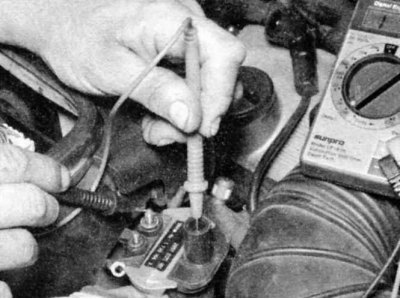
8. If the measured resistances differ significantly from the specified ones, the coil is faulty and should be replaced. Please note that the resistance depends on the temperature of the coil, so do not rush to reject the coil if the resistance differs slightly.
9. For the correct operation of the ignition system, it is essential that the wires are dry and clean.
10. Install the coil on its mount and connect the wires. Installation is the reverse of removal.
The original source of the article is on the website: «BMWMAN.RU»