
Since the ignition system generates high voltage, extreme caution must be taken whenever working on ignition components. This applies not only to the pulse sensor (electronic ignition), ignition coils, distributors and spark plug wires, but also associated components such as spark plug tips, tachometer and other test equipment.
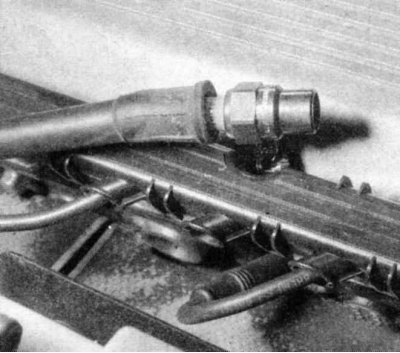
1. If the engine cranks but does not start, disconnect the spark plug lead from any spark plug and connect it to a spark tester (available at most auto supply stores).
There are two different types of spark testers. Make sure your tester is suitable for electronic (contactless) ignition. Connect the tester clamp to a metal bracket type housing element.
2. If you don't have a spark tester, disconnect it from one of the spark plugs. Using an insulated tool, hold the wire about six millimeters from the cylinder block - make sure the gap doesn't exceed six millimeters, otherwise the electronic components may be damaged.
3. Turn the engine over with the starter and watch for sparking at the end of the tester or the end of the high-tension cable. If a dark blue, clearly visible spark appears, then sufficient voltage is being supplied to the spark plugs to ignite the fuel. However, the spark plugs themselves may be faulty, so remove them and check them as described in Chapter Routine car maintenance.
4. If sparking does not occur, check the other high-voltage wire in the same way. Irregular sparking corresponds to its absence.
5. If sparking does not occur, remove the distributor cap and check the cap and rotor as described in Chapter Routine car maintenanceif moisture is detected, use a desiccant spray to dry the lid and runner (or something similar), then install the cap and repeat the spark test.
6. If sparking still does not occur, disconnect the high-tension wire of the ignition coil from the distributor cap and check this wire as described for the spark plug wires.
7. If sparking does not occur, check the ignition coil primary circuit contacts to ensure they are clean and secure. Make any necessary repairs, then retest.
8. If sparking occurs through the ignition coil high-tension wire, the distributor cap, rotor, spark plug high-tension wire(s), or spark plug(s) may be faulty. If sparking still does not occur, the high-tension wire from the ignition coil to the distributor cap may be faulty. If replacing the wire does not change the situation, check the ignition coil (see section Checking and replacing the ignition coil).
For other TCI distributor tests, please refer to Sections Checking and replacing the pulse sensor and ignition control unit (tCI system) and Checking and adjusting the air gap (tCI system).