
- Home
- BMW 5 Series
- E34
- Power unit
- Fuel system (gasoline)
- Removal and installation, checking of fuel level sensor
Removal and installation, checking of fuel level sensor (BMW 5 Series E34)
When the fuel level in the fuel tank drops, the float of the fuel reserve sensor drops. At the same time, the resistance of the sensor, taken from the sliding contact engine, increases. As a result, the voltage supplied to the fuel reserve indicator decreases and the indicator arrow shifts in the "empty" direction.
As the float continues to lower, the contact of the indicator closes and the warning light for remaining fuel lights up on the instrument panel.
Disconnect the positive and ground wires from the battery.
Remove the luggage compartment floor trim.
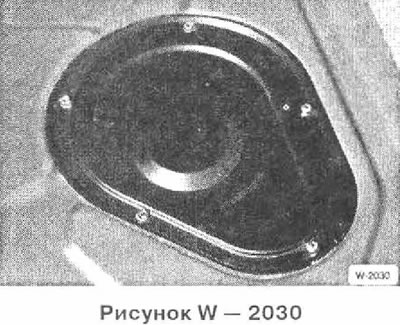
Loosen the screws and remove the cover.
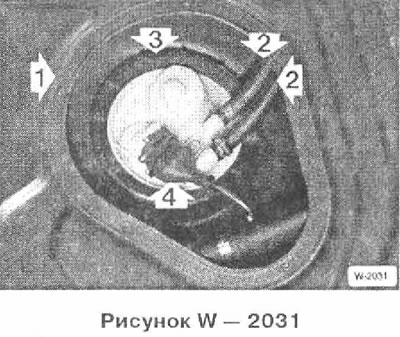
Mark fuel hoses 2 with adhesive tape and disconnect them from fuel level sensor 1 by loosening the clamps.
Disconnect connector 4. To do this, move the metal bar to the side and disconnect the connector.
Carefully knock off the union nut - three blows to the left. For this purpose, BMW service stations use tool 161020. This can also be done with a hardwood rod or a large screwdriver.
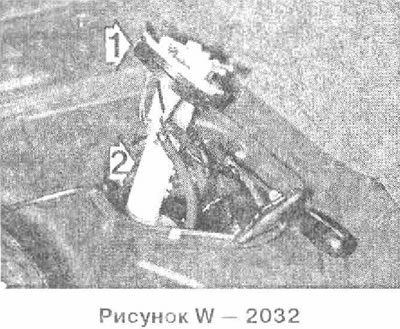
Lift the fuel gauge 1, tilt it to the side and pull it out. At the same time, put a rag and wipe off the leaking fuel.
If only the fuel level sensor is being removed, mark the fuel lines with tape before disconnecting them.
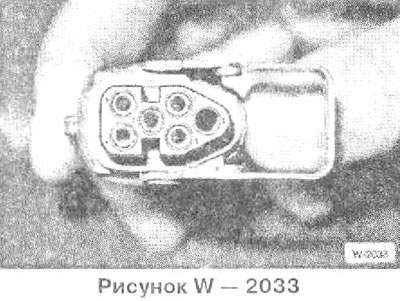
List of contacts of the fuel tank pump connector and the fuel level sensor:
Connect the ohmmeter to the fuel level sensor to terminals G and 31. On the connector these are contacts 1 and 3.
Keep the fuel gauge in the set position, the float is at the bottom, when the indicator on the car would show "reserve". Set value: 86.7±2.5 Ohm.
Turn the sensor 180°, the float is in the upper position, when the indicator on the car would show "full". The specified value: 3.2±0.7 Ohm.
Check the fuel level indicator contact: Connect an ohmmeter to terminals W and 31 of the fuel level sensor. The specified value with the sensor in the operating position: 0 Ohm; when turned 180°: infinity.
Connect the fuel pump fuel hoses to the fuel level sensor.
Insert the fuel level sensor with a new gasket. First insert the sealing ring into the hole in the fuel tank, and then insert the sensor.
Position the fuel gauge so that the connectors face the fuel hoses.
Screw on and tighten the union nut.
Connect the fuel hoses and secure them with new clamps.
Connect the connector and secure it with a metal bracket.
Install and tighten the cover screws, ensuring that the gasket is properly seated.
Connect the positive and ground wires to the battery.
Check the fuel level indicator on the instrument panel.
As the float continues to lower, the contact of the indicator closes and the warning light for remaining fuel lights up on the instrument panel.
Removal
Warning: Do not make an open fire! Fire hazard! When removing the fuel level sensor, the fuel tank must not be completely filled. Therefore, pump out the fuel into a suitable container. Fuel vapors are toxic, do not inhale fuel vapors. If possible, carry out work outdoors or provide sufficient ventilation.
Disconnect the positive and ground wires from the battery.
Remove the luggage compartment floor trim.
Loosen the screws and remove the cover.
Mark fuel hoses 2 with adhesive tape and disconnect them from fuel level sensor 1 by loosening the clamps.
Caution: The fuel system is under pressure, so disconnect the hoses slowly and wipe off any leaking fuel with a rag.
Disconnect connector 4. To do this, move the metal bar to the side and disconnect the connector.
Carefully knock off the union nut - three blows to the left. For this purpose, BMW service stations use tool 161020. This can also be done with a hardwood rod or a large screwdriver.
Lift the fuel gauge 1, tilt it to the side and pull it out. At the same time, put a rag and wipe off the leaking fuel.
If only the fuel level sensor is being removed, mark the fuel lines with tape before disconnecting them.
Examination
List of contacts of the fuel tank pump connector and the fuel level sensor:
- 1 Fuel level sensor mass
- 2 Control lamp
- 3 Fuel level sensor
- 4 Fuel pump weight
- 5 Fuel pump 1
Connect the ohmmeter to the fuel level sensor to terminals G and 31. On the connector these are contacts 1 and 3.
Keep the fuel gauge in the set position, the float is at the bottom, when the indicator on the car would show "reserve". Set value: 86.7±2.5 Ohm.
Turn the sensor 180°, the float is in the upper position, when the indicator on the car would show "full". The specified value: 3.2±0.7 Ohm.
Check the fuel level indicator contact: Connect an ohmmeter to terminals W and 31 of the fuel level sensor. The specified value with the sensor in the operating position: 0 Ohm; when turned 180°: infinity.
Installation
Connect the fuel pump fuel hoses to the fuel level sensor.
Insert the fuel level sensor with a new gasket. First insert the sealing ring into the hole in the fuel tank, and then insert the sensor.
Position the fuel gauge so that the connectors face the fuel hoses.
Screw on and tighten the union nut.
Connect the fuel hoses and secure them with new clamps.
Connect the connector and secure it with a metal bracket.
Install and tighten the cover screws, ensuring that the gasket is properly seated.
Connect the positive and ground wires to the battery.
Check the fuel level indicator on the instrument panel.
This article is available at russian, bulgarian, belarusian, ukrainian, serbian, croatian, romanian, polish, slovak, hungarian
Article verified: Polikarpov Saveliy
Share information:
Previous articles
БМВ E34: Fuel system (gasoline)
Next articles
Similar articles on other types of BMW cars:
Removal and installation, checking of fuel level sensor BMW 3 Series E30 (1982-1994)
Removal and installation the fuel level sensor BMW 3 Series E36 (1990-2000)
Fuel/Fuel Pump Sensor — Removal and Installation BMW 7 Series E32 (1986-1994)
Removal and installation fuel level sensors BMW 7 Series E38 (1994-2001)
Removal and installation the fuel filler cap BMW X3 E83 (2003-2010)
Fuel level indicator sensor BMW X5 E53 (1999-2006)
Removal and installation, checking of fuel level sensor BMW 3 Series E30 (1982-1994)
Removal and installation the fuel level sensor BMW 3 Series E36 (1990-2000)
Fuel/Fuel Pump Sensor — Removal and Installation BMW 7 Series E32 (1986-1994)
Removal and installation fuel level sensors BMW 7 Series E38 (1994-2001)
Removal and installation the fuel filler cap BMW X3 E83 (2003-2010)
Fuel level indicator sensor BMW X5 E53 (1999-2006)
Link in different formats to this page
Visitor comments
No comments yet
- General information
- Governing bodies
- Manual
- Maintenance
- Power unit
- Engine repair
- Lubrication system
- Cooling system
- Ignition system
- Supply system
- Injection system (gasoline)
- Injection system (diesel)
- Exhaust system
- Transmission
- Clutch
- Car gearbox
- Front axle
- Rear axle
- Chassis
- Steering
- Brake system
- Wheels and tires
- Body
- Interior
- Exterior
- Heating system
- Electrical equipment
- Equipment and devices
- Power devices
- Windscreen wipers
- Electrical circuits
- General information
- Manual
- Maintenance
- Power unit
- Engine repair
- Ignition system
- Engine lubrication system
- Cooling system
- Fuel system (gasoline)
- Fuel system (diesel)
- Exhaust system
- Transmission
- Clutch
- Car gearbox
- Chassis
- Front and rear suspension
- Steering
- Brake system
- Body
- Exterior
- Interior
- Electrical equipment
- Heating system
- Equipment and devices
- Power devices
- Electrical circuits
- General information
- Manual
- Maintenance
- Power unit
- Engine in a car
- Engine overhaul
- Cooling system
- Supply system
- Ignition system
- Control system
- Transmission
- Clutch
- Manual gearbox
- Automatic gearbox
- Transmission line
- Chassis
- Steering
- Front suspension
- Rear suspension
- Brake system
- Body
- Body elements
- Car care and painting
- Electrical equipment
- Heater and air conditioner
- Equipment and devices
- Starter and generator
- Electrical circuits
- General information
- Operation and maintenance
- Specifications
- Power unit
- Engine repair
- Cooling and lubrication system
- Supply system
- Ecotronic power supply system
- Fuel injection system
- Ignition system
- Transmission
- Clutch
- Gearbox BMW 242/4
- Gearbox Getrag 262/8
- Gearbox Getrag 265/6
- Automatic gearbox
- Cardan gear
- Rear axle
- Chassis
- Steering
- Front suspension
- Rear suspension
- Brake system
- Electrical equipment
- Equipment and devices
- Electrical circuits