
Table of contents: Dehumidification ↓ Flushing ↓ Filling ↓ Four-cylinder engines ↓ Six-cylinder engines ↓
- Home
- BMW 5 Series
- E28
- General information
- Maintenance
- Draining, flushing and filling the cooling system
Draining, flushing and filling the cooling system (BMW 5 Series E28)
Every 38,000 km or every two years.
Do not allow antifreeze to come into contact with your skin or painted surfaces of your vehicle. If it does come into contact with your skin, rinse immediately with plenty of water. Antifreeze is extremely toxic and can be fatal if ingested. Do not leave antifreeze in an open container or spilled on the floor; its sweet smell can easily attract children or pets. Check your local regulations for disposal of used antifreeze. Many areas have special collection centers for it.
The cooling system should be drained, flushed and refilled regularly. This procedure is performed to maintain the quality of the cooling mixture and prevent corrosion, which reduces the efficiency of the cooling system and can cause engine failure. During maintenance of the cooling system, the condition of all hoses and the radiator cap should also be checked and defective components replaced if necessary.
Dehumidification
1. If the car has just returned from a trip, wait a few hours until the engine has completely cooled down before starting the procedure.
2. After the engine has cooled, remove the expansion tank or radiator cap. If you have to open the cap when the engine is not completely cool, do it slowly and carefully to avoid burns.
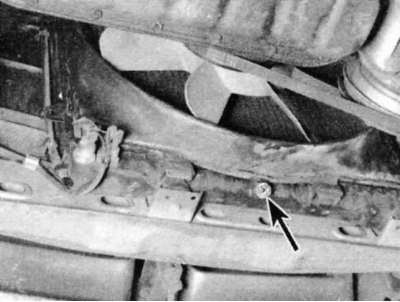
3. Place a large container under the radiator to collect the coolant. Where there is a drain plug, unscrew it (depending on the model, you may need a pair of pliers or a screwdriver for this). Where there is no drain plug, you will have to disconnect the lower hose from the radiator.
4. While the coolant is draining, check the condition of the radiator and heater hoses and clamps (see section Checking the fuel system).
5. Replace defective hoses and clamps (see chapter Cooling system, where the replacement procedure is described in detail).
Flushing
1. After the system has completely drained, flush the radiator with clean water from a garden hose until clean water runs out of the drain hole or bottom hose. If the radiator is badly rusted, damaged or leaking, it should be removed (see chapter Cooling system) and send it to a repair shop to a radiator specialist.
2. The flush described above will remove various deposits from the radiator, but will not remove rust and scale from the engine surfaces and coolant pipes. All of this can be removed with a chemical cleaner. Follow the instructions of the cleaner manufacturer to perform this procedure. Before flushing the engine, open the drain plug of the cylinder block.
3. On suitably equipped models, remove the overflow hose from the expansion tank. Drain the tank, rinse it with clean water and reconnect the hose.
Filling
Tighten the radiator drain plug or connect the lower radiator hose. Install and tighten the cylinder block drain plug.
Four-cylinder engines
1. Slowly pour new coolant (40/60% antifreeze/water mixture) into the radiator until it is full. Fill the expansion tank with coolant to the lower mark.
2. Without closing the radiator cap, start the engine in a well-ventilated area and run it until the thermostat opens (coolant will flow through the radiator and the upper radiator hose will heat up).
3. Turn off the engine and let it cool. Add coolant to the radiator to the base of the filler neck. On M40 engines, unscrew the air bleed valve at the top of the radiator and add coolant until it starts pouring out of the valve hole. Install and tighten the valve.
4. Squeeze the upper radiator hose to remove air, then add coolant again if necessary. Close the radiator cap.
5. Start the engine, warm it up to normal operating temperature and check for coolant leaks.
Six-cylinder engines
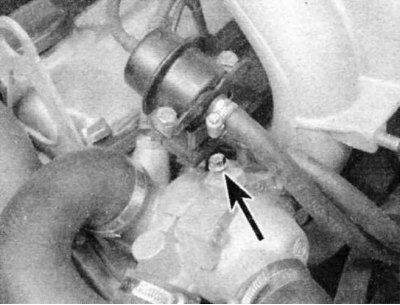
1. Loosen the air bleed valve in the thermostat housing.
2. Pour a 40/60% mixture of antifreeze and water into the radiator until it starts to flow out of the air bleed valve hole. Tighten the valve.
3. Close the radiator cap and start the engine; run it until the thermostat opens (the upper radiator hose will get hot). Slowly loosen the air release valve until no more air bubbles come out, then tighten the valve.
4. Repeat the procedure until all air is removed from the system.
The original article is posted on the resource: «BMWMan.ru»
This article is available at russian, bulgarian, belarusian, ukrainian, serbian, croatian, romanian, polish, slovak, hungarian
Article verified: Zhuravleva Isolda
Share information:
Previous articles
БМВ E28: Maintenance
Next articles
Similar articles on other types of BMW cars:
Filling and checking the cooling system BMW 3 Series E21 (1975-1983)
Diagnostics of engine cooling system faults BMW 3 Series E30 (1982-1994)
Diagnostics of engine cooling system faults BMW 7 Series E32 (1986-1994)
Additional cooling system fan BMW 7 Series E38 (1994-2001)
Cooling system — equipment and tools BMW X3 E83 (2003-2010)
Instructions for performing work on the cooling system BMW X5 E53 (1999-2006)
Filling and checking the cooling system BMW 3 Series E21 (1975-1983)
Diagnostics of engine cooling system faults BMW 3 Series E30 (1982-1994)
Diagnostics of engine cooling system faults BMW 7 Series E32 (1986-1994)
Additional cooling system fan BMW 7 Series E38 (1994-2001)
Cooling system — equipment and tools BMW X3 E83 (2003-2010)
Instructions for performing work on the cooling system BMW X5 E53 (1999-2006)
Link in different formats to this page
Visitor comments
No comments yet
- General information
- Governing bodies
- Manual
- Maintenance
- Power unit
- Engine repair
- Lubrication system
- Cooling system
- Ignition system
- Supply system
- Injection system (gasoline)
- Injection system (diesel)
- Exhaust system
- Transmission
- Clutch
- Car gearbox
- Front axle
- Rear axle
- Chassis
- Steering
- Brake system
- Wheels and tires
- Body
- Interior
- Exterior
- Heating system
- Electrical equipment
- Equipment and devices
- Power devices
- Windscreen wipers
- Electrical circuits
- General information
- Manual
- Maintenance
- Power unit
- Engine repair
- Ignition system
- Engine lubrication system
- Cooling system
- Fuel system (gasoline)
- Fuel system (diesel)
- Exhaust system
- Transmission
- Clutch
- Car gearbox
- Chassis
- Front and rear suspension
- Steering
- Brake system
- Body
- Exterior
- Interior
- Electrical equipment
- Heating system
- Equipment and devices
- Power devices
- Electrical circuits
- General information
- Manual
- Maintenance
- Power unit
- Engine in a car
- Engine overhaul
- Cooling system
- Supply system
- Ignition system
- Control system
- Transmission
- Clutch
- Manual gearbox
- Automatic gearbox
- Transmission line
- Chassis
- Steering
- Front suspension
- Rear suspension
- Brake system
- Body
- Body elements
- Car care and painting
- Electrical equipment
- Heater and air conditioner
- Equipment and devices
- Starter and generator
- Electrical circuits
- General information
- Operation and maintenance
- Specifications
- Power unit
- Engine repair
- Cooling and lubrication system
- Supply system
- Ecotronic power supply system
- Fuel injection system
- Ignition system
- Transmission
- Clutch
- Gearbox BMW 242/4
- Gearbox Getrag 262/8
- Gearbox Getrag 265/6
- Automatic gearbox
- Cardan gear
- Rear axle
- Chassis
- Steering
- Front suspension
- Rear suspension
- Brake system
- Electrical equipment
- Equipment and devices
- Electrical circuits