



- Home
- BMW 5 Series
- E28
- Transmission
- Automatic gearbox
- Replacing oil seals
Replacing oil seals (BMW 5 Series E28)
There are three seals on an automatic transmission - the torque converter seal, the selector shaft seal, and the transmission secondary shaft seal - that can cause fluid leaks. If the torque converter seal is leaking, you will see fluid on the bottom of the transmission housing. If the selector shaft seal is leaking, fluid will be visible on the transmission housing and in the pan. If the secondary shaft seal is leaking, fluid will be found on the housing and on the front of the driveshaft.
All of these seals can be replaced without disassembling the transmission, although replacing the converter seal requires removing the transmission and converter.
1. Remove the transmission and rotation converter (see section Removal and installation of automatic transmission).
2. Inspect the bushing in the hub of the rotation converter. If it is worn, the new seal will soon start leaking again. Try to remove any sharp edges or burrs with fine sandpaper. If the hub is too damaged to be sanded, replace the rotation converter.
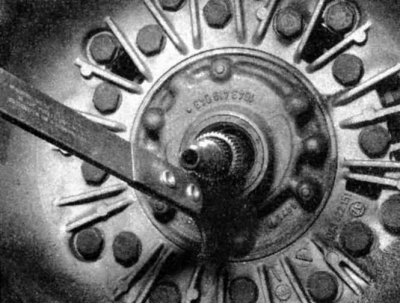
3. Using a special curved seal removal tool or a screwdriver, remove the old seal from the transmission housing.
4. Be careful not to damage the seal seat surface when removing the old seal.
5. Lubricate the lips of the new seal with fresh fluid and carefully install it into the seat using a replacement head or a piece of pipe with an outside diameter slightly smaller than the diameter of the seal.
6. Install the converter, making sure it is fully connected to the front pump (to do this, turn the converter during its installation until it snaps into place). Install the transmission/converter assembly (see section Removal and installation of automatic transmission).
1. Jack up the vehicle and securely place it on axle stands.
2. Remove the transmission selector lever from its shaft on the side of the transmission (see illustration). Do not disconnect the drive from the lever, otherwise it will have to be adjusted again.
3. Remove the old seal with a special tool or a small screwdriver. Try not to damage the surface of the seal seat.
4. Lubricate the lips of the new seal with fresh fluid and carefully install it into the seat using a replacement head or a piece of pipe with an outside diameter slightly smaller than the diameter of the seal.
5. Install the selector lever and tighten the nut. If you did not disconnect the drive, there is no need to adjust it.
1. Jack up the rear of the car and securely place it on axle stands. Don't forget to block the front wheels to prevent the car from rolling off the stands.
2. Where necessary to ensure free access, remove the exhaust system (see chapter Power supply system).
3. Remove the driveshaft (see chapter Clutch).
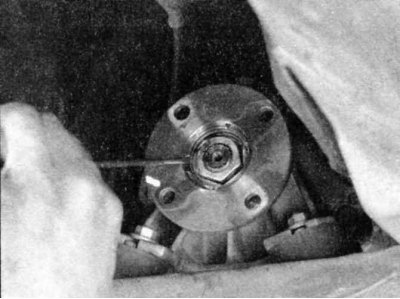
4. Bend back the back of the locking plate tongue, hold the flange stationary and loosen the flange nut using a 30mm socket.
5. Remove the old seal with a special tool or a small screwdriver. Try not to damage the surface of the seal seat.
6. Apply a thin film of fluid to the lips of the new seal, then clean the end of the secondary shaft. Place the seal on the shaft and carefully press it into place using a socket or a piece of pipe with an outside diameter slightly smaller than the outside diameter of the seal.
7. Install the flange. Apply sealant to the side of the nut facing the flange to prevent leaks. Tighten the flange nut to the specified torque. Install the new locking plate and press the tongue into the slot.
8. Perform the rest of the installation in the reverse order of removal.
Check the transmission fluid level and top up if necessary (Chapter Routine car maintenance).
Examine the original source using the link on the website «BMWMan»
All of these seals can be replaced without disassembling the transmission, although replacing the converter seal requires removing the transmission and converter.
Rotary converter seal
1. Remove the transmission and rotation converter (see section Removal and installation of automatic transmission).
2. Inspect the bushing in the hub of the rotation converter. If it is worn, the new seal will soon start leaking again. Try to remove any sharp edges or burrs with fine sandpaper. If the hub is too damaged to be sanded, replace the rotation converter.
3. Using a special curved seal removal tool or a screwdriver, remove the old seal from the transmission housing.
4. Be careful not to damage the seal seat surface when removing the old seal.
5. Lubricate the lips of the new seal with fresh fluid and carefully install it into the seat using a replacement head or a piece of pipe with an outside diameter slightly smaller than the diameter of the seal.
6. Install the converter, making sure it is fully connected to the front pump (to do this, turn the converter during its installation until it snaps into place). Install the transmission/converter assembly (see section Removal and installation of automatic transmission).
Transmission selector lever shaft seal
1. Jack up the vehicle and securely place it on axle stands.
2. Remove the transmission selector lever from its shaft on the side of the transmission (see illustration). Do not disconnect the drive from the lever, otherwise it will have to be adjusted again.
3. Remove the old seal with a special tool or a small screwdriver. Try not to damage the surface of the seal seat.
4. Lubricate the lips of the new seal with fresh fluid and carefully install it into the seat using a replacement head or a piece of pipe with an outside diameter slightly smaller than the diameter of the seal.
5. Install the selector lever and tighten the nut. If you did not disconnect the drive, there is no need to adjust it.
Secondary shaft seal
1. Jack up the rear of the car and securely place it on axle stands. Don't forget to block the front wheels to prevent the car from rolling off the stands.
2. Where necessary to ensure free access, remove the exhaust system (see chapter Power supply system).
3. Remove the driveshaft (see chapter Clutch).
4. Bend back the back of the locking plate tongue, hold the flange stationary and loosen the flange nut using a 30mm socket.
5. Remove the old seal with a special tool or a small screwdriver. Try not to damage the surface of the seal seat.
6. Apply a thin film of fluid to the lips of the new seal, then clean the end of the secondary shaft. Place the seal on the shaft and carefully press it into place using a socket or a piece of pipe with an outside diameter slightly smaller than the outside diameter of the seal.
7. Install the flange. Apply sealant to the side of the nut facing the flange to prevent leaks. Tighten the flange nut to the specified torque. Install the new locking plate and press the tongue into the slot.
8. Perform the rest of the installation in the reverse order of removal.
All seals
Check the transmission fluid level and top up if necessary (Chapter Routine car maintenance).
Examine the original source using the link on the website «BMWMan»
This article is available at russian, bulgarian, belarusian, ukrainian, serbian, croatian, romanian, polish, slovak, hungarian
Article verified: Zhuravleva Isolda
Share information:
Previous articles
БМВ E28: Automatic gearbox
Next articles
Similar articles on other types of BMW cars:
Replacing the main gear pinion seals BMW 3 Series E21 (1975-1983)
Replacing crankshaft seals BMW 7 Series E38 (1994-2001)
Replacing the oil filter (center bolt design) BMW 7 Series E32 (1986-1994)
Replacing the intake camshaft BMW X3 E83 (2003-2010)
Replacing valve stem seals BMW X5 E53 (1999-2006)
Replacing the main gear pinion seals BMW 3 Series E21 (1975-1983)
Replacing crankshaft seals BMW 7 Series E38 (1994-2001)
Replacing the oil filter (center bolt design) BMW 7 Series E32 (1986-1994)
Replacing the intake camshaft BMW X3 E83 (2003-2010)
Replacing valve stem seals BMW X5 E53 (1999-2006)
Link in different formats to this page
Visitor comments
No comments yet
- General information
- Governing bodies
- Manual
- Maintenance
- Power unit
- Engine repair
- Lubrication system
- Cooling system
- Ignition system
- Supply system
- Injection system (gasoline)
- Injection system (diesel)
- Exhaust system
- Transmission
- Clutch
- Car gearbox
- Front axle
- Rear axle
- Chassis
- Steering
- Brake system
- Wheels and tires
- Body
- Interior
- Exterior
- Heating system
- Electrical equipment
- Equipment and devices
- Power devices
- Windscreen wipers
- Electrical circuits
- General information
- Manual
- Maintenance
- Power unit
- Engine repair
- Ignition system
- Engine lubrication system
- Cooling system
- Fuel system (gasoline)
- Fuel system (diesel)
- Exhaust system
- Transmission
- Clutch
- Car gearbox
- Chassis
- Front and rear suspension
- Steering
- Brake system
- Body
- Exterior
- Interior
- Electrical equipment
- Heating system
- Equipment and devices
- Power devices
- Electrical circuits
- General information
- Manual
- Maintenance
- Power unit
- Engine in a car
- Engine overhaul
- Cooling system
- Supply system
- Ignition system
- Control system
- Transmission
- Clutch
- Manual gearbox
- Automatic gearbox
- Transmission line
- Chassis
- Steering
- Front suspension
- Rear suspension
- Brake system
- Body
- Body elements
- Car care and painting
- Electrical equipment
- Heater and air conditioner
- Equipment and devices
- Starter and generator
- Electrical circuits
- General information
- Operation and maintenance
- Specifications
- Power unit
- Engine repair
- Cooling and lubrication system
- Supply system
- Ecotronic power supply system
- Fuel injection system
- Ignition system
- Transmission
- Clutch
- Gearbox BMW 242/4
- Gearbox Getrag 262/8
- Gearbox Getrag 265/6
- Automatic gearbox
- Cardan gear
- Rear axle
- Chassis
- Steering
- Front suspension
- Rear suspension
- Brake system
- Electrical equipment
- Equipment and devices
- Electrical circuits