
Clean the brake line.
Caution: Brake pipes are coated with a plastic layer to protect against corrosion. If this layer is damaged, the pipes may rust. For this reason, do not clean the pipes with a wire brush, sandpaper or screwdriver.
Check the pipes from the master brake cylinder to the wheel brake cylinders with a portable lamp. The master brake cylinder is located in the engine compartment under the brake system expansion tank.
The tubes should not be bent or dented. There should be no areas covered with corrosion or with abrasions. Otherwise, replace the section of the tube up to the place of the next connection,
Brake hoses connect tubes to the wheel brake cylinders on the moving parts of the car. They are made of a material that can withstand high pressure, but over time they can crack, swell, or be damaged by sharp objects. In such cases, they must be replaced immediately.
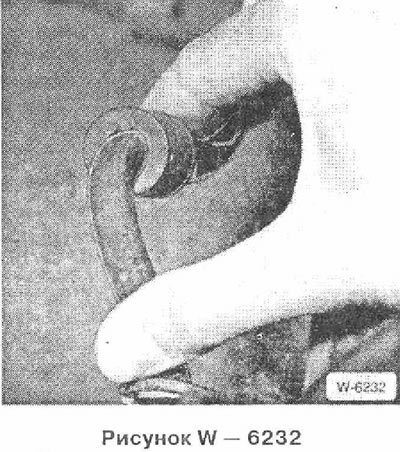
To detect possible damage, bend the hoses by hand. Do not twist the hoses. Observe the color markings on the hoses!
Turn the steering wheel left and right until it stops. The brake hoses should not touch any parts of the car.
The connection points of the brake hoses and pipes must not be wet with brake fluid.
Note: If the expansion tank and gaskets are wet, this does not indicate a defective master cylinder. It is more likely that brake fluid is leaking through the vent in the tank cap or through the cap gasket.
Replacing brake fluid
Special tool:
- 10mm open-end wrench for air release valves.
Consumables:
- Brake fluid specification DOT4.
Brake fluid absorbs moisture from the air through the pores of the brake hoses and through the ventilation hole in the expansion tank cap. Therefore, over time, the boiling point of the brake fluid decreases. Under heavy loads on the brake system, steam bubbles can therefore form in the pipes, which has a strong effect on the operation of the brake system.
Brake fluid should be replaced once a year, regardless of mileage, preferably in the spring.
Be careful when working with brake fluid,
Suck out the brake fluid from the reservoir to a level of approximately 10 mm.
Caution: Do not empty the expansion tank completely, as this may allow air to enter the brake system.
Fill the reservoir with new brake fluid up to the MAX mark.
Place a clean hose on the air bleed valve on the right rear brake caliper and place a container underneath.
Open the air release valve and pump the brake pedal about 10 times.
Close the air bleed valve. Add new brake fluid to the expansion tank.
In the same way, pump out the old brake fluid from the remaining brake calipers.
Caution: The flowing liquid must be clear and free of bubbles.
Take old brake fluid to your local special waste collection point.