



- 10mm ring spanner for air bleed valve.
Replacement materials:
- Brake fluid that meets DOT 4 specification.
Brake fluid is able to absorb moisture from the air through the pores in the brake hoses and the ventilation hole in the expansion tank cap. Therefore, over time, the boiling point of the brake fluid decreases. Under heavy load on the brakes, vapor locks can form in the brake pipes, which greatly disrupts the operation of the brake system.
Brake fluid should be replaced every 2 years, preferably in the spring.
Pay attention to the precautions when handling brake fluid.
Using a suction container, suck out the brake fluid from the expansion tank, leaving a layer of fluid approximately 10 mm thick at the bottom of the tank.
Caution: Do not suck out all the fluid from the reservoir, otherwise air will enter the brake system.
Fill the expansion tank with new brake fluid up to the MAX mark.
On the right rear disc brake caliper, attach a clean transparent hose to the bleed valve and insert it into a suitable container.
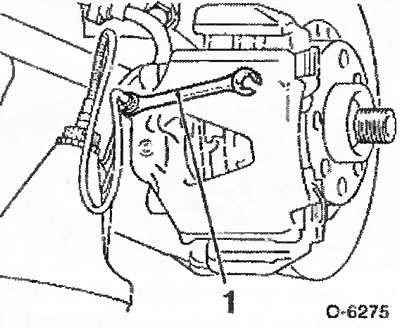
Ask an assistant to repeatedly press the brake pedal until there is a noticeable resistance to pressing. Press the pedal, at the same time using the ring spanner "1" to open the air bleed valve and allow the brake fluid to flow out through the transparent hose. When the brake pedal rests against the bottom of the car, close the air bleed valve and remove your foot from the pedal. Repeat this procedure until (about 10 times), until new fluid starts to flow through the transparent hose. New brake fluid is lighter in color.
Close the air bleed valve and fill the expansion tank with new brake fluid.
In the same way, pump out the old brake fluid from the other wheel brake cylinders, observing the following sequence: 1) rear right, 2) rear left, 3) front right, 4) front left.
Caution: The drained brake fluid must in any case be clean and free of air bubbles.
Note: Finally, replace the brake fluid in the clutch drive in a similar manner. Bleeding air from the clutch hydraulic drive is described on page 72.
Dispose of old brake fluid at a special collection point for used fuels and lubricants.
Warning: Never store old brake fluid in drinking bottles or in places accessible to children. Risk of poisoning.