
Table of contents: Removal coolant ↓ Filling the system with coolant ↓
- Home
- BMW 3 Series
- E46
- Power unit
- Cooling system
- Replacing the coolant
Replacing the coolant (BMW 3 Series E46)
To carry out the work you will need:
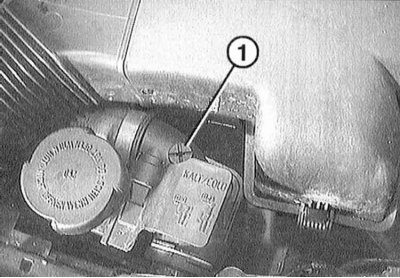
As part of maintenance, the coolant should be replaced every 4 years. Caution: Coolant is somewhat toxic and should not be simply poured out. Local authorities should provide information on the location of collection points for such materials.
The volume of the cooling system is given in Specifications.
1. Carefully open the expansion tank cap.
2. Raise and support the vehicle. Remove the lower engine compartment cover, refer to Section Removal and installation the lower engine compartment cover.
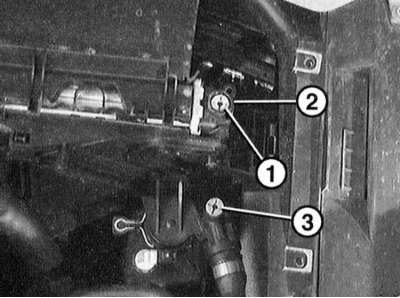
3. Place a clean container under the radiator and unscrew the plug at the bottom under the radiator, holding the adjusting nut "2". The 316i, 318i engines also have a separate drain plug "3" for the expansion tank, which must also be opened.
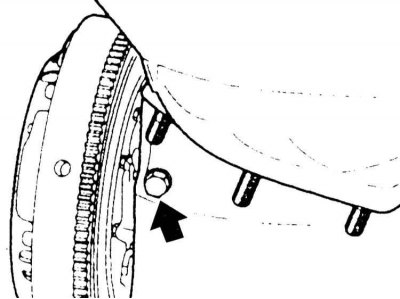
4. Additionally, place a container under the engine and unscrew the drain plug on the cylinder block. The plug is located under the exhaust manifold.
5. Drain the coolant completely and dispose of it according to existing procedures.
6. Screw the drain plug with a new sealing ring into the cylinder block and tighten to a torque of 25 N·m.
7. Screw the drain plug onto the radiator with a new seal and tighten it slightly to a torque of 2.5 Nm.
8. Set the heater in the cabin to maximum power. Set the fan switch to a low level and turn on the ignition. This opens the heater valves.
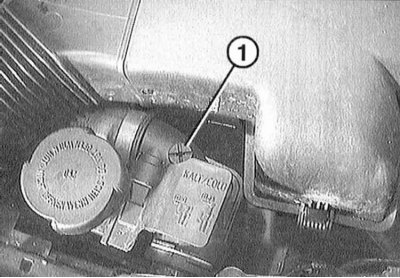
9. Open the air bleed nipple at the top of the radiator next to the expansion tank.
10. Petrol engines: Fill the expansion tank to the brim with fresh coolant so that the liquid comes out without bubbles through the air bleed nipple. Close the nipple.
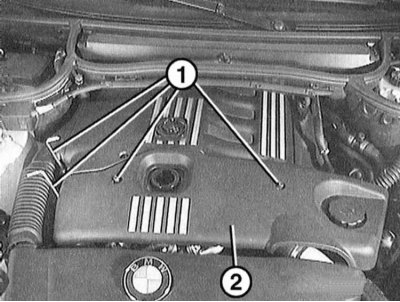
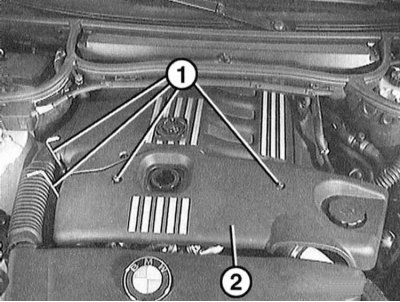
11. Loosen screws "1" and remove engine cover "2". In the illustration, both left screws have Allen keys.
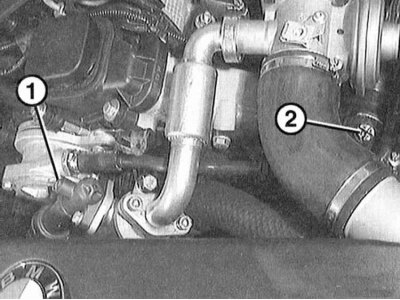
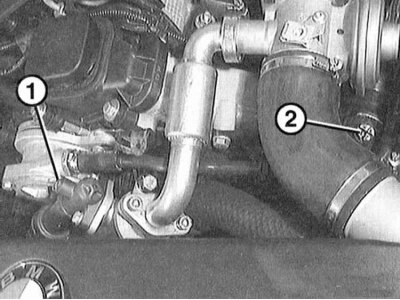
12. Loosen the air bleed nipple "1" on the EGR radiator and nipple "2" on the oil-water heat exchanger.
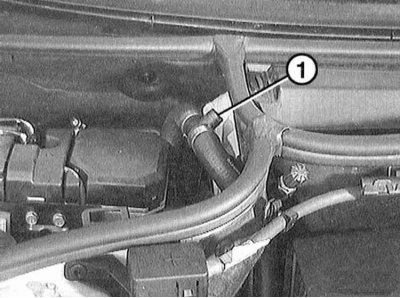
13. Loosen the air bleed nipple "1" on the heater hose.
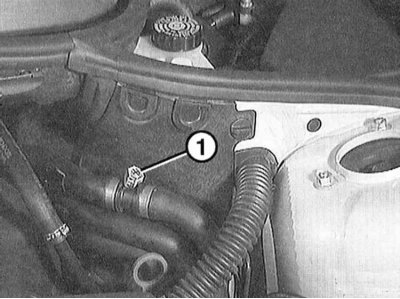
14. Engine 320d with air conditioning: Loosen the air bleed nipple "1" on the hose going to the heater heat exchanger.
15. For a diesel engine, it is essential to follow the following sequence for filling the system with coolant:
16. Close the expansion tank with the cap. Do not warm up the engine with the cap open, as this may cause damage.
17. Start the engine and keep the speed above 2500 rpm by pressing the gas pedal in short bursts. As a result of removing the air contained in the coolant, the level of the liquid in the reservoir will drop slightly.
18. Turn off the ignition.
19. Check the fluid level on a cold engine and top up if necessary, refer to Section Checking fluid levels.
20. Visually check the tightness of the cooling system, in particular the hose connections, as well as the drain plugs and air bleed nipples.
21. Diesel engine 320d: Install and secure the engine cover.
- Inspection pit or hydraulic garage lift with supports.
- Open-end wrench or socket.
- Coolant container.
- Antifreeze. Only antifreeze grades approved by BMW may be used. Refer to Specifications. Note: Mixing different grades of antifreeze is not permitted.
- Clean, low-lime drinking water.
- The drain plug on the cylinder block requires an aluminum sealing ring A 14 x 18.
As part of maintenance, the coolant should be replaced every 4 years. Caution: Coolant is somewhat toxic and should not be simply poured out. Local authorities should provide information on the location of collection points for such materials.
The volume of the cooling system is given in Specifications.
Removal coolant
Do not open the plug when the engine is hot. There is a risk of burns! Open the plug only when the coolant temperature is below +90°C. When opening the plug, place a rag on it.
1. Carefully open the expansion tank cap.
The operation of lifting and installing the vehicle on stands is associated with danger! Therefore, before carrying out the operation, read the Section Jacking and towing.
2. Raise and support the vehicle. Remove the lower engine compartment cover, refer to Section Removal and installation the lower engine compartment cover.
3. Place a clean container under the radiator and unscrew the plug at the bottom under the radiator, holding the adjusting nut "2". The 316i, 318i engines also have a separate drain plug "3" for the expansion tank, which must also be opened.
4. Additionally, place a container under the engine and unscrew the drain plug on the cylinder block. The plug is located under the exhaust manifold.
5. Drain the coolant completely and dispose of it according to existing procedures.
6. Screw the drain plug with a new sealing ring into the cylinder block and tighten to a torque of 25 N·m.
7. Screw the drain plug onto the radiator with a new seal and tighten it slightly to a torque of 2.5 Nm.
Filling the system with coolant
8. Set the heater in the cabin to maximum power. Set the fan switch to a low level and turn on the ignition. This opens the heater valves.
9. Open the air bleed nipple at the top of the radiator next to the expansion tank.
10. Petrol engines: Fill the expansion tank to the brim with fresh coolant so that the liquid comes out without bubbles through the air bleed nipple. Close the nipple.
11. Loosen screws "1" and remove engine cover "2". In the illustration, both left screws have Allen keys.
12. Loosen the air bleed nipple "1" on the EGR radiator and nipple "2" on the oil-water heat exchanger.
13. Loosen the air bleed nipple "1" on the heater hose.
14. Engine 320d with air conditioning: Loosen the air bleed nipple "1" on the hose going to the heater heat exchanger.
15. For a diesel engine, it is essential to follow the following sequence for filling the system with coolant:
- a) Slowly fill the expansion tank with liquid. Close the nipple "2" of the oil-water heat exchanger when liquid comes out through it.
- b) Continue pouring liquid. Close the nipple "1" next to the expansion tank when liquid starts to flow out.
- c) Fill the expansion tank with liquid to the brim.
- d) Close the remaining fittings on the heater hose, the recirculation system radiator and, if there is air conditioning, on the heater heat exchanger hose.
16. Close the expansion tank with the cap. Do not warm up the engine with the cap open, as this may cause damage.
17. Start the engine and keep the speed above 2500 rpm by pressing the gas pedal in short bursts. As a result of removing the air contained in the coolant, the level of the liquid in the reservoir will drop slightly.
18. Turn off the ignition.
If necessary, add coolant to the system only after the engine has cooled down, otherwise there is a risk of burns after removing the plug!
19. Check the fluid level on a cold engine and top up if necessary, refer to Section Checking fluid levels.
20. Visually check the tightness of the cooling system, in particular the hose connections, as well as the drain plugs and air bleed nipples.
21. Diesel engine 320d: Install and secure the engine cover.
This article is available at russian, bulgarian, belarusian, ukrainian, serbian, croatian, romanian, polish, slovak, hungarian
Article verified: Sevastyanov Nikolay
Share information:
Previous articles
БМВ E46: Cooling system
Next articles
Similar articles on other types of BMW cars:
Replacing the coolant BMW 5 Series E12 (1972-1981)
Replacing the coolant BMW 5 Series E34 (1988-1996)
Replacing the coolant BMW 7 Series E32 (1986-1994)
Replacing the coolant BMW 7 Series E38 (1994-2001)
Coolant temperature gauge BMW X3 E83 (2003-2010)
Replacing the coolant BMW X5 E53 (1999-2006)
Replacing the coolant BMW 5 Series E12 (1972-1981)
Replacing the coolant BMW 5 Series E34 (1988-1996)
Replacing the coolant BMW 7 Series E32 (1986-1994)
Replacing the coolant BMW 7 Series E38 (1994-2001)
Coolant temperature gauge BMW X3 E83 (2003-2010)
Replacing the coolant BMW X5 E53 (1999-2006)
Link in different formats to this page
Visitor comments
No comments yet
- General information
- Manual
- Maintenance
- Power unit
- Engine repair
- Cooling system
- Power system (gasoline)
- Injection system (gasoline)
- Fuel system (diesel)
- Exhaust system
- Ignition system
- Charge and launch systems
- Transmission
- Car gearbox
- Clutch and drive shafts
- Chassis
- Brake system
- Suspension front and rear
- Steering
- Body
- Body care and repair
- Exterior
- Interior
- Electrical equipment
- Troubleshooting
- Lighting and signaling
- Equipment and devices
- Heater and air conditioner
- Electrical circuits
- General information
- Manual
- Repair on the road
- Weekly checks
- Maintenance
- Troubleshooting
- Power unit
- 4 cylinder engines
- 6 cylinder engines
- Engine overhaul
- Cooling and heating
- Fuel and exhaust system
- Starting and charging system
- Ignition system
- Transmission
- Clutch
- Mechanical gearbox
- Automatic gearbox
- Cardan and drive shafts
- Chassis
- Brake system
- Wheel suspension
- Steering
- Body
- Exterior
- Interior
- Electrical equipment
- Equipment and devices
- Electrical circuits
- General information
- Maintenance
- Power unit
- Engine repair
- Cooling system
- Ignition system
- Supply system
- Fuel injection system
- Exhaust system
- Transmission
- Clutch
- Car gearbox
- Front and rear axle
- Chassis
- Steering
- Brake system
- Body
- Exterior
- Interior
- Electrical equipment
- Heating system
- Equipment and devices
- Power devices
- Electrical circuits
- Power unit
- M10/M20 engine
- M40 engine
- Ignition system
- Lubrication system
- Cooling system
- Supply system
- Fuel injection
- Exhaust system
- Transmission
- Clutch
- Manual gearbox
- Front axle
- Rear axle
- Chassis
- Steering
- Brake system
- Body
- Exterior
- Interior
- Electrical equipment
- Heating system
- Equipment and devices
- Electrical circuits
- General information
- Specifications
- Operation and maintenance
- 4-cylinder engine
- Engine repair
- Cooling and lubrication system
- Supply system
- Ignition system
- 6-cylinder engine
- Engine repair
- Cooling and lubrication system
- Supply system
- Fuel injection system
- Ignition system
- Transmission
- Clutch
- 4-speed manual gearbox
- 5-speed manual gearbox
- Automatic gearbox
- Cardan and rear axle
- Chassis
- Steering
- Front suspension
- Rear suspension
- Brake system
- Electrical equipment
- Equipment and devices
- Electrical circuits