
- Home
- BMW 5 Series
- E39
- Power unit
- Ignition system
- Removal and installation / checking of ignition coils
Removal and installation / checking of ignition coils (BMW 5 Series E39)
You can check the ignition coils using an ohmmeter. However, an accurate check that allows you to make confident conclusions about certain faults in the ignition system can only be performed at a service station using an oscilloscope.
Turn off the ignition.
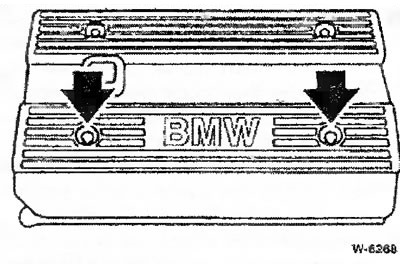
Remove the mounting bolt caps and unscrew the 2 bolts located underneath them.
Remove the oil filler cap and cylinder head trim.
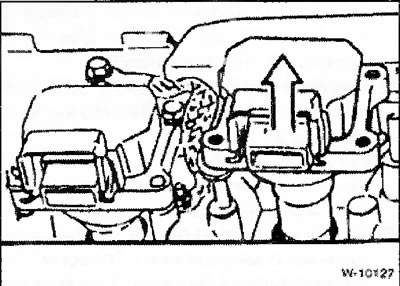
Remove the plug from each ignition coil by pulling the metal clip on the plug upwards.
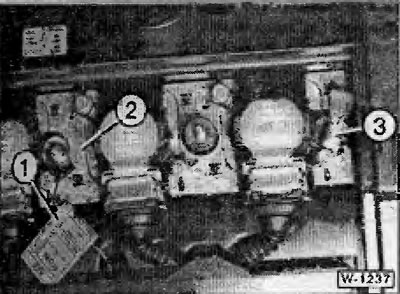
Loosen the 2 mounting bolts for each coil and remove the coils.
If there is a metal cylinder head lining: a flexible ground jumper from the wire shaft is located between cylinders 2 and 3.
If there is a plastic cylinder head lining: the mass wire "1" is attached to the connecting plate "2", see the figure. During installation, the wires must be attached again in their original places.
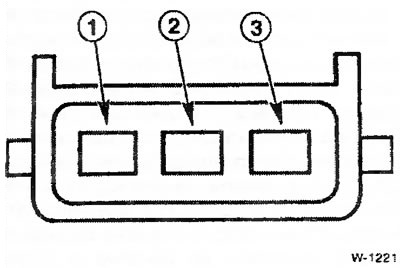
Measure the resistance of the primary winding of the ignition coil by connecting an ohmmeter to contacts 1 and 15. The prescribed resistance value is approximately 0.8Ω.
Replacing the spark plug tip is described here.
Insert the coils with spark plug tips and connect them with flexible jumpers.
Secure the plugs to the ignition coils using metal clamps.
Install the cylinder head trim. Screw on the oil filler cap.
[The original article is posted on the resource: BMWMAN.ru]
Removal
Turn off the ignition.
Remove the mounting bolt caps and unscrew the 2 bolts located underneath them.
Remove the oil filler cap and cylinder head trim.
Remove the plug from each ignition coil by pulling the metal clip on the plug upwards.
Loosen the 2 mounting bolts for each coil and remove the coils.
Note: Ignition coils of cylinders 1 and 8 have flexible jumpers. Grounds "3" with the cylinder head cover.
If there is a metal cylinder head lining: a flexible ground jumper from the wire shaft is located between cylinders 2 and 3.
If there is a plastic cylinder head lining: the mass wire "1" is attached to the connecting plate "2", see the figure. During installation, the wires must be attached again in their original places.
Examination
Measure the resistance of the primary winding of the ignition coil by connecting an ohmmeter to contacts 1 and 15. The prescribed resistance value is approximately 0.8Ω.
Note: Secondary winding resistance (between the spark plug connector, pin 4 and ground connection) not measured.
Replacing the spark plug tip is described here.
Installation
Insert the coils with spark plug tips and connect them with flexible jumpers.
Secure the plugs to the ignition coils using metal clamps.
Install the cylinder head trim. Screw on the oil filler cap.
[The original article is posted on the resource: BMWMAN.ru]
This article is available at russian, bulgarian, belarusian, ukrainian, serbian, croatian, romanian, polish, slovak, hungarian
Article verified: Ilyinsky Matvey
Share information:
Previous articles
БМВ E39: Ignition system
Next articles
Similar articles on other types of BMW cars:
Ignition coils — removal and installation BMW 3 Series E46 (1998-2006, petrol)
Removal and installation ignition coils/ignition cables BMW 3 Series E46 (1998-2006)
Ignition coils — removal, inspection and installation BMW 7 Series E32 (1986-1994)
Removal and installation the ignition switch and steering wheel lock BMW 7 Series E38 (1994-2001)
Pistons — removal and installation BMW X3 E83 (2003-2010)
Checking ignition coils BMW X5 E53 (1999-2006)
Ignition coils — removal and installation BMW 3 Series E46 (1998-2006, petrol)
Removal and installation ignition coils/ignition cables BMW 3 Series E46 (1998-2006)
Ignition coils — removal, inspection and installation BMW 7 Series E32 (1986-1994)
Removal and installation the ignition switch and steering wheel lock BMW 7 Series E38 (1994-2001)
Pistons — removal and installation BMW X3 E83 (2003-2010)
Checking ignition coils BMW X5 E53 (1999-2006)
Link in different formats to this page
Visitor comments
No comments yet
- General information
- Governing bodies
- Manual
- Maintenance
- Power unit
- Engine repair
- Lubrication system
- Cooling system
- Ignition system
- Supply system
- Injection system (gasoline)
- Injection system (diesel)
- Exhaust system
- Transmission
- Clutch
- Car gearbox
- Front axle
- Rear axle
- Chassis
- Steering
- Brake system
- Wheels and tires
- Body
- Interior
- Exterior
- Heating system
- Electrical equipment
- Equipment and devices
- Power devices
- Windscreen wipers
- Electrical circuits
- General information
- Manual
- Maintenance
- Power unit
- Engine repair
- Ignition system
- Engine lubrication system
- Cooling system
- Fuel system (gasoline)
- Fuel system (diesel)
- Exhaust system
- Transmission
- Clutch
- Car gearbox
- Chassis
- Front and rear suspension
- Steering
- Brake system
- Body
- Exterior
- Interior
- Electrical equipment
- Heating system
- Equipment and devices
- Power devices
- Electrical circuits
- General information
- Manual
- Maintenance
- Power unit
- Engine in a car
- Engine overhaul
- Cooling system
- Supply system
- Ignition system
- Control system
- Transmission
- Clutch
- Manual gearbox
- Automatic gearbox
- Transmission line
- Chassis
- Steering
- Front suspension
- Rear suspension
- Brake system
- Body
- Body elements
- Car care and painting
- Electrical equipment
- Heater and air conditioner
- Equipment and devices
- Starter and generator
- Electrical circuits
- General information
- Operation and maintenance
- Specifications
- Power unit
- Engine repair
- Cooling and lubrication system
- Supply system
- Ecotronic power supply system
- Fuel injection system
- Ignition system
- Transmission
- Clutch
- Gearbox BMW 242/4
- Gearbox Getrag 262/8
- Gearbox Getrag 265/6
- Automatic gearbox
- Cardan gear
- Rear axle
- Chassis
- Steering
- Front suspension
- Rear suspension
- Brake system
- Electrical equipment
- Equipment and devices
- Electrical circuits