
Table of contents: Cooling system filling volume ↓ Draining the coolant ↓ Filling the cooling system ↓
- Home
- BMW 5 Series
- E39
- General information
- Maintenance
- Replacing the coolant
Replacing the coolant (BMW 5 Series E39)
As part of the maintenance, it is necessary to replace the coolant every 3 years. For this, the following tool is required:
The following parts are required for replacement:
Use the switch in the passenger compartment to turn on the heater to maximum power.
First turn the cooling system cap slightly to the left to relieve excess pressure. Then unscrew the cap completely and remove it.
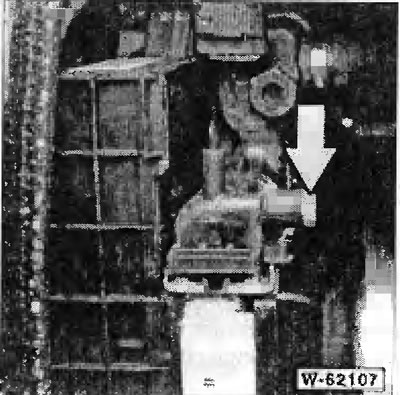
Raise the car from the front. Remove the lower engine compartment cover.
Place a clean container under the radiator and loosen the drain plug "arrow" from the bottom of the radiator. Use a large slotted screwdriver or a coin to unscrew it.
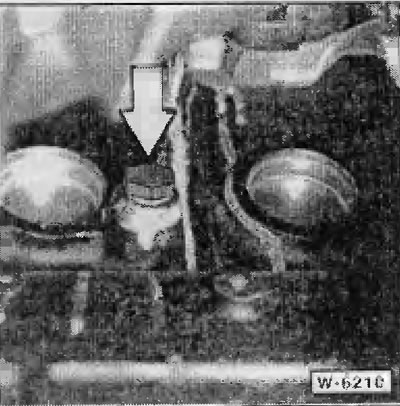
Place a container under the engine and unscrew the drain plug "arrow" on the cylinder block. The plug is located directly under the exhaust manifold.
Drain the coolant completely.
Install the cylinder block drain plug with a new gasket and tighten to a torque of 25 Nm.
The radiator drain plug is easy to tighten. To do this, insert a coin into the plug slot and tighten the plug firmly by hand.
Fill the expansion tank to the brim with fresh coolant.
Cars models 520i, 523i, 528i
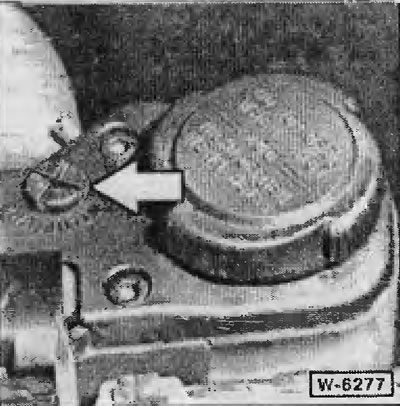
Open the air bleed plug "arrow" on top of the radiator, next to the expansion tank, and wait until the coolant flows through the hole without air bubbles.
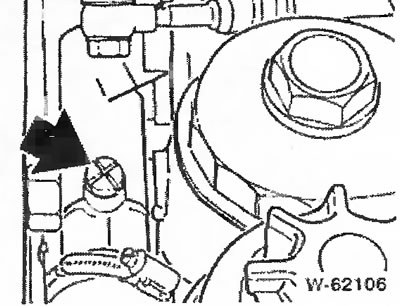
Unscrew the air bleed plug "arrow" on the coolant line in the oil filter area and wait until coolant flows through the hole without air bubbles.
Tighten the air bleed plugs and top up the coolant level in the expansion tank.
Model 525tda: Air is removed automatically via the top hose to a separate expansion tank, so there are no air bleed plugs.
Close the expansion tank cap. Do not warm up the engine with the expansion tank cap open, as this may cause it to fail.
Start the engine, set the heater switch to the WARM position and warm up the engine. By jerking the accelerator pedal, maintain the crankshaft speed above 2500 rpm. The air coming out of the cooling system helps to lower the coolant level to approximately the maximum level mark on the expansion tank.
Turn off the ignition.
When the engine has cooled down, top up the coolant level to the MAX mark on the expansion tank, see the figures in the chapter "Checking the coolant level".
Open the bleed plugs again and make sure that coolant flows out of the holes without air bubbles. Close the radiator cap and tighten the bleed plugs.
Check the cooling system, especially the hose connections, as well as the drain plugs and the coolant pump, for leaks.
- Jack and support sawhorses.
- Large slotted screwdriver.
- A set of ring or socket wrenches.
- Container for draining coolant.
The following parts are required for replacement:
- To top up the coolant level, including in warm weather, use only a mixture of soft, clean water and antifreeze. To avoid deposits, it is best to use distilled water. Use only nitrite- and ammonium-free antifreezes approved for use by BMW (the permit for operation must be on the container).
Note: In order to be able to continue the trip, you can also, especially in summer, drink clean water. However, after this, it is necessary to bring the concentration of antifreeze in the coolant to the required level as soon as possible.
- The drain plug in the cylinder block requires an aluminum O-ring size A14x18.
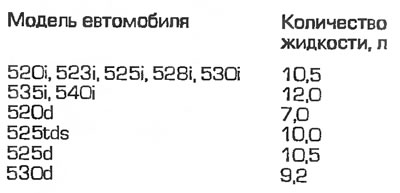
Cooling system filling volume
Draining the coolant
Use the switch in the passenger compartment to turn on the heater to maximum power.
First turn the cooling system cap slightly to the left to relieve excess pressure. Then unscrew the cap completely and remove it.
Caution: Do not open the expansion tank cap when the engine is hot. Risk of scalding from steam! The cooling system is under pressure! Open the cap only when the coolant temperature is below +60°C. Place a rag on the cap before opening it.
Raise the car from the front. Remove the lower engine compartment cover.
Place a clean container under the radiator and loosen the drain plug "arrow" from the bottom of the radiator. Use a large slotted screwdriver or a coin to unscrew it.
Place a container under the engine and unscrew the drain plug "arrow" on the cylinder block. The plug is located directly under the exhaust manifold.
Drain the coolant completely.
Warning: Coolant is poisonous, so it must not be thrown out or thrown away with household waste. City and district administrations must inform about the location of the nearest special waste collection point.
Install the cylinder block drain plug with a new gasket and tighten to a torque of 25 Nm.
The radiator drain plug is easy to tighten. To do this, insert a coin into the plug slot and tighten the plug firmly by hand.
Filling the cooling system
Fill the expansion tank to the brim with fresh coolant.
Cars models 520i, 523i, 528i
Open the air bleed plug "arrow" on top of the radiator, next to the expansion tank, and wait until the coolant flows through the hole without air bubbles.
Unscrew the air bleed plug "arrow" on the coolant line in the oil filter area and wait until coolant flows through the hole without air bubbles.
Tighten the air bleed plugs and top up the coolant level in the expansion tank.
Model 525tda: Air is removed automatically via the top hose to a separate expansion tank, so there are no air bleed plugs.
Close the expansion tank cap. Do not warm up the engine with the expansion tank cap open, as this may cause it to fail.
Start the engine, set the heater switch to the WARM position and warm up the engine. By jerking the accelerator pedal, maintain the crankshaft speed above 2500 rpm. The air coming out of the cooling system helps to lower the coolant level to approximately the maximum level mark on the expansion tank.
Turn off the ignition.
Caution: Only top up the coolant level after the engine has cooled down. Otherwise, there is a risk of scalding from steam when opening the expansion tank cap!
When the engine has cooled down, top up the coolant level to the MAX mark on the expansion tank, see the figures in the chapter "Checking the coolant level".
Open the bleed plugs again and make sure that coolant flows out of the holes without air bubbles. Close the radiator cap and tighten the bleed plugs.
Check the cooling system, especially the hose connections, as well as the drain plugs and the coolant pump, for leaks.
This article is available at russian, bulgarian, belarusian, ukrainian, serbian, croatian, romanian, polish, slovak, hungarian
Article verified: Ilyinsky Matvey
Share information:
Previous articles
БМВ E39: Maintenance
Next articles
Similar articles on other types of BMW cars:
Replacing the coolant BMW 3 Series E21 (1975-1983)
Replacing the coolant BMW 3 Series E30 (1982-1994)
Replacing the coolant BMW 7 Series E32 (1986-1994)
Replacing the coolant BMW 7 Series E38 (1994-2001)
Coolant temperature gauge BMW X3 E83 (2003-2010)
Replacing the coolant BMW X5 E53 (1999-2006)
Replacing the coolant BMW 3 Series E21 (1975-1983)
Replacing the coolant BMW 3 Series E30 (1982-1994)
Replacing the coolant BMW 7 Series E32 (1986-1994)
Replacing the coolant BMW 7 Series E38 (1994-2001)
Coolant temperature gauge BMW X3 E83 (2003-2010)
Replacing the coolant BMW X5 E53 (1999-2006)
Link in different formats to this page
Visitor comments
No comments yet
- General information
- Governing bodies
- Manual
- Maintenance
- Power unit
- Engine repair
- Lubrication system
- Cooling system
- Ignition system
- Supply system
- Injection system (gasoline)
- Injection system (diesel)
- Exhaust system
- Transmission
- Clutch
- Car gearbox
- Front axle
- Rear axle
- Chassis
- Steering
- Brake system
- Wheels and tires
- Body
- Interior
- Exterior
- Heating system
- Electrical equipment
- Equipment and devices
- Power devices
- Windscreen wipers
- Electrical circuits
- General information
- Manual
- Maintenance
- Power unit
- Engine repair
- Ignition system
- Engine lubrication system
- Cooling system
- Fuel system (gasoline)
- Fuel system (diesel)
- Exhaust system
- Transmission
- Clutch
- Car gearbox
- Chassis
- Front and rear suspension
- Steering
- Brake system
- Body
- Exterior
- Interior
- Electrical equipment
- Heating system
- Equipment and devices
- Power devices
- Electrical circuits
- General information
- Manual
- Maintenance
- Power unit
- Engine in a car
- Engine overhaul
- Cooling system
- Supply system
- Ignition system
- Control system
- Transmission
- Clutch
- Manual gearbox
- Automatic gearbox
- Transmission line
- Chassis
- Steering
- Front suspension
- Rear suspension
- Brake system
- Body
- Body elements
- Car care and painting
- Electrical equipment
- Heater and air conditioner
- Equipment and devices
- Starter and generator
- Electrical circuits
- General information
- Operation and maintenance
- Specifications
- Power unit
- Engine repair
- Cooling and lubrication system
- Supply system
- Ecotronic power supply system
- Fuel injection system
- Ignition system
- Transmission
- Clutch
- Gearbox BMW 242/4
- Gearbox Getrag 262/8
- Gearbox Getrag 265/6
- Automatic gearbox
- Cardan gear
- Rear axle
- Chassis
- Steering
- Front suspension
- Rear suspension
- Brake system
- Electrical equipment
- Equipment and devices
- Electrical circuits