
Table of contents: Checking the temperature sensor ↓ Removal the temperature sensor ↓
- Home
- BMW 7 Series
- E32
- Power unit
- Injection system (petrol)
- Temperature sensor — checking, removal and installation
Temperature sensor — checking, removal and installation (BMW 7 Series E32)
Two temperature sensors measure the temperature of the coolant and incoming air and transmit information to the control unit. The sensors have a working element with a negative temperature coefficient of resistance (NTC), i.e. its resistance decreases with increasing temperature. If the coolant temperature sensor fails, the control unit uses the coolant temperature value of 80°C as a backup value. Damaged sensors at low ambient temperatures and a cold engine lead to difficult starting of the engine and its uneven operation.
Remove the plug from the desired sensor. The location of the sensors is shown below.
Connect an ohmmeter to the sensor contacts.
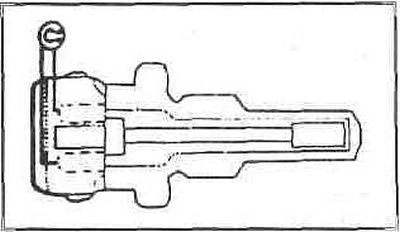
Measure the resistance and compare it with the technical data. Depending on the temperature, intermediate values can be obtained:
If the resistance differs from the required value, then the sensor must be removed.
Hang the sensor by the hexagon on the wire in a container with water so that it does not touch the walls of the container. Cool the water by throwing ice cubes into it, and then heat the water in the container on the stove. Remove the sensor at the desired temperature and measure the resistance between the contacts. If it differs from the required value, replace the sensor.
If the temperature sensor is OK, connect a voltmeter between the temperature sensor plug and ground.
Turn on the ignition. The required voltage value is about 5 V. If there is no voltage, check the integrity of the wire.
If there is voltage, check the ground wire for integrity.
If the sensor wires are OK, then you need to look for the fault elsewhere, for example, in the control unit.
To prevent coolant from leaking out when removing the sensor, it is better to partially drain it beforehand.
Remove the engine cover (housing) from the intake manifold and disconnect the crankcase ventilation connection from the valve cover.
The coolant temperature sensor is located under the intake manifold at the front of the cylinder block.
Remove the plug and unscrew the sensor. The sensor contains devices for the DME and for the temperature indicator.
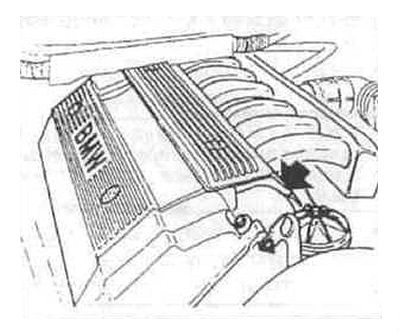
Screw in the sensor with a new sealing ring and tighten it to a torque of 20 Nm.
Place the plug on and secure it by snapping the wire.
Place the crankcase ventilation hose onto the cylinder head and install the engine cover.
Fill with coolant and bleed air from the cooling system.
Take a test drive and check the tightness of the sensor connection, tighten it a little if necessary.
Interrogate the DME unit memory. After troubleshooting, erase the fault codes.
Removing the inlet air temperature sensor
Remove the bolts and throttle body.
Press the tab on the temperature sensor to release it from the intake manifold. Remove the connector.
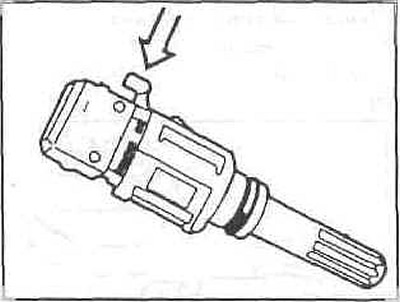
Insert the temperature sensor.
Push the plug in and the wire retainer should snap into place.
Install the throttle body.
Attach the air supply hose and secure it with a clamp.
Interrogate the DME unit memory. After troubleshooting, erase the codes from the memory.
[This article is based on information from the website «BMWMAN»]
Checking the temperature sensor
Remove the plug from the desired sensor. The location of the sensors is shown below.
Connect an ohmmeter to the sensor contacts.
Measure the resistance and compare it with the technical data. Depending on the temperature, intermediate values can be obtained:
- -10°: 8.2-10.5 Ohm;
- +20°C: 3.3-2.7 Ohm;
- +80°: 0.3-0.36 Ohm.
If the resistance differs from the required value, then the sensor must be removed.
Hang the sensor by the hexagon on the wire in a container with water so that it does not touch the walls of the container. Cool the water by throwing ice cubes into it, and then heat the water in the container on the stove. Remove the sensor at the desired temperature and measure the resistance between the contacts. If it differs from the required value, replace the sensor.
If the temperature sensor is OK, connect a voltmeter between the temperature sensor plug and ground.
Turn on the ignition. The required voltage value is about 5 V. If there is no voltage, check the integrity of the wire.
If there is voltage, check the ground wire for integrity.
If the sensor wires are OK, then you need to look for the fault elsewhere, for example, in the control unit.
Removal the temperature sensor
To prevent coolant from leaking out when removing the sensor, it is better to partially drain it beforehand.
Remove the engine cover (housing) from the intake manifold and disconnect the crankcase ventilation connection from the valve cover.
The coolant temperature sensor is located under the intake manifold at the front of the cylinder block.
Remove the plug and unscrew the sensor. The sensor contains devices for the DME and for the temperature indicator.
Installation
Screw in the sensor with a new sealing ring and tighten it to a torque of 20 Nm.
Place the plug on and secure it by snapping the wire.
Place the crankcase ventilation hose onto the cylinder head and install the engine cover.
Fill with coolant and bleed air from the cooling system.
Take a test drive and check the tightness of the sensor connection, tighten it a little if necessary.
Interrogate the DME unit memory. After troubleshooting, erase the fault codes.
Removing the inlet air temperature sensor
Remove the bolts and throttle body.
Caution: The throttle cable and coolant hoses for throttle body heating remain connected.
Press the tab on the temperature sensor to release it from the intake manifold. Remove the connector.
Installation
Insert the temperature sensor.
Push the plug in and the wire retainer should snap into place.
Install the throttle body.
Attach the air supply hose and secure it with a clamp.
Interrogate the DME unit memory. After troubleshooting, erase the codes from the memory.
[This article is based on information from the website «BMWMAN»]
This article is available at russian, bulgarian, belarusian, ukrainian, serbian, croatian, romanian, polish, slovak, hungarian
Article verified: Sevastyanov Nikolay
Share information:
Previous articles
БМВ E32: Injection system (petrol)
Next articles
Similar articles on other types of BMW cars:
Removal and installation, checking of temperature sensor BMW 3 Series E30 (1982-1994)
Removal and installation, checking of temperature sensor BMW 3 Series E36 (1990-2000)
Removal and installation, checking of temperature sensor BMW 5 Series E34 (1988-1996)
Removal and installation the heater temperature sensor BMW 5 Series E39 (1995-2003)
Pistons — removal and installation BMW X3 E83 (2003-2010)
Coolant temperature sensor BMW X5 E53 (1999-2006)
Removal and installation, checking of temperature sensor BMW 3 Series E30 (1982-1994)
Removal and installation, checking of temperature sensor BMW 3 Series E36 (1990-2000)
Removal and installation, checking of temperature sensor BMW 5 Series E34 (1988-1996)
Removal and installation the heater temperature sensor BMW 5 Series E39 (1995-2003)
Pistons — removal and installation BMW X3 E83 (2003-2010)
Coolant temperature sensor BMW X5 E53 (1999-2006)
Link in different formats to this page
Visitor comments
No comments yet
- General information
- Introduction to guide
- Manual
- Maintenance
- Power unit
- Engine M60/1, M60/2 (petrol)
- M62 engine (petrol)
- M57 engine (diesel)
- M67 engine (diesel)
- Cooling system
- Fuel system (petrol)
- Fuel system (diesel)
- Exhaust system
- Ignition and control systems
- Charge and launch systems
- Transmission
- Clutch
- Mechanical gearbox
- Automatic gearbox
- Cardan and drive shafts
- Chassis
- Brake system
- Front suspension
- Rear suspension
- Steering
- Body
- Exterior
- Interior
- Electrical equipment
- Equipment and devices
- Lighting
- Heating and air conditioning
- Electrical circuits
- General information
- Care and maintenance
- Power unit
- Minor engine repair
- Engine overhaul
- Lubrication system
- Cooling system
- Ignition system
- Supply system
- Injection system (petrol)
- Injection system (diesel)
- Exhaust system
- Transmission
- Clutch
- Manual gearbox
- Automatic gearbox
- Cardan gear
- Rear axle and shafts
- Chassis
- Front suspension
- Rear suspension
- Steering
- Wheels and tires
- Brake system
- Body
- Body elements
- Electrical equipment
- Equipment and devices
- Electrical circuits