
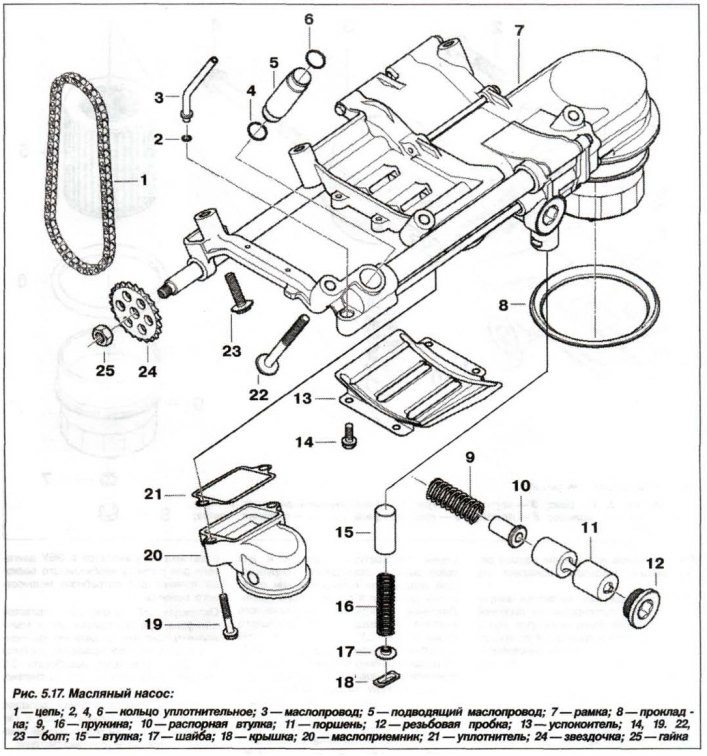
The oil pump is a Duocentic type with trochoidal engagement, driven by the crankshaft via a chain drive. Mounted in the engine sump, it takes oil from the sump with an oil receiver and forces it through a full-flow oil filter into the engine's pressure oil line. The oil filter is mounted on the pump frame and is connected to the main line.
After the oil filter, a pressure reducing valve is installed, which, when the pressure increases above the set value, dumps excess oil into the oil bath (pan). When the filter is clogged, the bypass valve directs unfiltered oil directly into the pressure line. The opening pressure of the pressure reducing valve is 4.5 kgf/cm². The pressure adjustment range on an engine warmed up to operating temperature is 4.0 – 6.0 kgf/cm².
A check valve is installed in the oil filter nipple, which prevents oil from leaking out of the channels and hydraulic compensators of the valve drive after the engine is stopped. Purified oil flows through the pressure line and its branches to the main bearings of the crankshaft. Through inclined drillings in the body of the crankshaft, oil flows to its connecting rod journals and is sprayed to the piston pins and cylinder mirrors. At the same time, engine oil flows through vertical channels to the cylinder head to the camshaft bearings, cylindrical hydraulic compensators of the valve drive, valve guides, chain tensioners and the mechanism for changing the position of the intake valve drive shaft.
The article was copied from an online resource: «BMWMan.ru»