
Remove the bolts and/or nuts securing the seal housing to the engine block. Be sure to remove the two bolts (bottom) connecting the rear of the oil pan to the base of the seal housing.
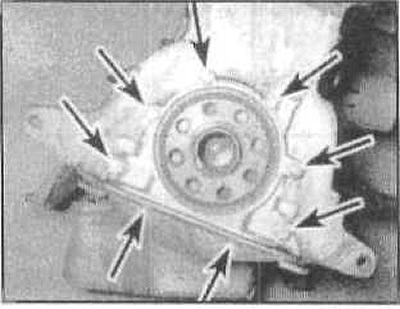
Run a sharp, thin knife between the crankcase gasket and the seal housing. Be very careful not to damage or contaminate the gasket so that it can be reused.
Tap the housing with a plastic mallet or a wooden block. Do not pry the housing away from the engine block with a screwdriver, as this may damage the contact surfaces.
Using a scraper, remove all traces of old sealant from the contact surfaces of the housing and engine block and wipe them off with a rag soaked in solvent.
Caution: Be very careful not to scratch the soft aluminum surfaces.
Place the housing on two wooden blocks and knock out the seal using a hammer and screwdriver.
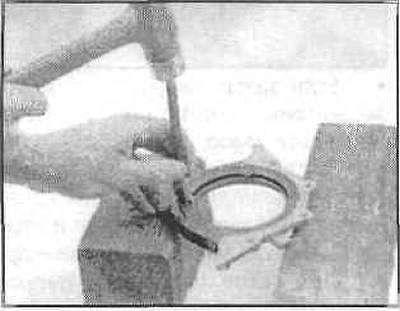
Be very careful not to damage the walls of the seal mounting hole.
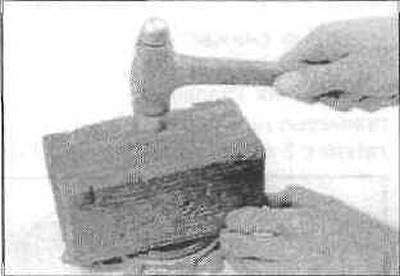
Coat the outer edge and sealing lip of the new seal with multi-purpose grease and tap the seal into the housing using a hammer and block of wood.
Apply a thin layer of sealant to the oil pan gasket where it meets the seal housing. Apply additional sealant to the edges of the gasket that meet the engine block.
Coat both sides of the new gasket with sealant, then apply it to the seal housing. Position the housing on the rear of the engine, insert the bolts and tighten to the specified torque. Work in a diagonal sequence.
Note: First tighten the housing mounting bolts to the engine block, then tighten the housing mounting bolts to the oil pan.
Install flywheel/drive. Install gearbox.