
If the valve clearance is too large, then part of the pushrod and camshaft stroke will be spent on compensating for the excess clearance, i.e. the valves will not be open long enough. This will have two effects - the valve drive mechanism parts will make a knocking sound, since there is an excess clearance, and the engine will run poorly, since the intake valve will not open enough and less working mixture will enter the cylinder. Insufficient opening of the exhaust valve will lead to excess exhaust gas pressure in the cylinder, which prevents the required amount of working mixture from entering the cylinder.
If the valve clearance is too small, the intake and exhaust valves do not sit tightly on the cylinder head when they are closed. When a valve sits on the cylinder head, it does two things - it closes the combustion chamber so that no gases can escape from the cylinder, and it cools itself by absorbing some of the heat from the combustion process by the cylinder head and the engine cooling system. So if the valve clearance is too small, the engine will run poorly (due to gases escaping from the combustion chamber), the valve will overheat and become deformed (because it cannot transfer heat until it touches the valve seat in the cylinder head).
Caution: While all valve adjustments should be made with the utmost care, it is better to have a looser adjustment than a tighter one, as burnt valves can result from a tighter adjustment.
Warm up the engine to normal operating temperature before checking or adjusting valve clearances.
Remove the cylinder head cover.
Set the piston of the first cylinder to the DVN position of the compression stroke
Check the valve clearances of the first cylinder. The clearances in the hot state of the valves are:
- inlet valves - 0.35 mm;
- exhaust valves - 0.4 mm.
Insert the feeler gauge between the valve stem and the rocker arm. If the feeler gauge fits between them with a little effort, the gap is correct and no adjustment is needed.
If the gap is greater or less than specified, loosen the lock nut. Insert a key made from a large diameter metal wire and rotate the eccentric until the gap becomes the required value.
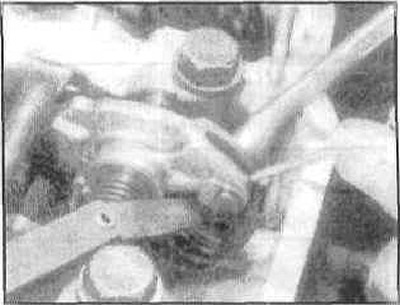
If the clearance is set, tighten the eccentric and lock nut. Recheck the clearance.
After adjusting the valves of the first cylinder, turn the crankshaft 120°, then check and adjust the valves of the fifth cylinder.
Repeat the adjustment procedure on the remaining cylinders (1-5-3-6-2-4).
Install the cylinder head cover.
Read the original source on the website: «BMWMan.ru»