
If you don't have the tools or don't want to do the honing, most machine shops will do the job for a reasonable price.
1. Before honing the cylinders, install the main bearing caps and tighten the bolts to the torque specified in Table of sizes and adjustment data at the end of the Guide.
2. There are generally two types of hones available: a flexible or "bottle brush" type hone and the more common grinding hone with spring-loaded abrasive stones. Both types of hones are suitable for the job, but for the less experienced mechanic, the "bottle brush" type hone may be easier to use. You will also need several quarts of kerosene or honing oil, rags and a power drill. Proceed as follows.
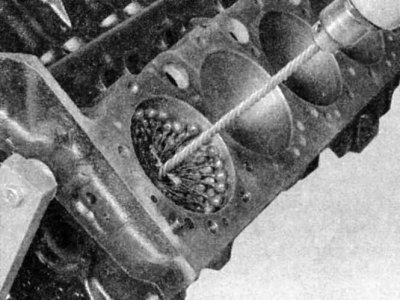
3. Install the hone in the drill, compress the stones into one bunch and insert the bunch into the first cylinder. Do not forget to wear protective glasses or a mask.
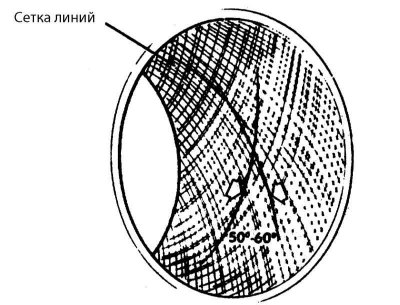
4. Lubricate the cylinder with sufficient honing oil, turn on the drill and move the hone up and down so that a fine grid of intersecting lines is formed on the cylinder wall. Ideally, the grid lines should intersect at an angle of approximately 60°. Make sure there is enough lubricant and do not remove more material than is necessary to obtain the desired surface.
Piston ring manufacturers may specify a smaller grid intersection angle than the normal 60° - read and follow the instructions supplied with new rings.
5. Do not remove the hone while it is rotating from the cylinder. Instead, turn off the drill and continue to move the hone up and down until it stops completely, then squeeze the stones into a bunch and remove the hone. If a bottle brush type hone is used, turn off the drill and rotate the chuck in the normal direction while removing the hone from the cylinder.
6. Remove oil from the cylinder and repeat the operation for the remaining cylinders.
7. After honing is complete, use a fine file to chamfer the top edges of the cylinders to prevent the piston rings from sticking when installed. Be very careful not to scratch the cylinder walls with the tip of the file.
8. The entire cylinder block must be washed again very thoroughly with warm, soapy water to remove the abrasive sand created by honing.
The cylinders can be considered clean when a white, lint-free cloth soaked in clean engine oil and used to wipe the cylinder no longer collects sand residues that leave grey stains on the cloth. Don't forget to brush out all the holes and channels of the oil lines and rinse them with running water.