
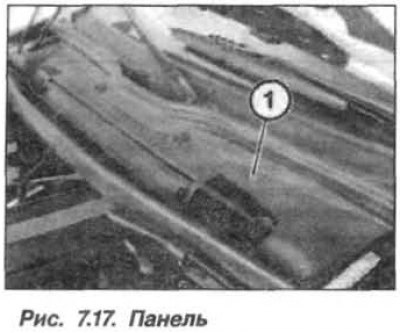
Removal of the master cylinder must be carried out in the following order: Open the hood and remove the front panel (1, Fig. 7.17) in the windshield area.
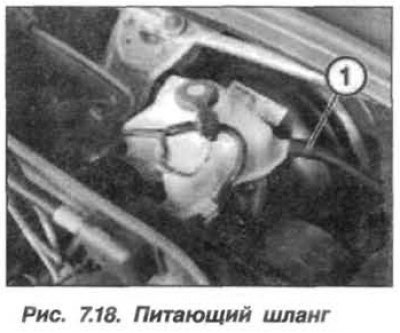
Remove brake fluid from the reservoir until its level reaches the level of the supply hose connection (1, Fig. 7.18) clutch/brake hydraulic drive. Use a clean syringe used for brake fluid to pump out the brake fluid. Disconnect the feed hose (1) from the reservoir.
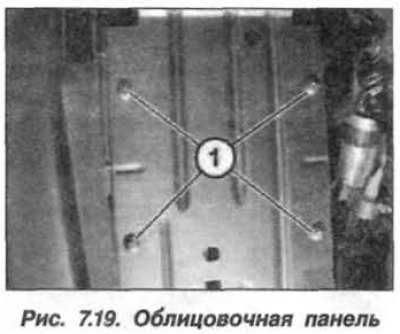
Remove the left, lower instrument panel at the base of the pedal bracket and unscrew the bolts (1, Fig. 7.19).
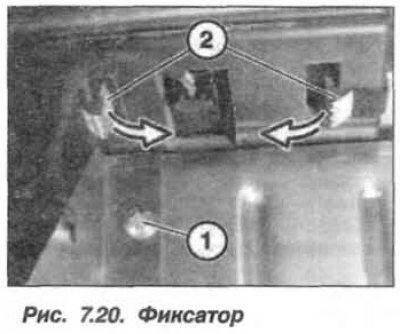
Remove the screw (1, Fig. 7.20) and press the clips (2) out of the light switch.
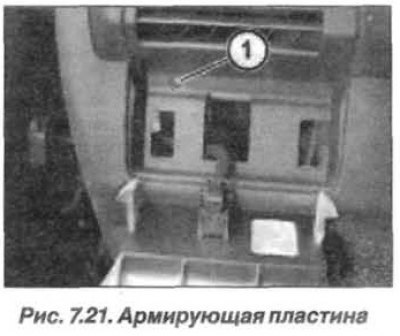
Remove the screw (1, Fig. 7.21) and remove the reinforcing plate.
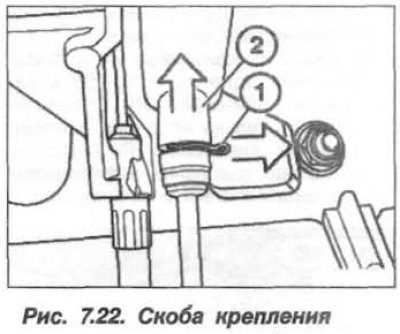
Remove the clutch pedal and bracket (1, Fig. 7.22).
Cover the floor with a rag under the front panel of the passenger compartment to protect it from spilled liquid. Clamp the flexible hose from the feed tank to the master cylinder using a special clamp. Carefully disconnect the feed hose and pipeline from the master cylinder. Install plugs in the holes of the hose, pipeline and master cylinder.
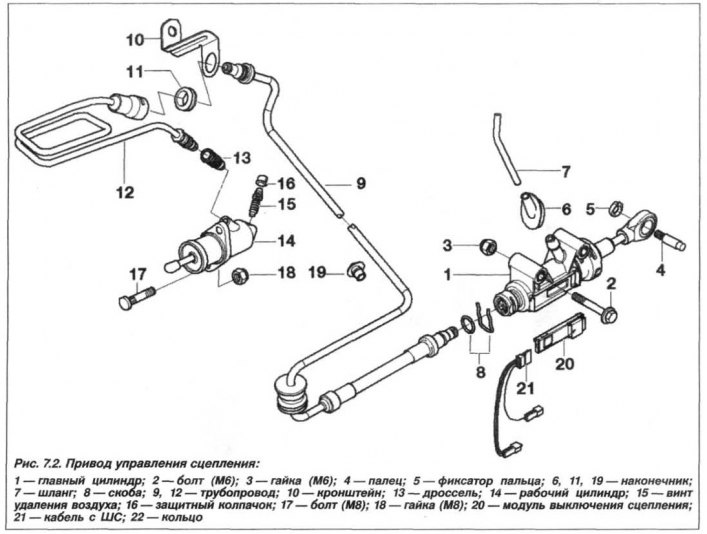
Use a screwdriver to remove the module (20, see Fig. 7.2) switch from the main cylinder (1) of the hydraulic clutch drive. Release the SHs lock (21) and disconnect the SHS from the switch module (20).
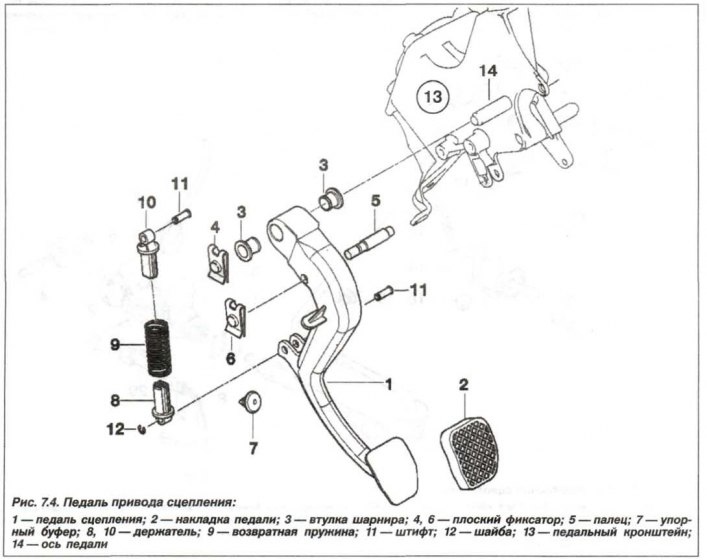
Loosen the bolts (2) securing the master cylinder (1) to the pedal bracket. Remove the fuse (6, see Fig. 7.4) and remove the pin (5) from the pedal lever (1). Remove the clutch master cylinder from inside the passenger compartment.
The master cylinder must be checked in the following order:
- clean the outer surfaces of the master cylinder;
- remove the rubber boot if installed;
- lubricate the push rod.
The master cylinder cannot be disassembled.
Installation of the master cylinder should be carried out in the reverse order, while it is necessary.
Before installation, lubricate the pushrod fork pin.
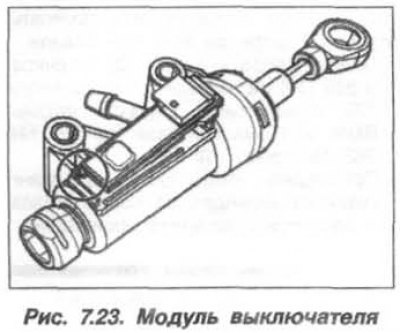
The clutch switch module has protection against incorrect installation (circle, Fig. 7.23) and should lock into place with an audible click.
Tighten the master cylinder fasteners to a torque of 20 N·m (2.0 kgf·m).
Upon completion of the work, fill and bleed the hydraulic system as described above. Check the operation of the clutch drive.