
Use a scraper to remove all traces of gasket material from the cylinder block. Be careful not to scratch the surface of the block.
Remove the main bearing caps and pull out the bearing shells. Mark the shells (from which cylinder, were they in the cover or the cylinder block) and put them aside.
Remove all threaded plugs from the oil passages. They usually don't unscrew and have to be drilled out. For now, plug the holes with rags, and install new plugs when reassembling.
The engine block is usually steam cleaned in a workshop, but with some precautions it can be done at home.
After steam cleaning, clean all oil holes and channels again using special brushes. Rinse the channels with warm water until the water comes out clean. Dry the unit thoroughly and wipe all machined surfaces with anti-corrosion oil.
If the block is not too dirty, you can clean it with hot soapy water and a stiff brush. Regardless of the cleaning method, thoroughly clean all oil holes and passages, dry the block completely, and apply oil to all machined surfaces.
Run a suitable size tap through all threaded holes to remove any corrosion, deposits and sealant residue. If possible, blow compressed air through the holes after this operation to remove any fine particles that may have formed.
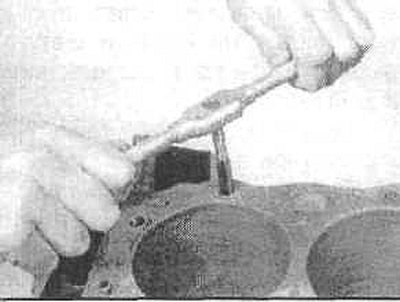
Install the main bearing caps and finger tighten the bolts.
Apply sealant to the new plugs and install them into the holes. Use a bushing and hammer to seat the plugs in place - seat slowly and stop when the plug is flush with the block. Make sure the plugs are not crooked and are seated correctly.
Press the plug into place using a bushing that is slightly smaller in diameter than the plug and a hammer.
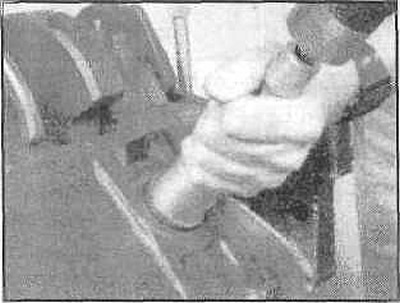
Apply non-hardening sealant to the oil passage thread plugs and screw them into the holes in the block. Make sure they are securely tightened.
If the engine is not going to be reassembled immediately, cover it with plastic wrap to keep it clean.